Smoke Leak Testing With Separate EVAP and Standard Pressure Modes
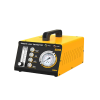
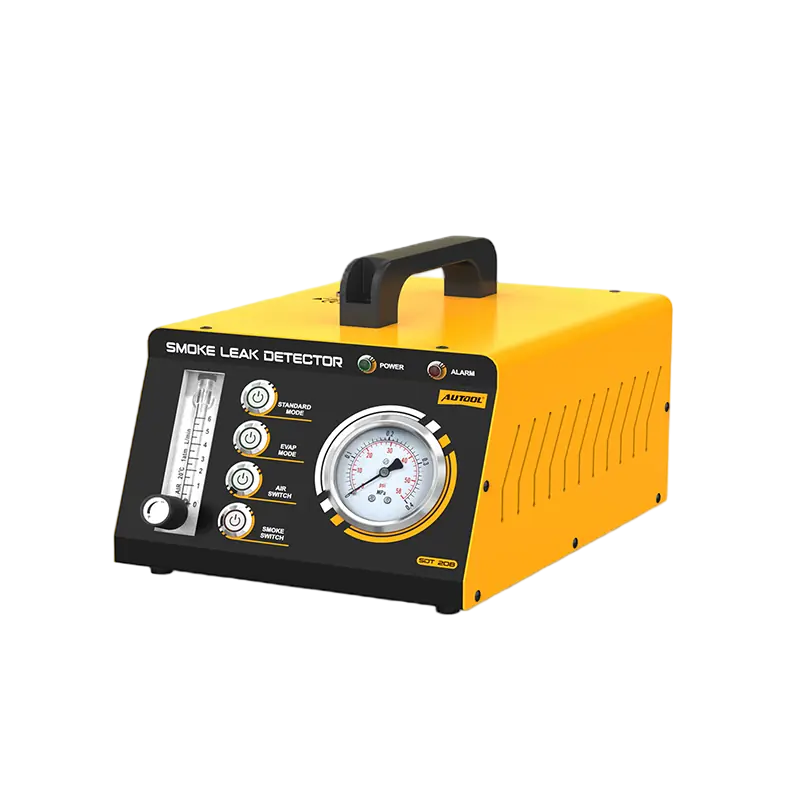
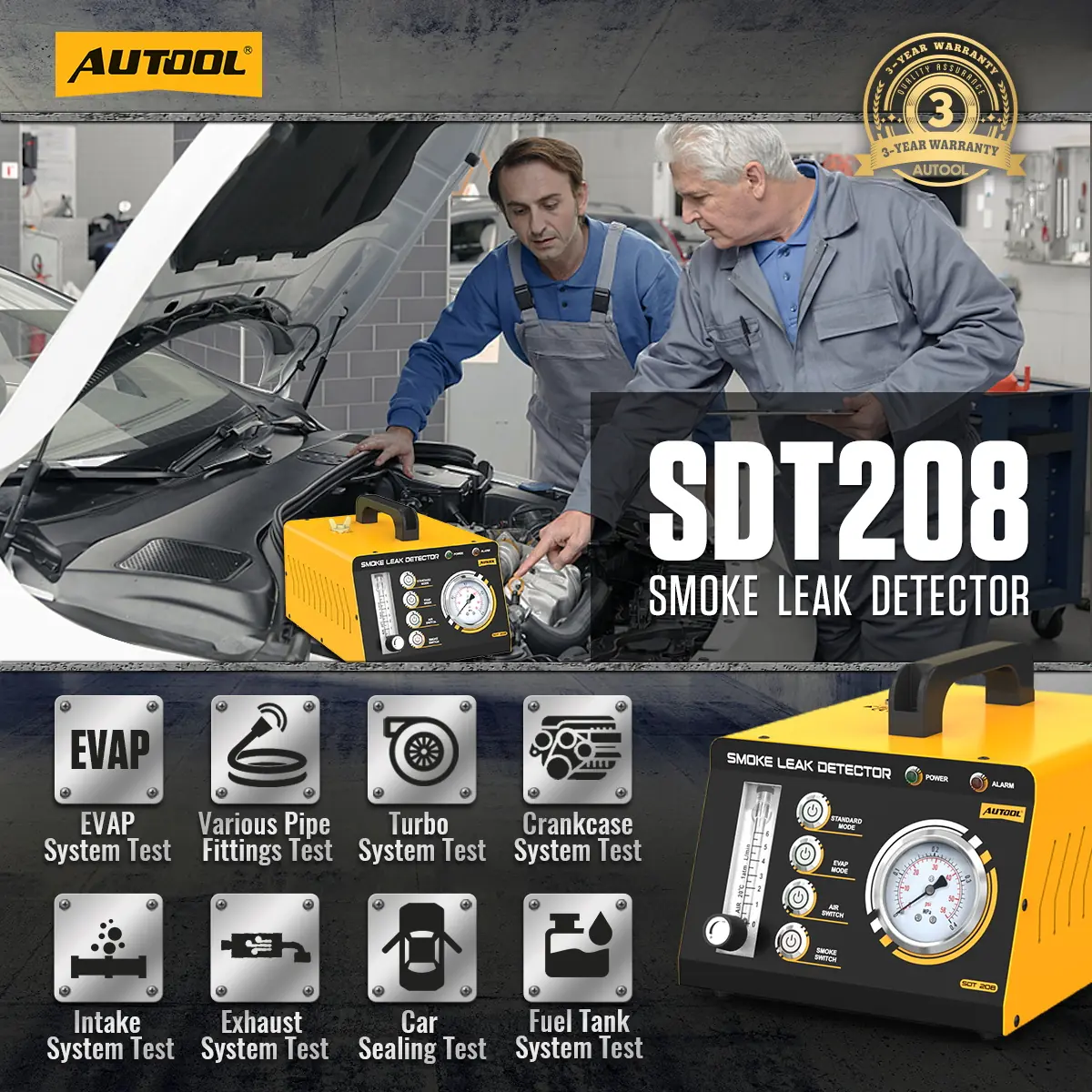
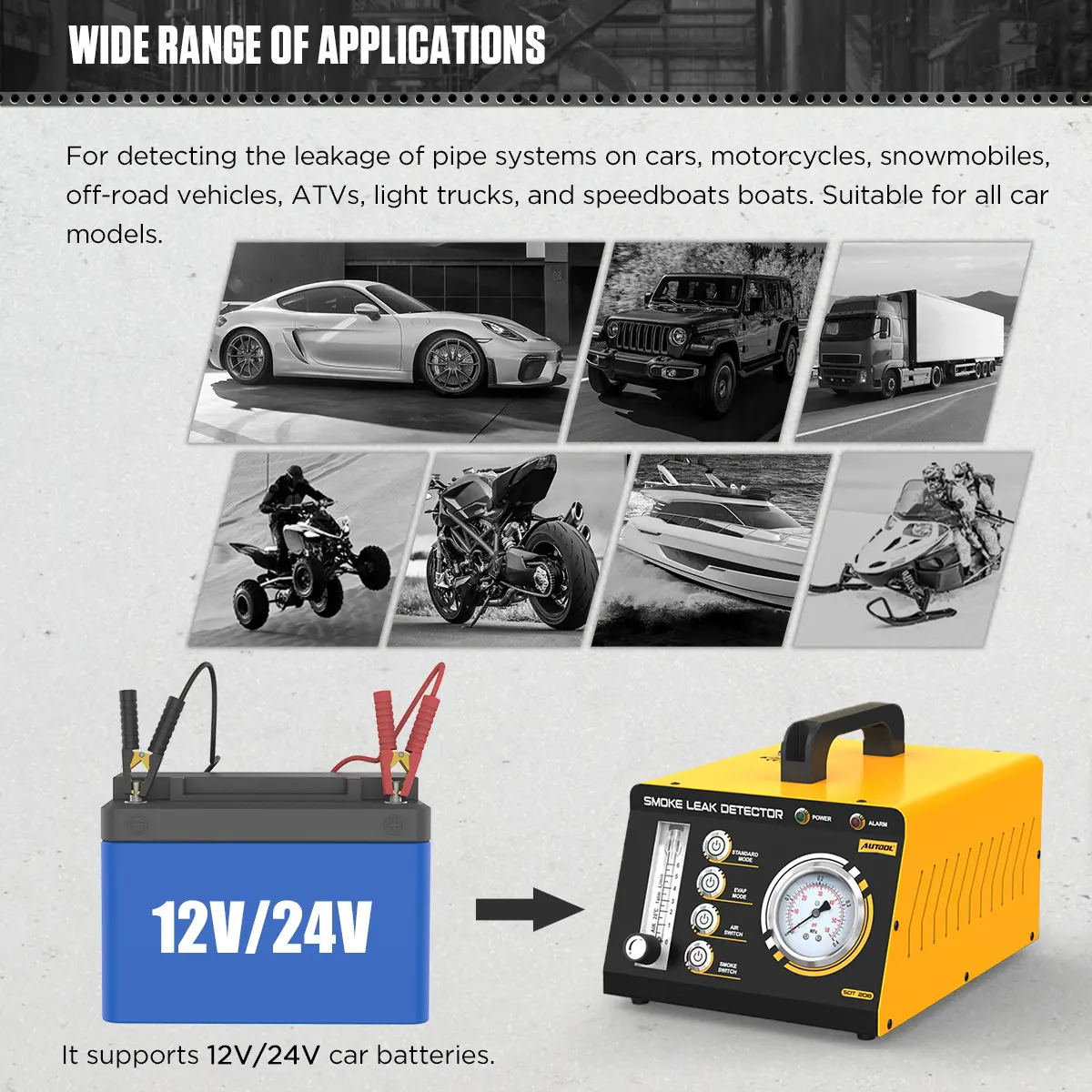
The SDT208 runs from a 12 V or 24 V vehicle battery and uses its built-in pump, so no compressor is needed. Check pressure and airflow in Air Mode, then switch to Smoke Mode to find the leak path; choose EVAP or Standard Mode only within the pressure the vehicle procedure permits.
- EVAP <10 psi / Standard 35 psi
- 12 V / 24 V Power
- Built-In Air Pump
- Smoke in About 5 s
- Flow Meter + Pressure Gauge
Key Features
-
Two Pressure Modes
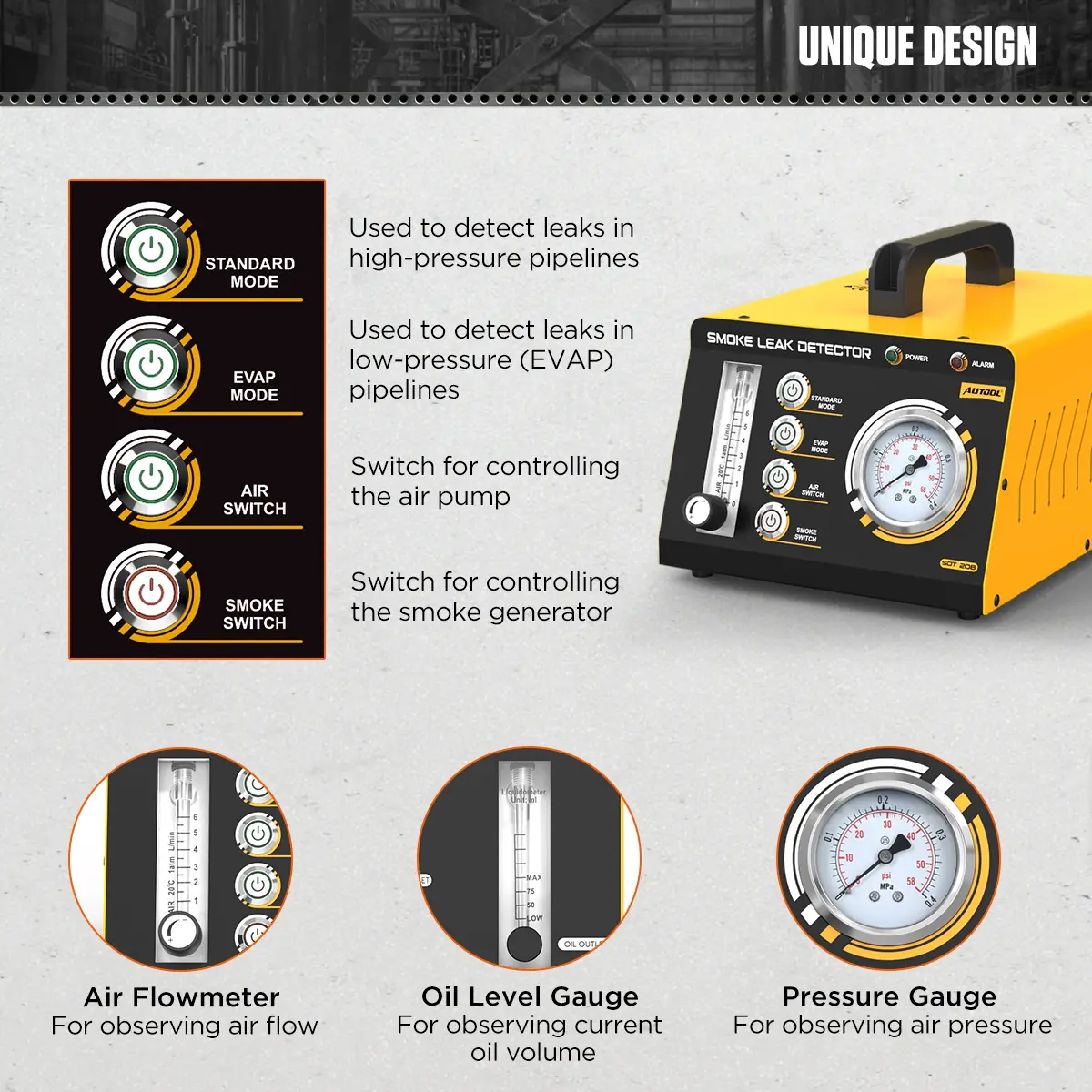
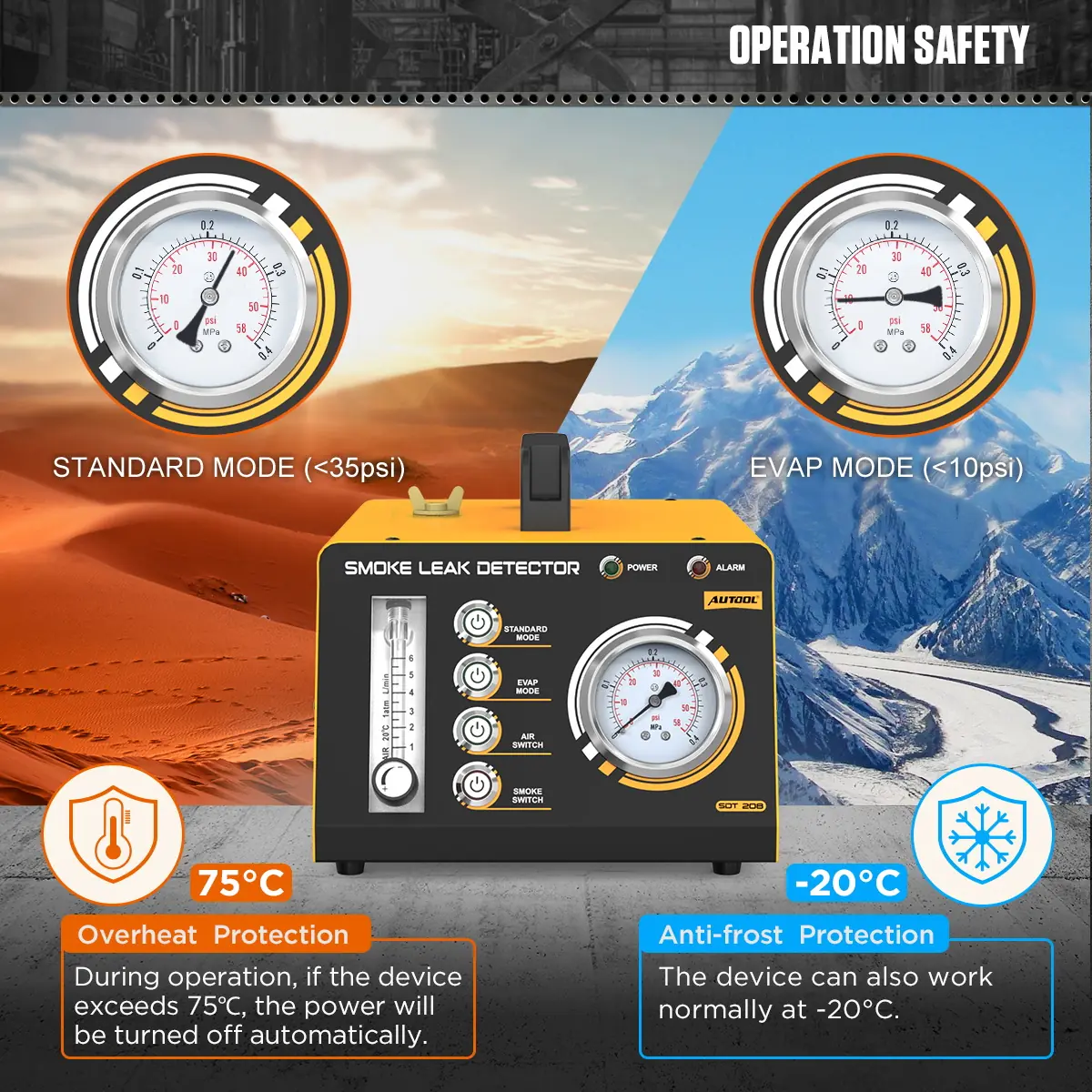
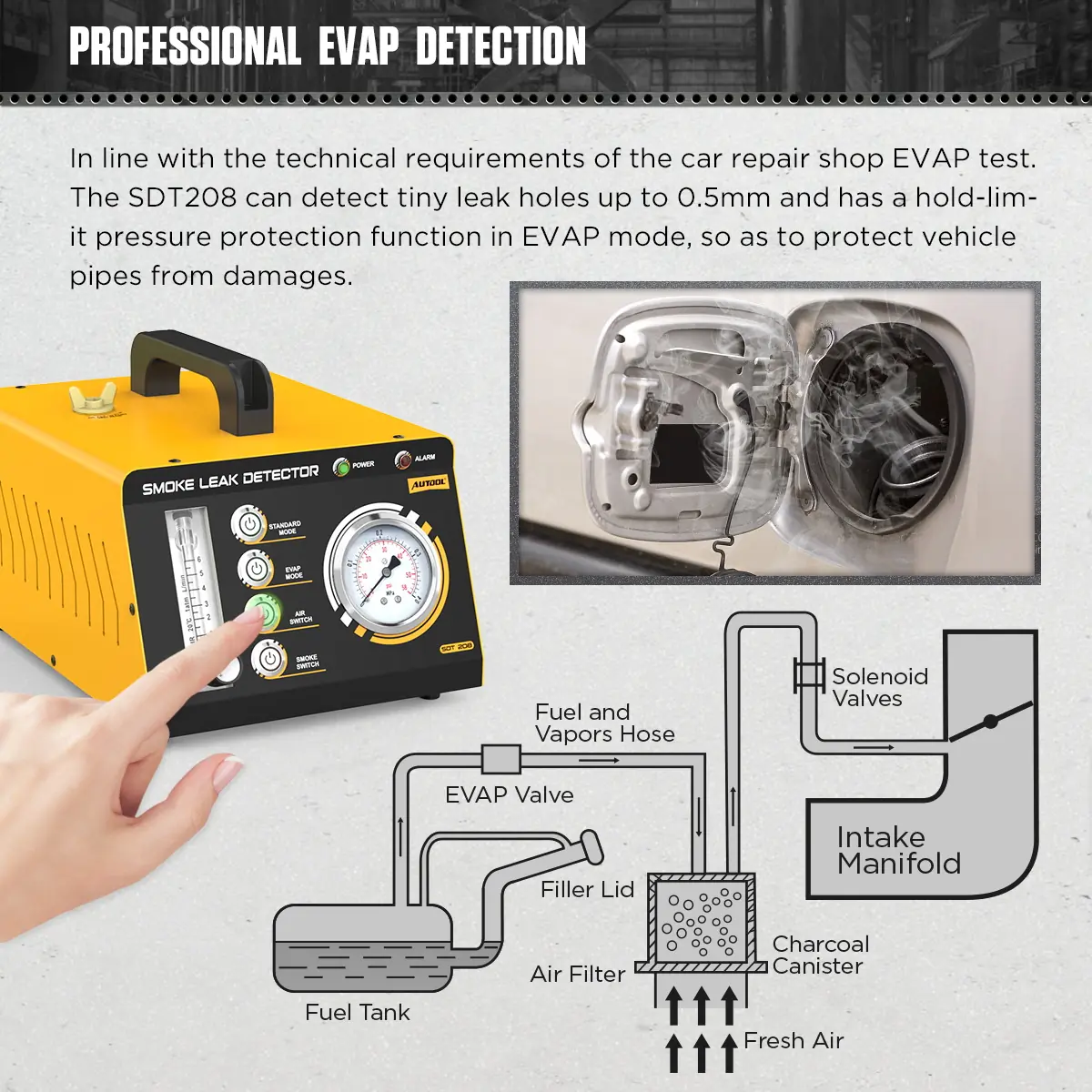
EVAP Mode stays below 10 psi to help protect EVAP lines; Standard Mode reaches up to 35 psi for systems whose procedure allows it.
-
Small EVAP Leaks
EVAP Mode supports checks for leaks down to about 0.5 mm, used with EVAP tools that match the vehicle test port.
-
Pressure and Flow Feedback
The pressure gauge and airflow meter show changes that point to a leak, and the flow control valve sets the airflow into the test line.
-
Air Mode and Smoke Mode
Use Air Mode for pressure monitoring and Smoke Mode for visual leak location.
-
Wide System Coverage
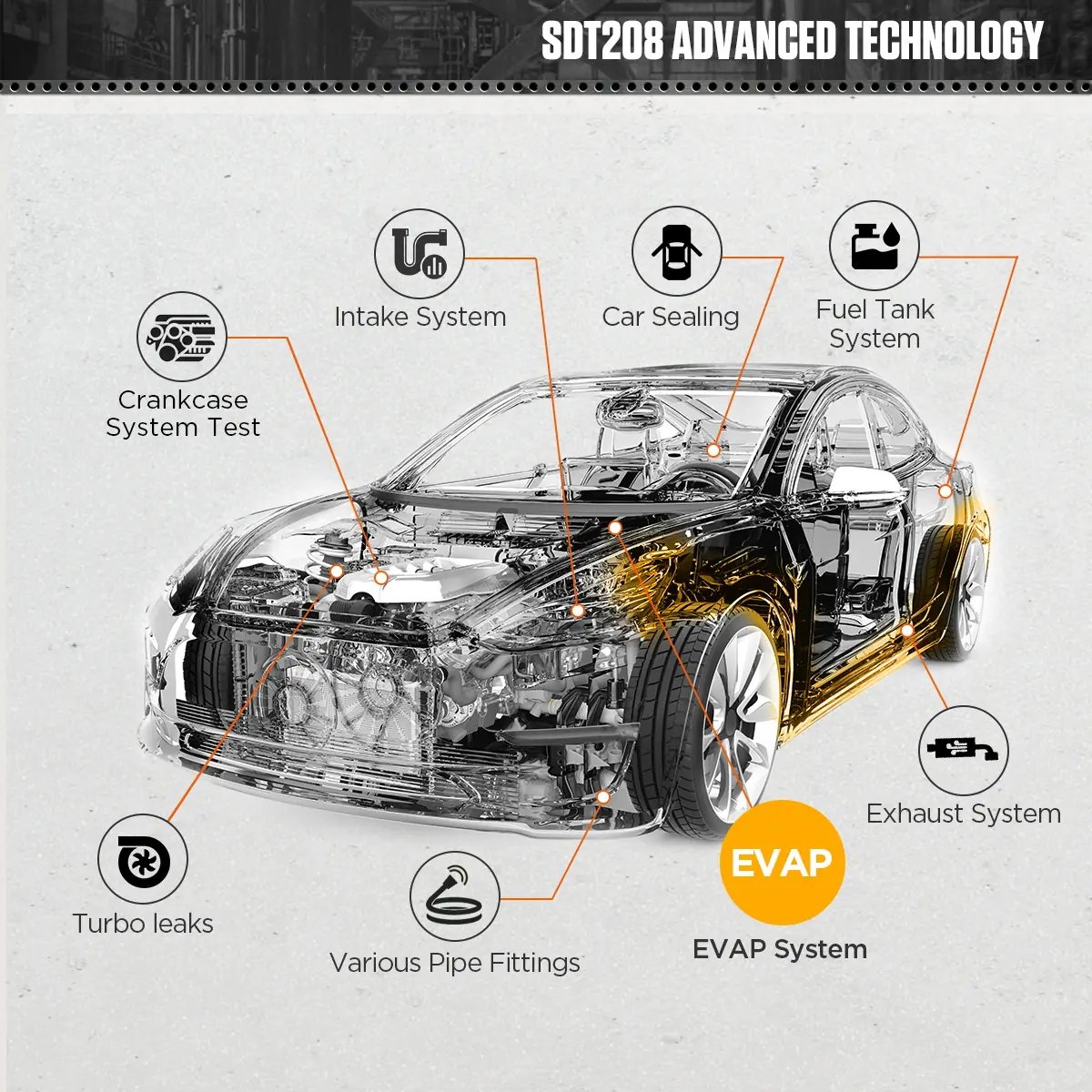
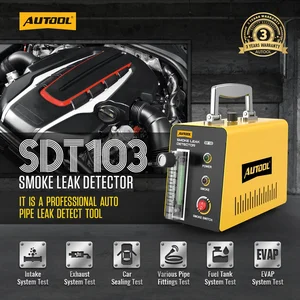
EVAP, intake, throttle-related and vacuum lines, exhaust, crankcase, fuel-tank sealing areas, line fittings and selected low-pressure turbo and intercooler paths.
-
Clear Front Panel
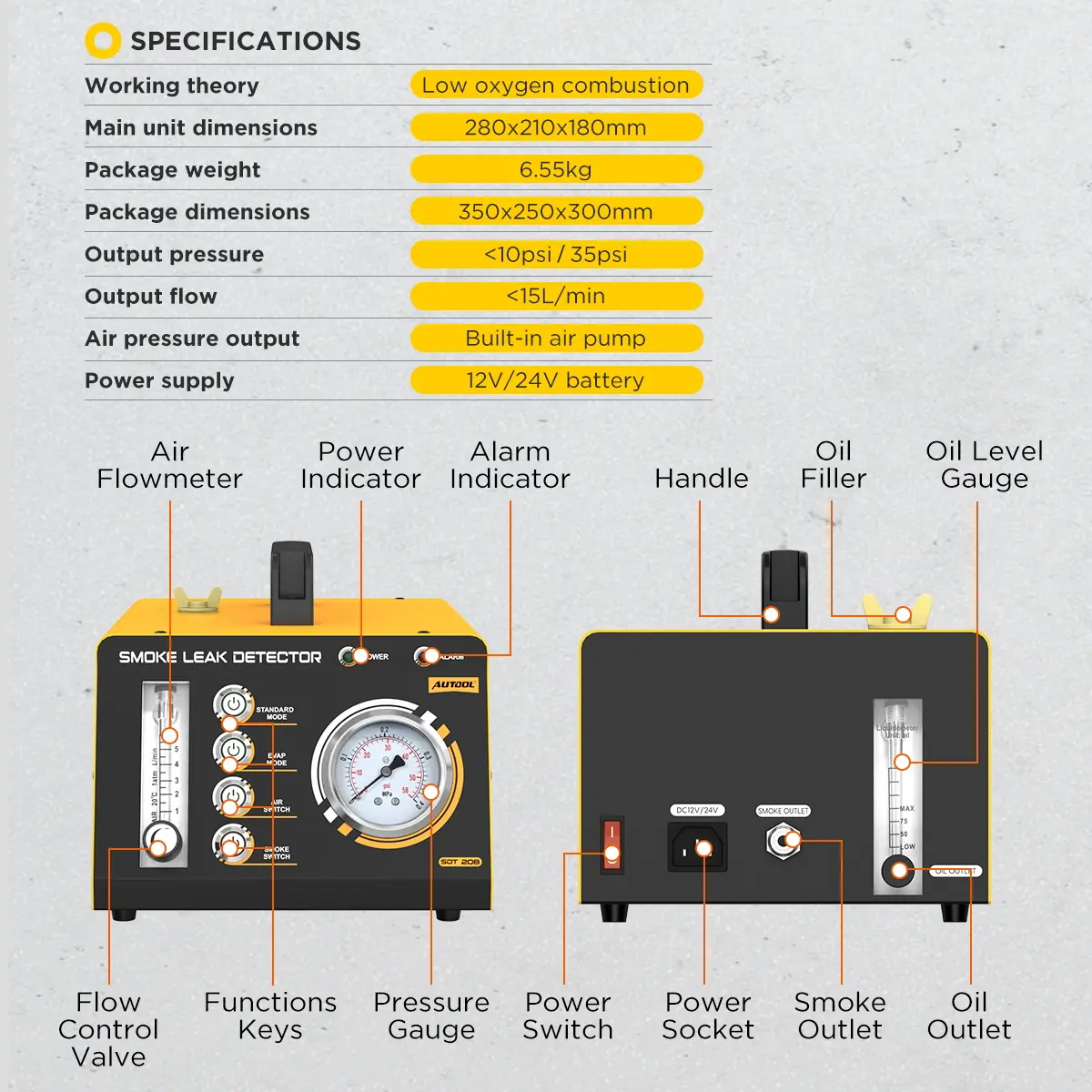
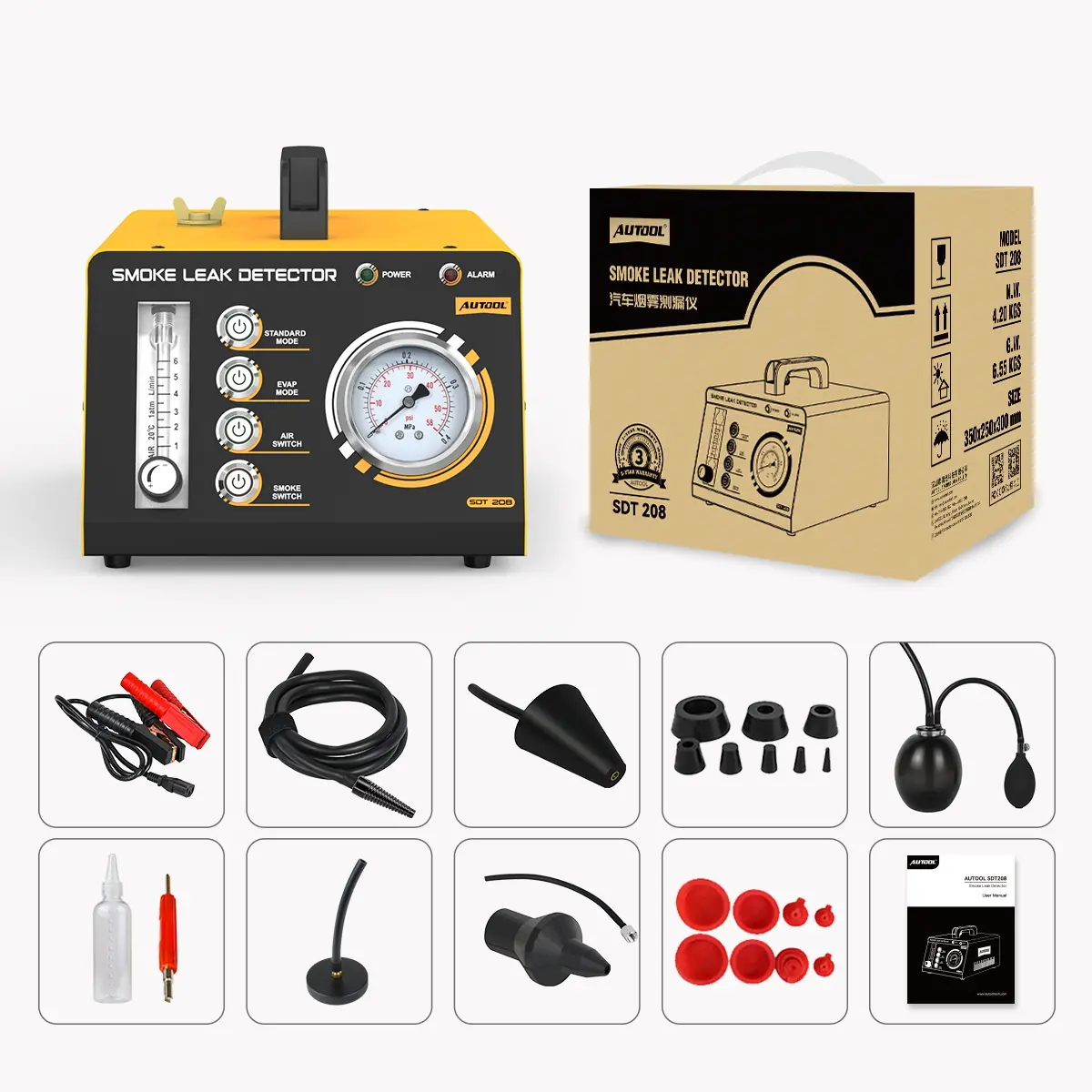
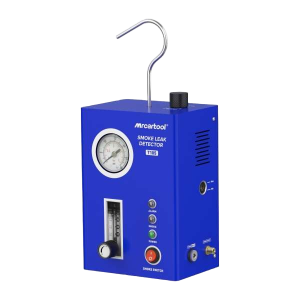
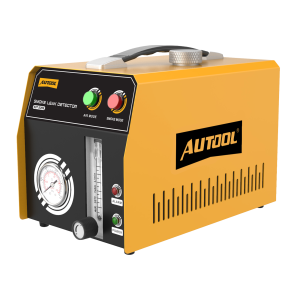
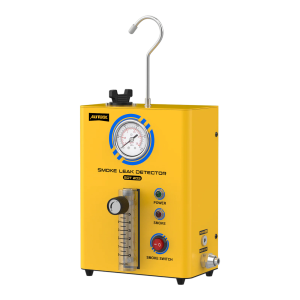
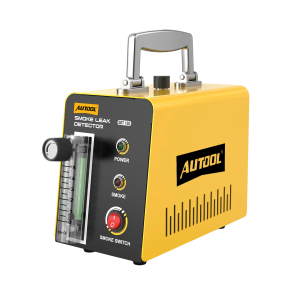
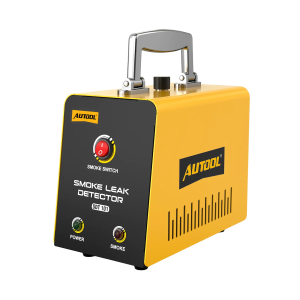
Oil level gauge, airflow meter, pressure gauge, power indicator and alarm indicator in one view.
-
Temperature Protection
Power shuts off above 75°C, and the unit operates down to -20°C.
More Specifications
| Working principle | Low-oxygen combustion |
|---|---|
| Test oil fill | 10–15 mL of smoke-testing oil, liquid paraffin or baby oil |
| Continuous running | 8 minutes maximum |
Model Comparison
| SDT205S | SDT206 | SDT208 | |
|---|---|---|---|
| Rated output pressure | <15 psi | <18 psi | <10 psi EVAP / 35 psi Standard |
| Rated output flow | <6 L/min | <6 L/min | <15 L/min |
| Input power | DC 12 V | DC 12 V | DC 12 V / 24 V |
| Air pumps | Built-in | Two built-in | Built-in |
| Rated power | 65 W | 70 W | 80 W |
| Oil level gauge | No | Yes | Yes |
| Main unit weight | 3.2 kg | 3.5 kg | 4.2 kg |
What’s in the Box
- SDT208 smoke leak detector
- 12 V / 24 V battery power cable
- Smoke output hose
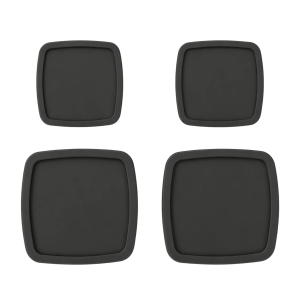
- Cone adapter, rubber caps and adapter set
- Empty oil bottle
- User manual and certificate
How to Use
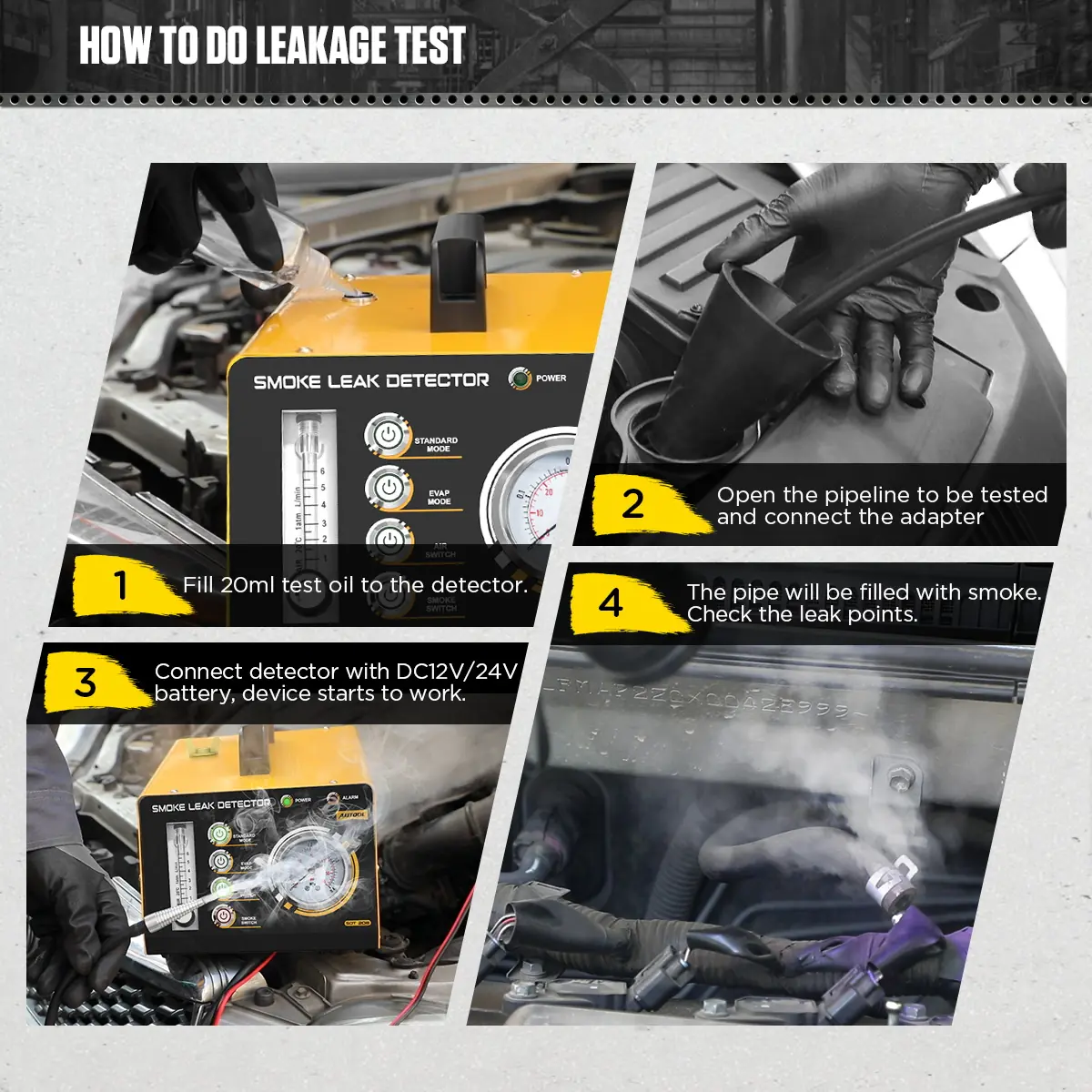
- Add testing oilFill 10–15 mL of baby oil or liquid paraffin; do not overfill.
- Open the airflow regulatorGently turn the knob to open the regulator valve.
- Connect the test lineDisconnect the line to be tested and fit the hose or adapter that matches the test port.
- Power upConnect to a 12 V or 24 V DC battery and turn on the power switch.
- Select the modeChoose Standard or EVAP Mode for the pressure range, then Air Mode for pressure and airflow or Smoke Mode for leak location.
- Locate the leakWatch smoke, pressure and airflow; a headlamp helps reveal small escape points.
- Repair and retestConfirm the escape path against the system layout, repair it and repeat the same test.
Setup, test pressure and troubleshooting: SDT208 user manual (PDF).
Good to Know
Caution
- Testing oil is not included.
- Never use Standard Mode on a low-pressure EVAP task, and do not introduce smoke or pressure where the service procedure does not permit it.
- The SDT208 cannot directly pressure-test a high-pressure automotive A/C system.
- Do not run continuously for more than 8 minutes, and do not refill oil while it is running.
- The round metal housing gets hot during use; avoid touching it.
Care
- Refill only when the smoke becomes thin, and drain the remaining oil before adding fresh oil.
- Let the unit cool before restarting after overheat protection trips.
FAQ
How do I read the pressure gauge and flow meter?
If pressure rises and stabilizes, the line may have no obvious leak. If pressure keeps falling, the line may have a leak that needs inspection.
Can smoke help on an A/C line?
Only indirectly. Isolate and pressurize the line section per the service procedure, then apply smoke nearby and watch whether escaping air disturbs it.
What if the smoke is thin or there is none?
Check the 10–15 mL oil level, power connection, open regulator and selected mode. Replace old oil with fresh oil, and let the unit cool if it has overheated.


 English
  German
  Spanish