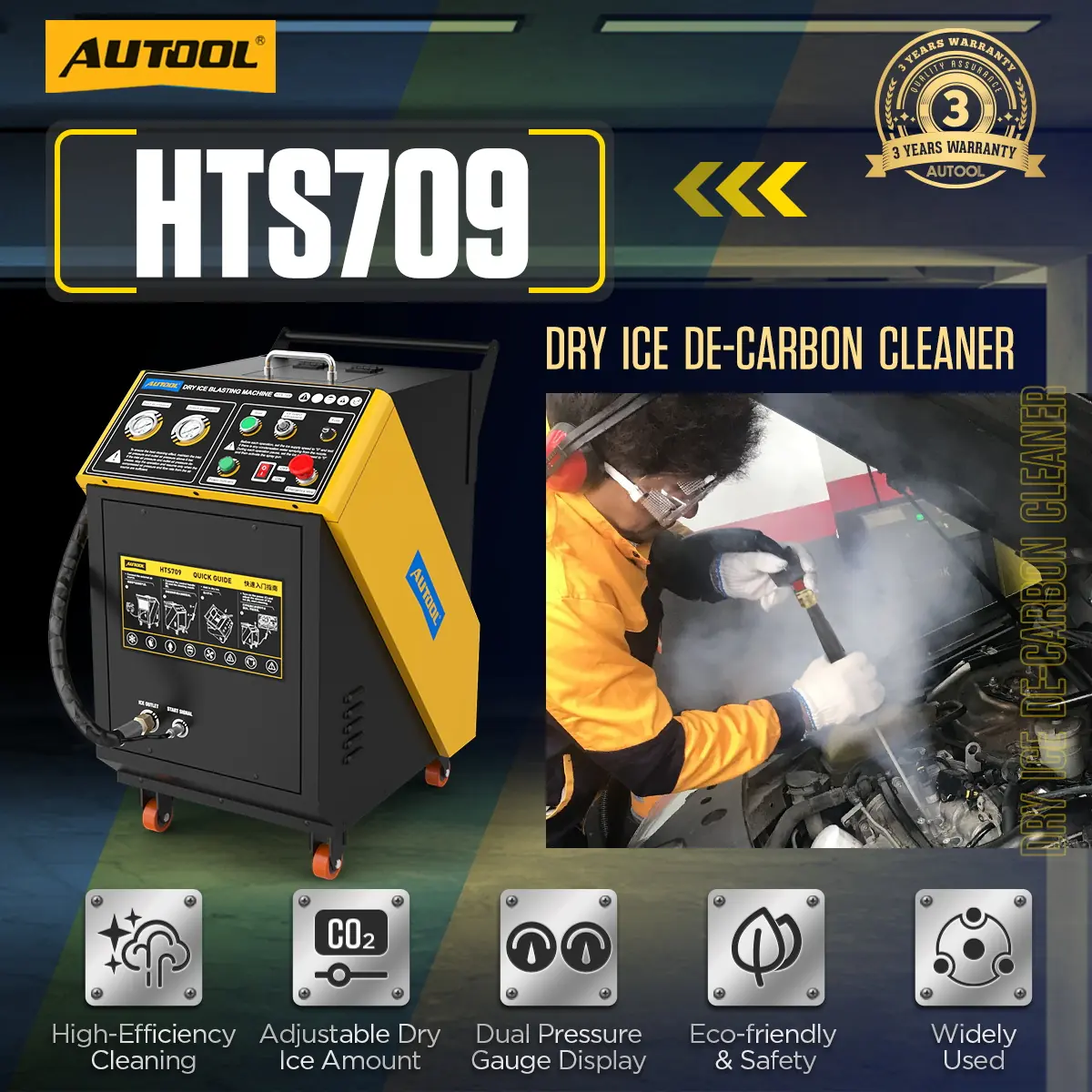
Dry Ice Carbon Cleaning With Supply and Working Pressure in View
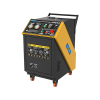
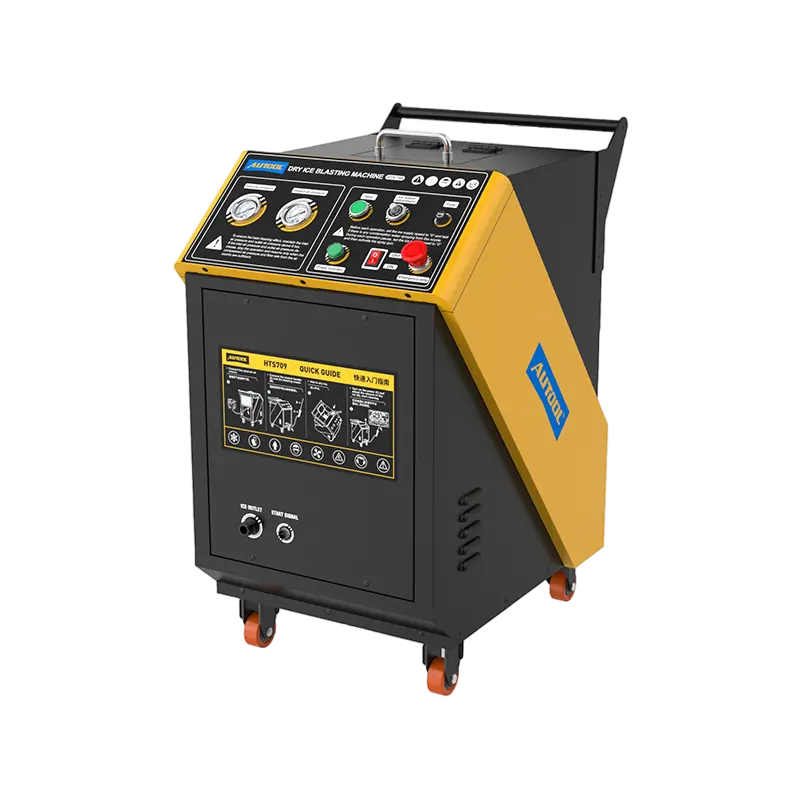
The HTS709 removes carbon, oil and other suitable contaminants with dry ice instead of water or chemical solvents, showing inlet air and outlet working pressure on separate gauges while you set ice delivery. It needs an external dry compressed-air supply and dry ice, neither of which is included.
- Dual Pressure Gauges
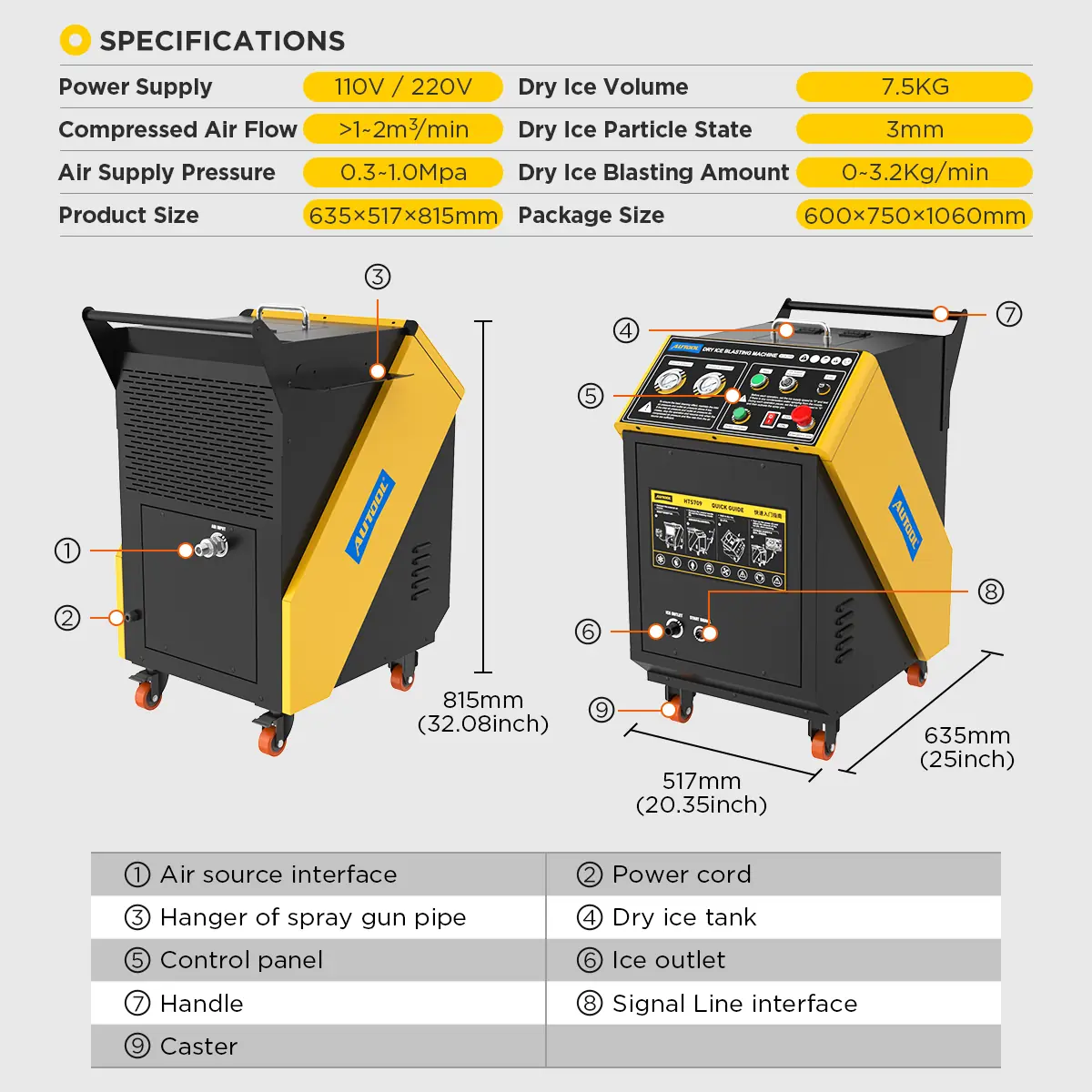
- 7.5 kg Hopper
- 0–3.2 kg/min Ice Feed
- Oil-Water Separator
- 4 Nozzle Types
Key Features
-
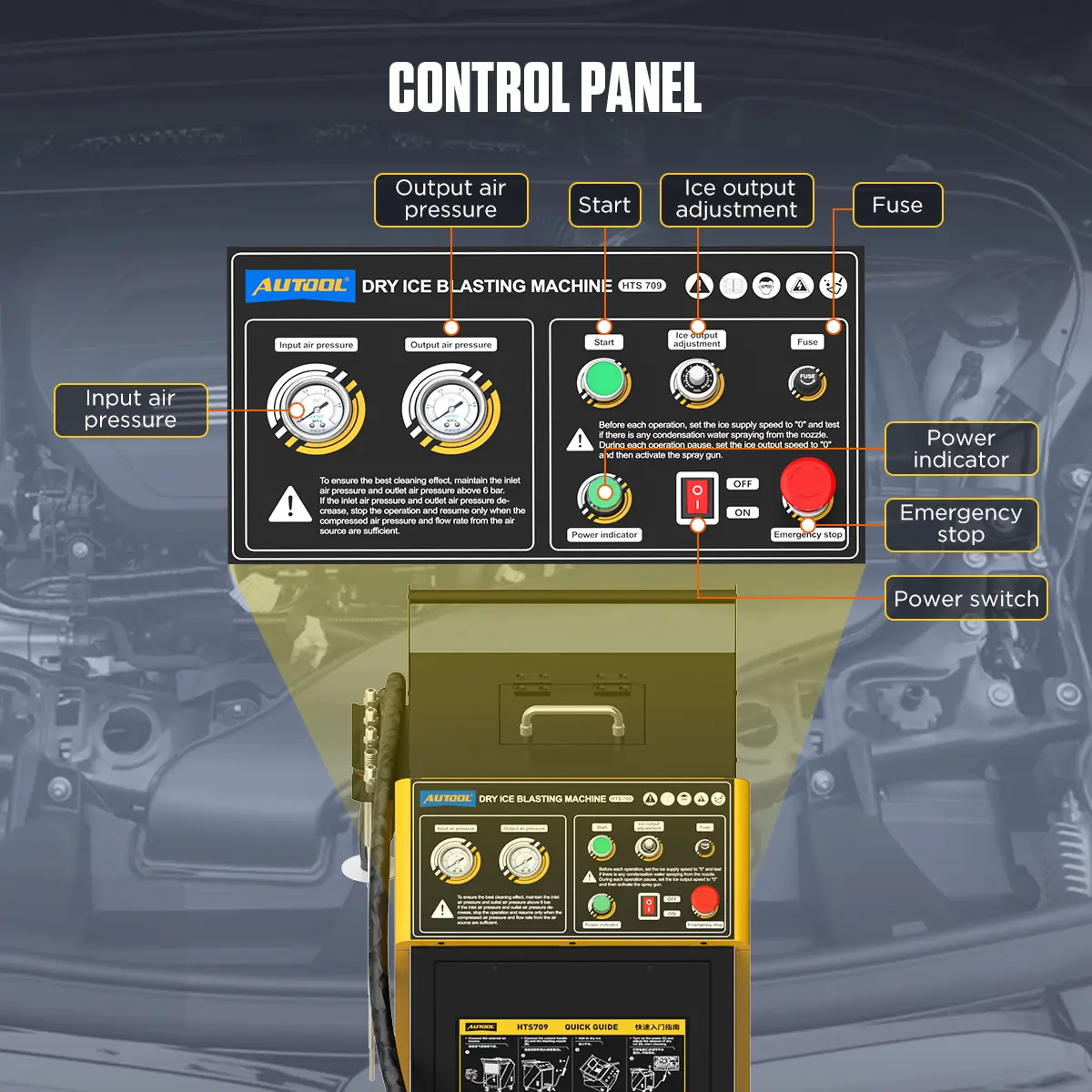
Inlet and Outlet Pressure Monitoring
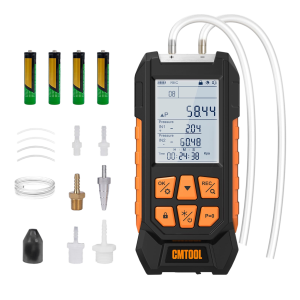
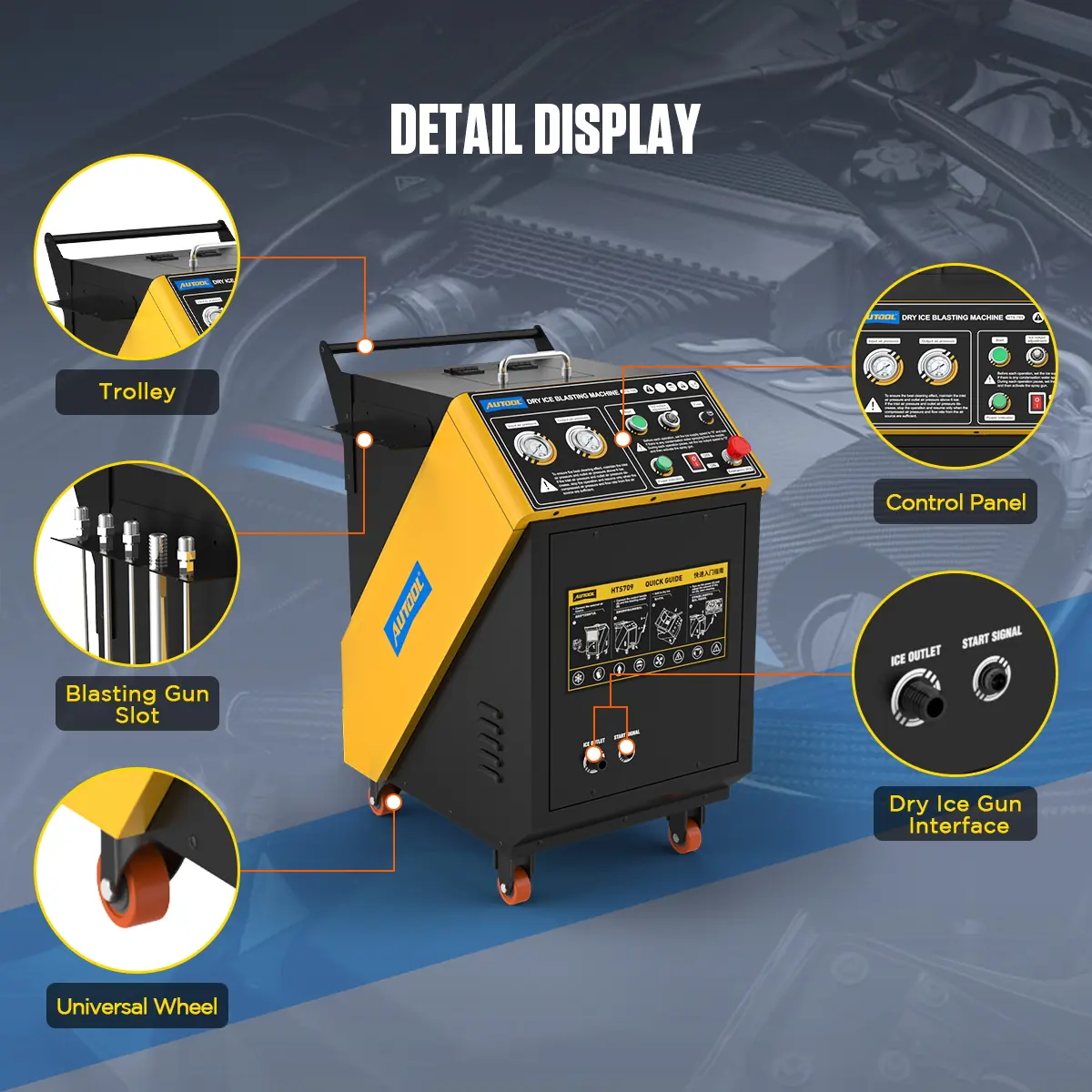
Separate gauges show incoming air pressure and outlet working pressure, so supply and blasting conditions can be checked during cleaning.
-
Adjustable Ice Delivery
Raise output gradually while watching both gauges, then keep the setting tested on a small area for the surface and task.
-
Moisture and Clumping Control
A large oil-water separator and spiral feed reduce moisture-related clumping, line blockage and interrupted delivery.
-
Fewer Refills
The 7.5 kg internal hopper extends continuous operation during repeated workshop cleaning.
-
Organized Mobile Controls
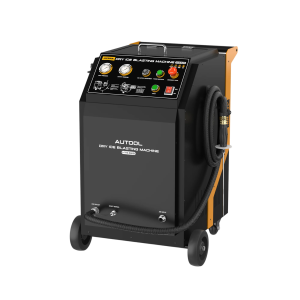
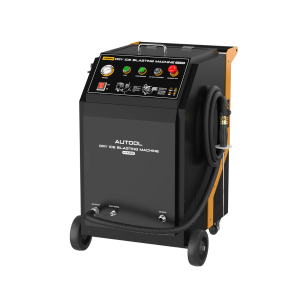
Push handle, control panel, emergency stop, gun holder, air and gun interfaces, and four 360° wheels keep operating points within reach.
-
No Solid Media Left Behind
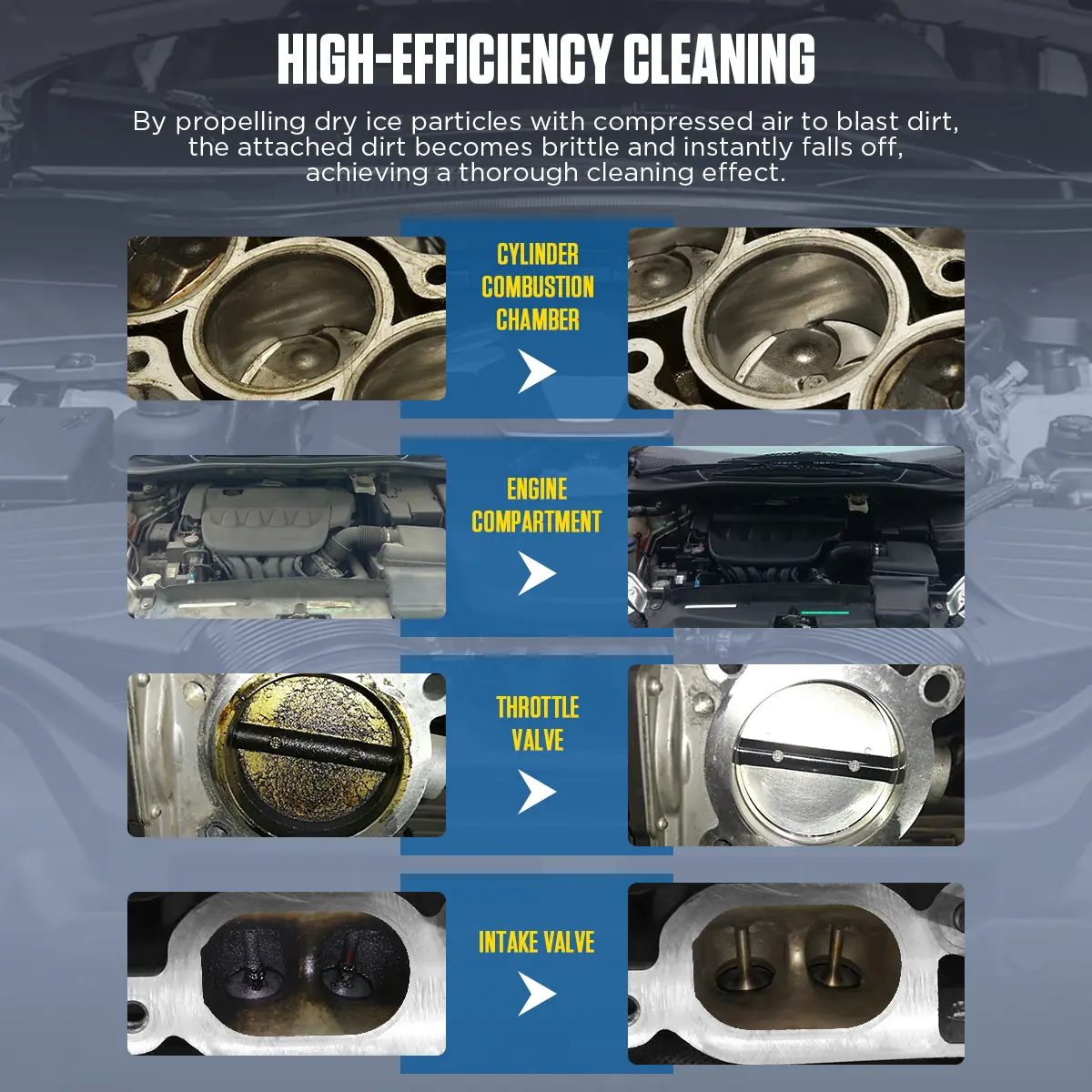
Pellets at about -78.5°C make deposits brittle, then sublimate on impact and expand nearly 800 times to lift them; only the removed carbon and oil remain to collect.
More Specifications
| Start-up air pressure | Operates once supply is above 4 kgf/cm² |
|---|---|
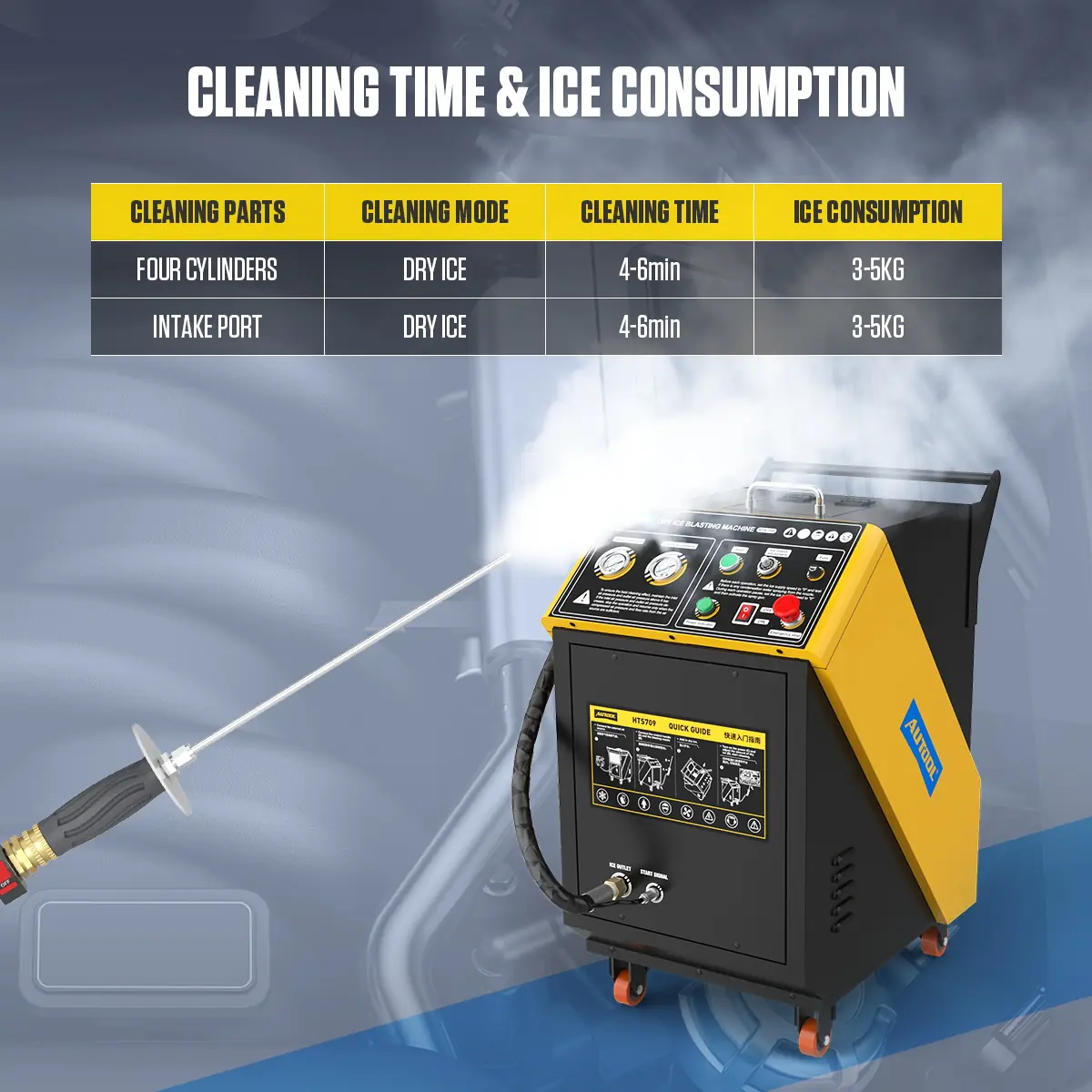
| Working reference | About 4–6 min and 3–5 kg of dry ice per four-cylinder or intake-port clean; varies with deposits, conditions and settings |
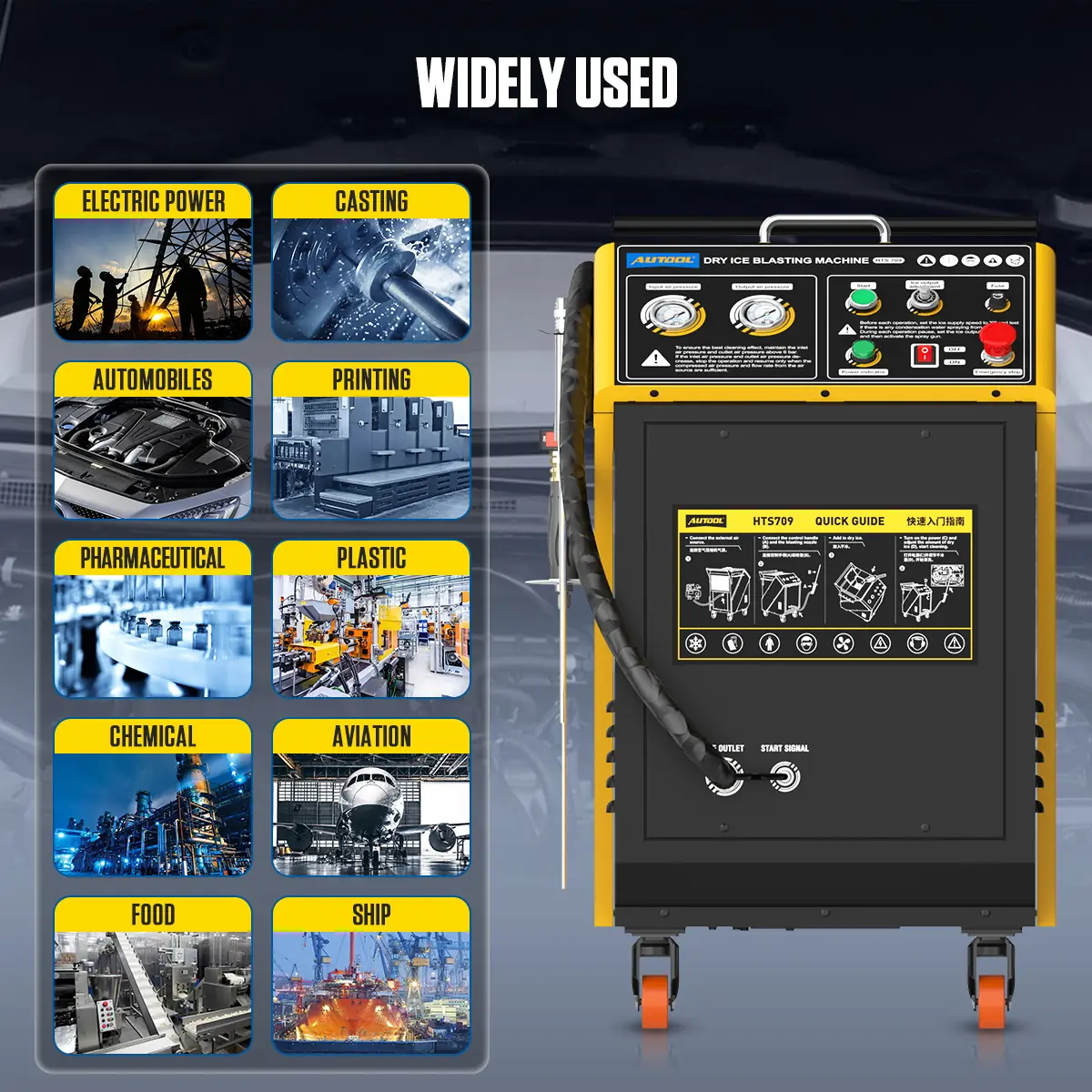
| Applicable vehicles | Fuel, hybrid and electric vehicles |
HTS709 vs HTS708
| HTS709 | HTS708 | |
|---|---|---|
| Pressure gauge | Dual (inlet / outlet) | Single |
| Airflow | >1–2.0 m³/min | >1–3.0 m³/min |
| Rated power | 1100 W | 550 W |
| Net / gross weight | 63 kg / 90 kg | 60 kg / 88 kg |
| Hopper / ice feed | 7.5 kg / 0–3.2 kg/min | 7.5 kg / 0–3.2 kg/min |
What’s in the Box
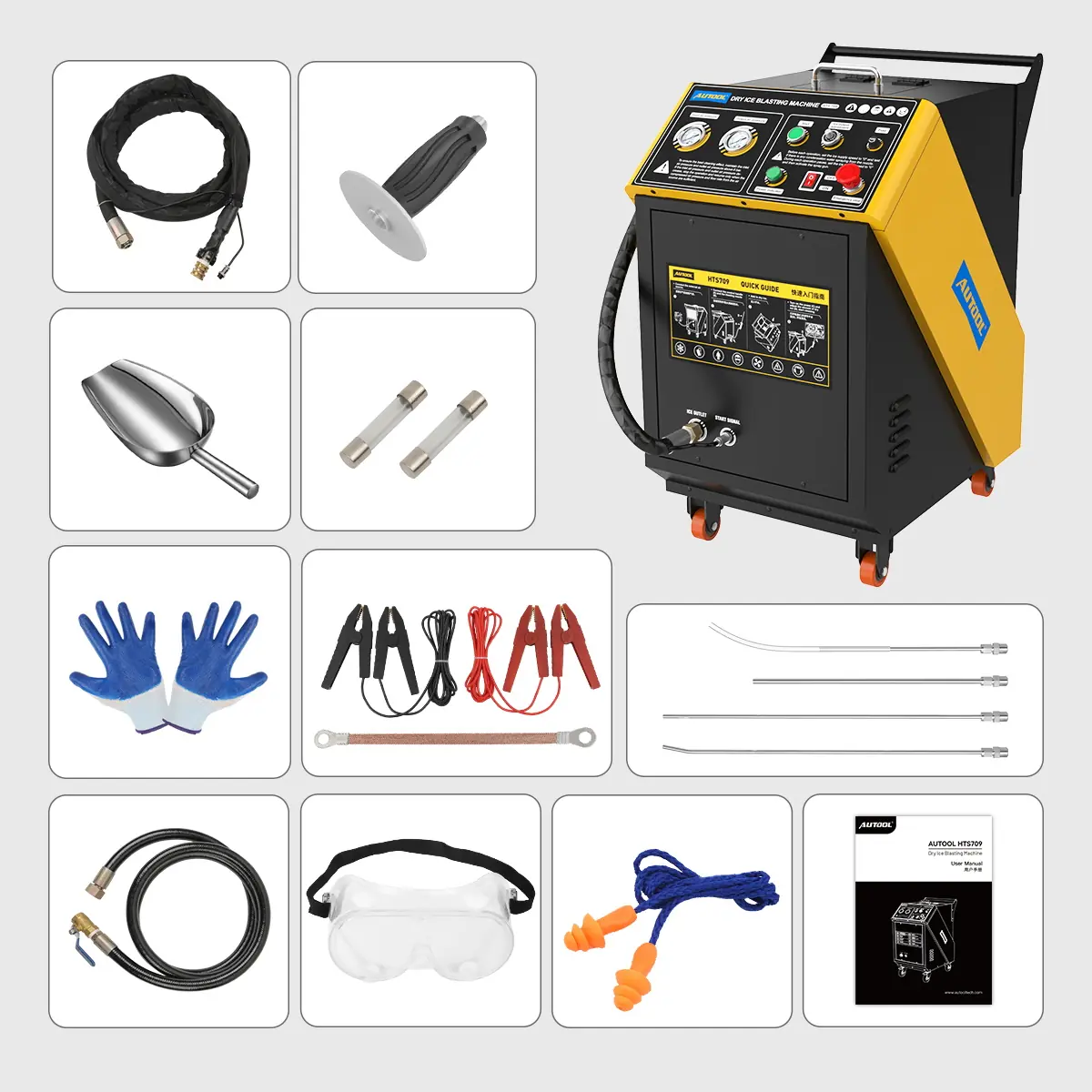
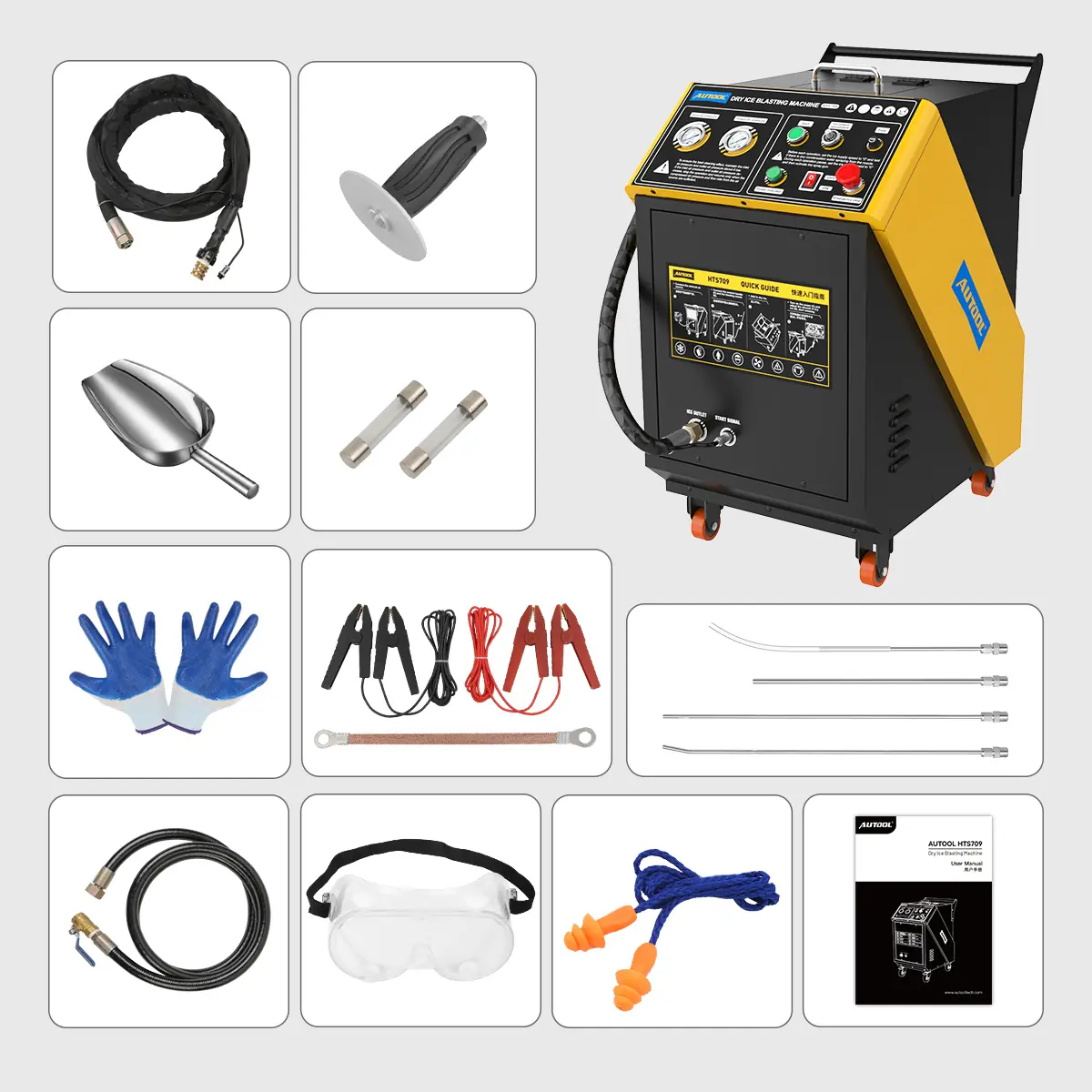
- HTS709 dry ice cleaning machine
- 3 m blasting hose
- Spray gun and extension tubes
- Air inlet hose with valve
- Clamp cables and grounding cable
- Ice scoop, spare fuses and fittings
- Gloves, safety goggles and earplugs
- User manual
How to Use
- Confirm the setupCheck voltage against the nameplate, and prepare dry compressed air, fresh pellets, grounding and ventilation.
- Inspect connectionsCheck hoses, nozzle, grounding, separator and control state before loading.
- Purge moistureRun air with the feed at zero until condensate is cleared.
- Load and testLoad 3 mm pellets and start with a conservative setting on a suitable test area.
- Monitor both pressuresWatch the inlet and outlet gauges and adjust output gradually for the task.
- Collect debrisThe dry ice turns to gas, but loosened carbon and oil still need collecting.
- Clear and shut downSet feed to zero, clear the line as directed, isolate air and power, and inspect wear parts.
Full loading, operating and troubleshooting steps: HTS709 user manual (PDF).
Good to Know
Caution
- Compressor and dry ice are not included. A dehumidifying compressor is recommended to prevent clumping and moisture problems in the lines.
- Connect only to a grounded (earthed) socket that matches the machine’s voltage.
- CO₂, cold and noise: ventilate the area and wear cold-resistant gloves, goggles, hearing protection, protective clothing and closed-toe shoes. Avoid skin contact with dry ice.
- Never aim the nozzle at people, and clear residual pellets before shutdown.
- Test coatings and materials on a small area first, and use lower settings around sensitive surfaces. Use on intake valves or combustion chambers only where the vehicle procedure permits.
Care
- The gauges aid monitoring; material, coating, nozzle, distance, pressure, airflow and operator procedure still decide whether cleaning is suitable.
FAQ
Can dry ice blasting remove paint?
It can remove failing or weakly bonded paint, but its mild-to-medium strength may not be enough for well-bonded coatings; paint type and primer affect the result.
Will it remove rust?
It removes loose surface rust, oxidation and salt, but not deeply adhered rust or pitting. Because it is non-abrasive, it cannot produce a white-metal finish.
What else do I need to start?
A compressed-air source, power supply and dry ice supply. With a portable diesel compressor, an aftercooler helps remove moisture and cool the air.
Where can I get dry ice?
Pellets or blocks are usually available from industrial gas suppliers, welding supply companies and local suppliers, either as needed or on regular delivery.

 English
  German
  Spanish