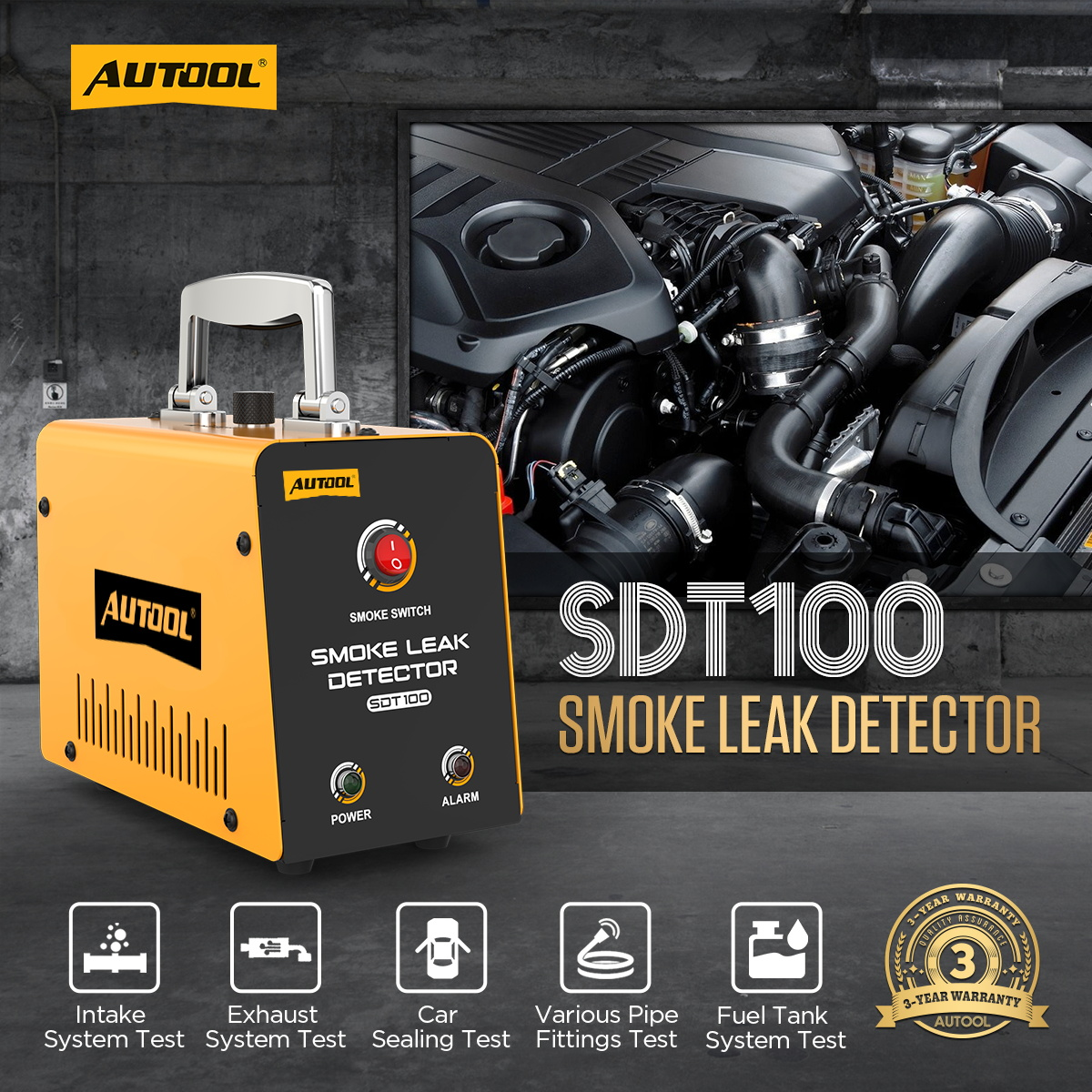
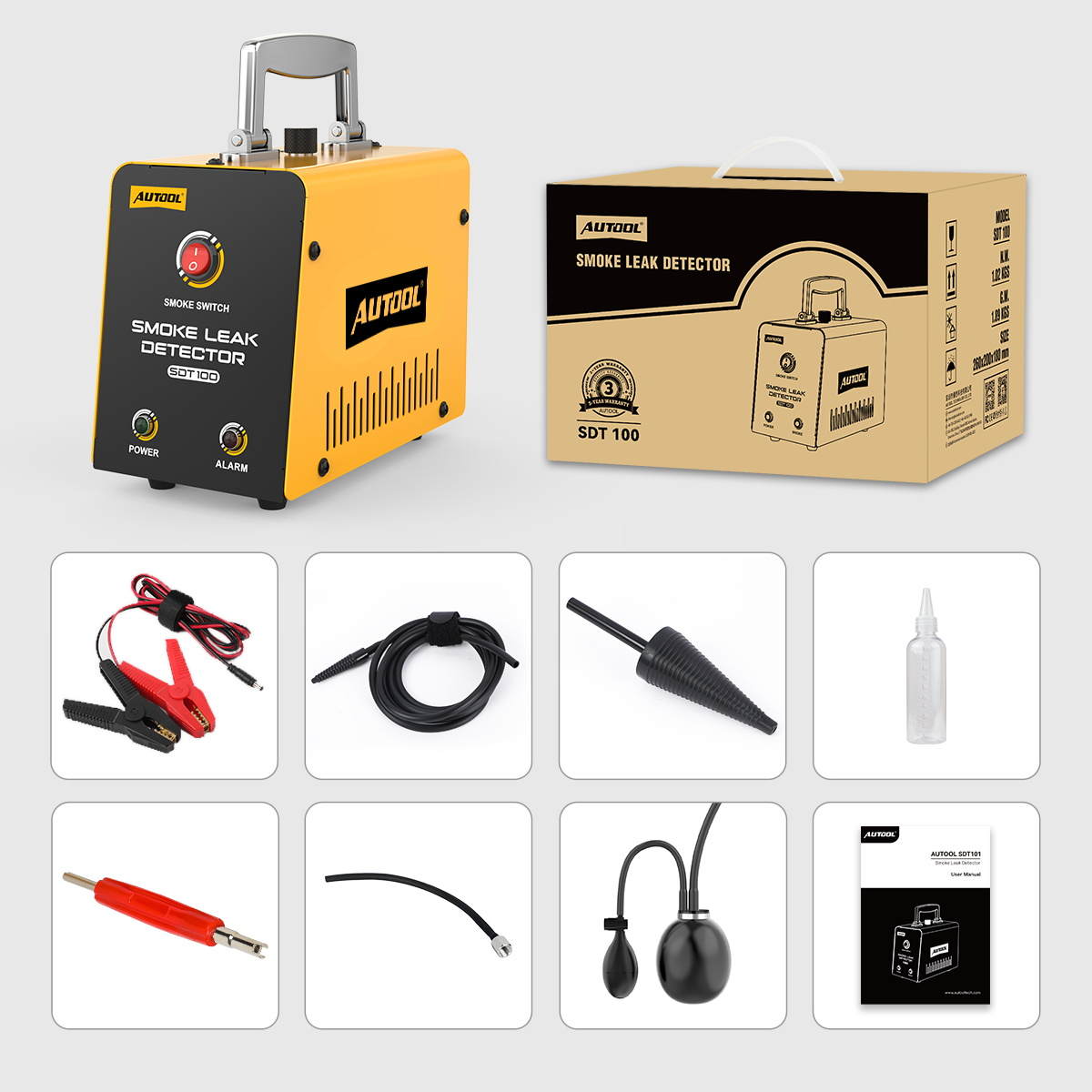
Find Low-Pressure Leaks with Smoke, No Shop Air Needed
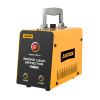
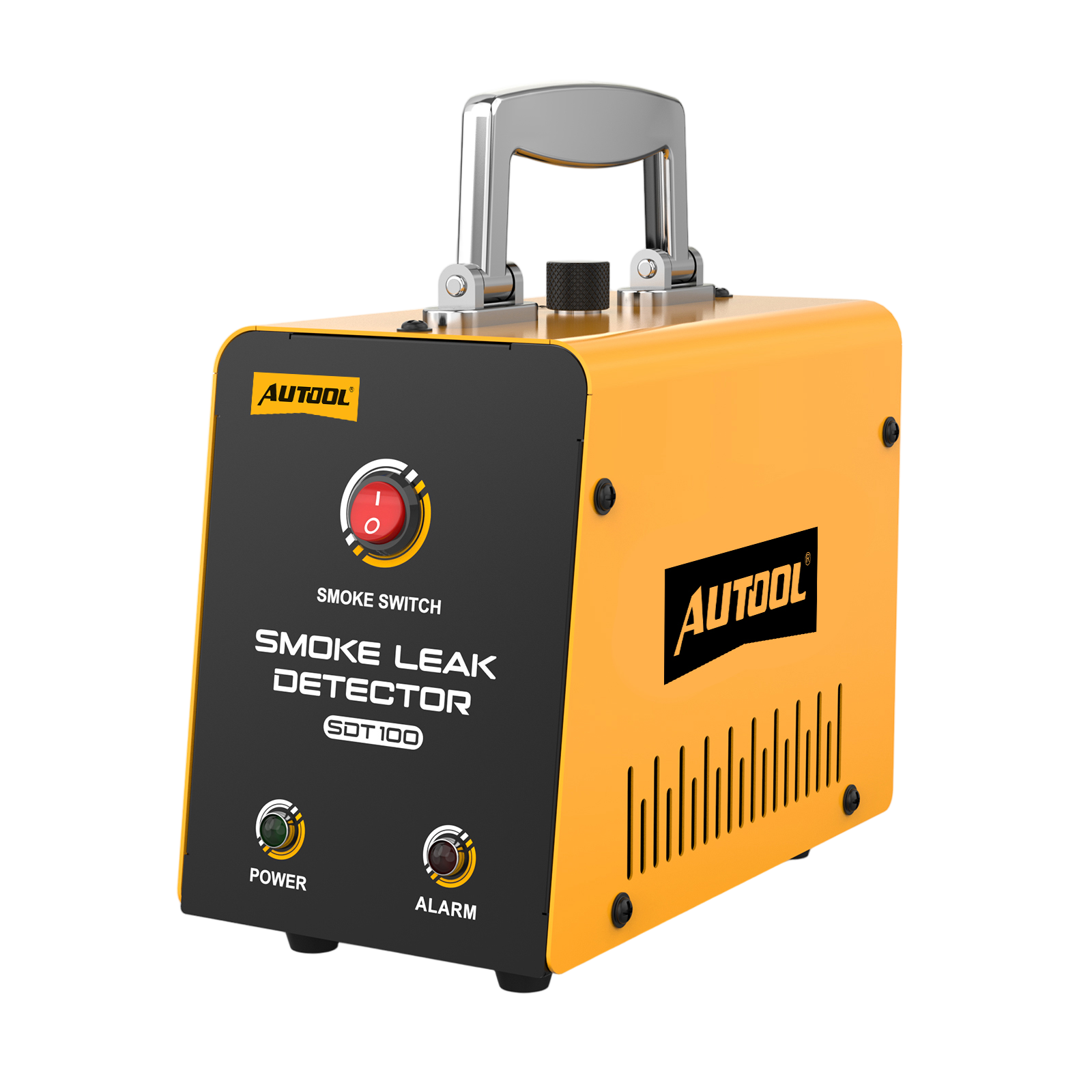
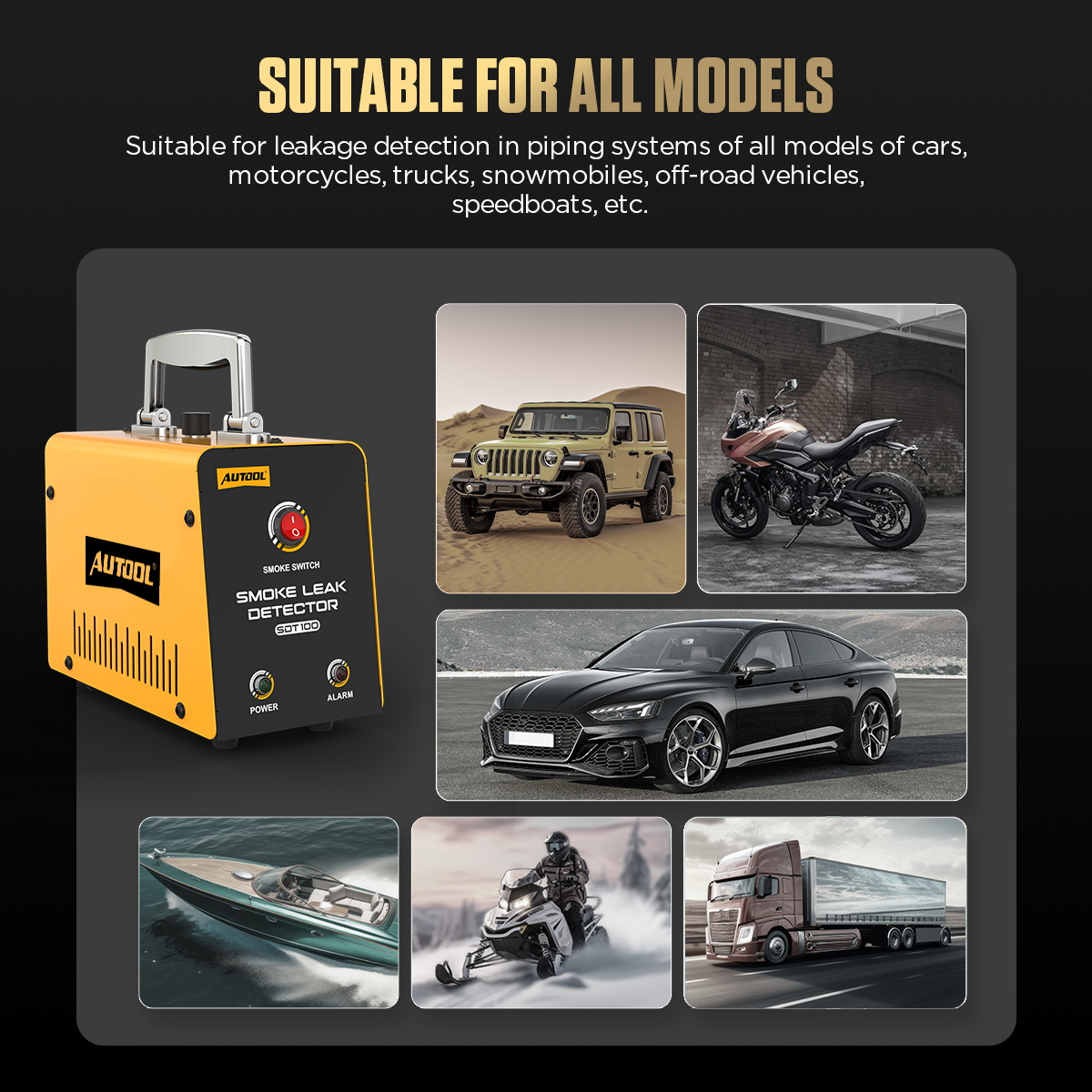
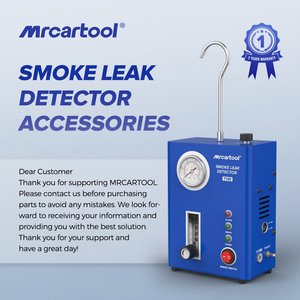
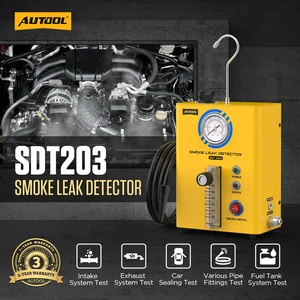
The SDT100 runs from a 12 V vehicle battery and uses its built-in pump to push visible smoke through EVAP, vacuum, intake, exhaust, crankcase and other low-pressure systems. Output is fixed and it cannot pressure-test an A/C system directly. Testing oil is not included.
- Built-In Air Pump
- Smoke in About 5 s
- 12 V Battery Powered
- Overheat Protection
- Fault Indicator
Key Features
-
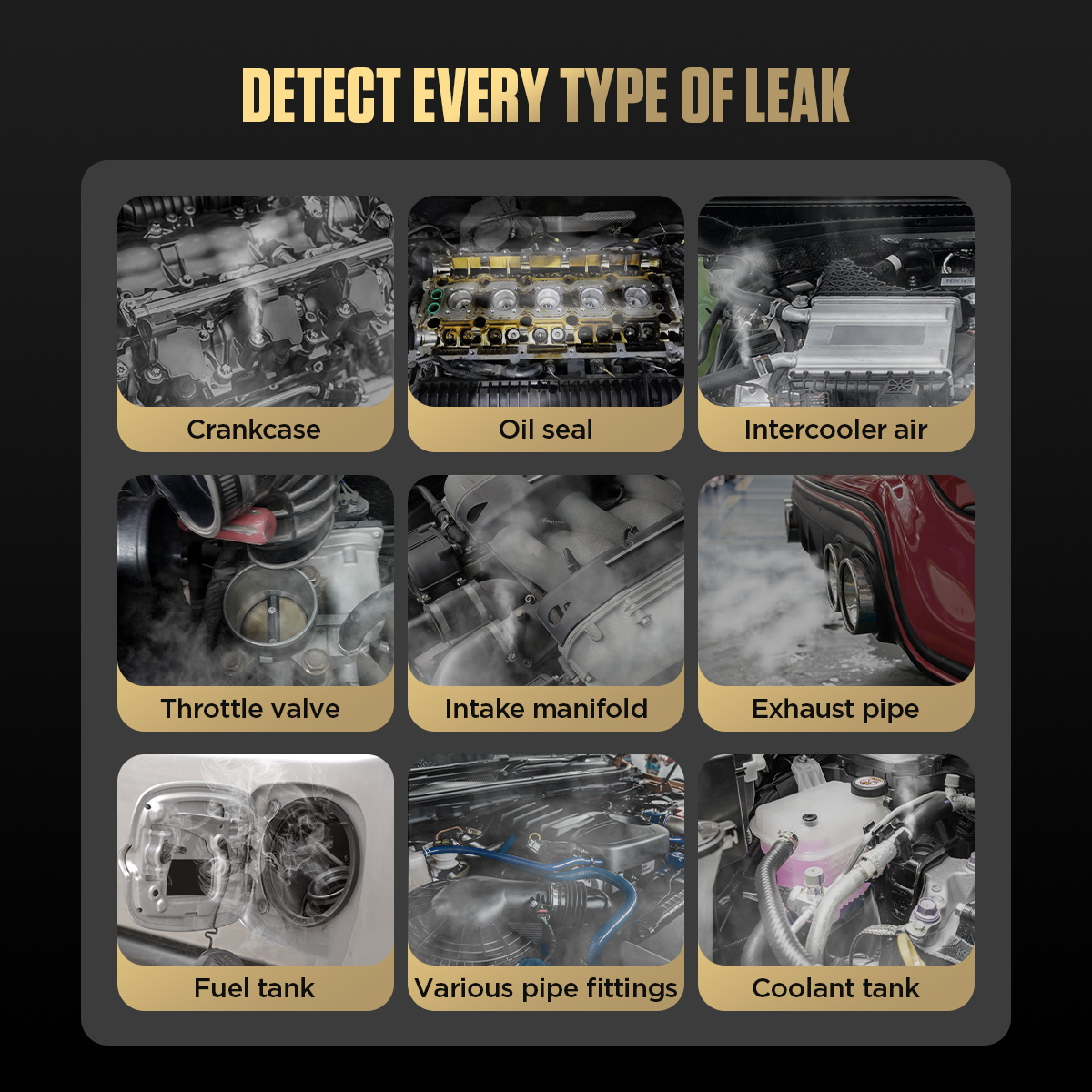
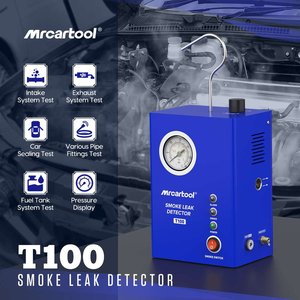
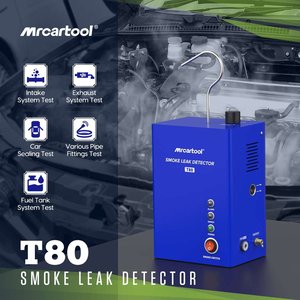
EVAP and Vacuum Leak Detection
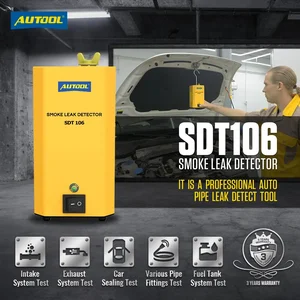
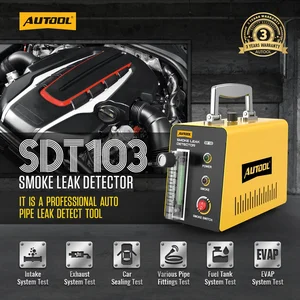
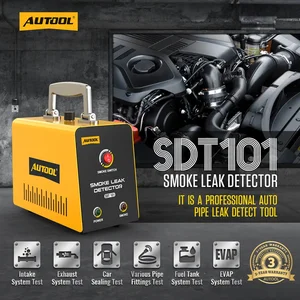
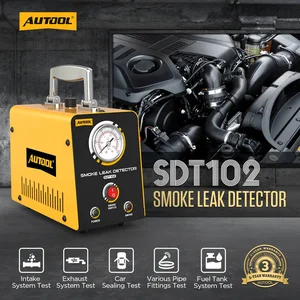
Also checks intake and exhaust systems, crankcases, oil seals, intercooler air paths, fuel and coolant tanks, line fittings and low-pressure turbo systems.
-
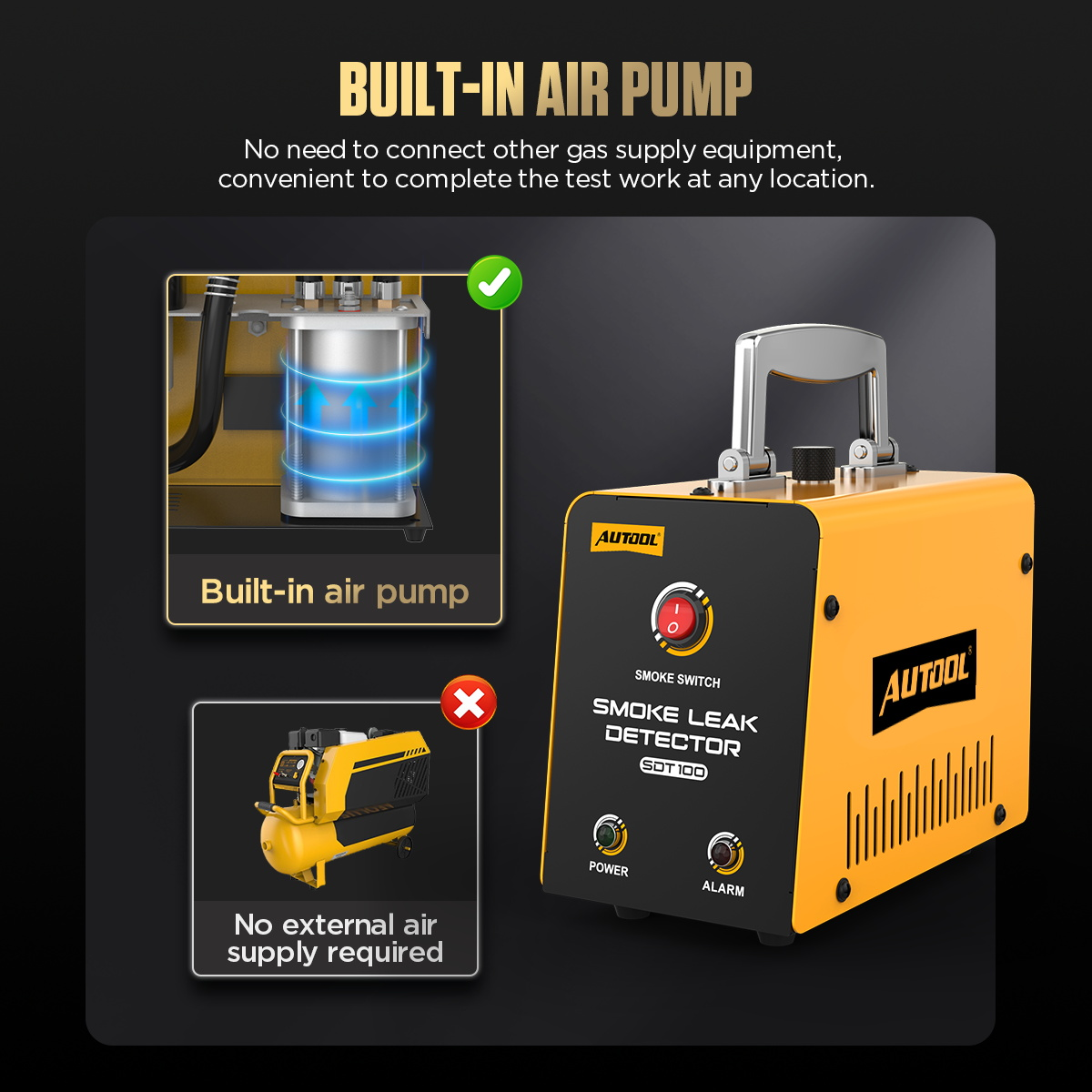
Built-In Air Pump
No separate compressor or pump is needed, which shortens setup.
-
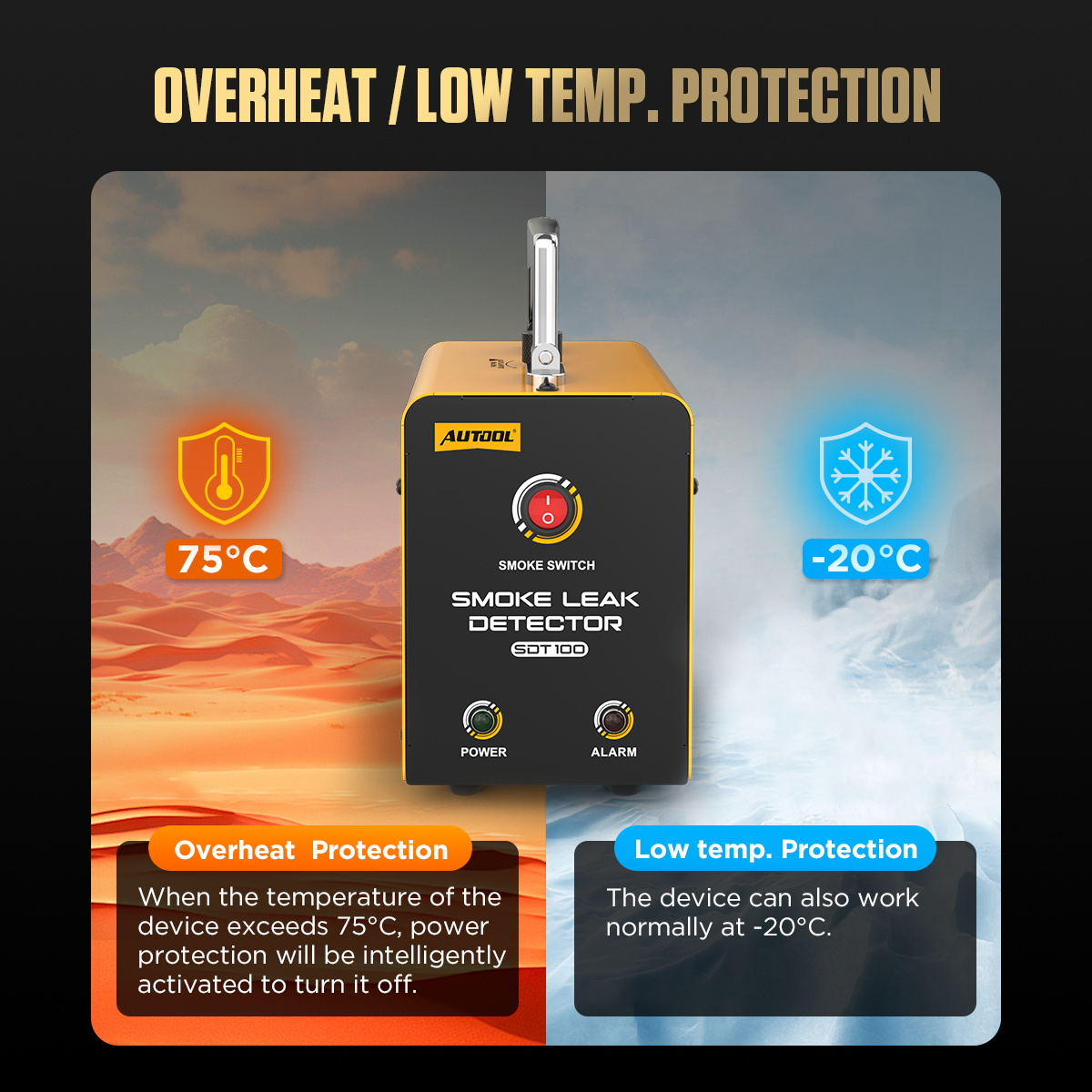
Overheat and Low-Temperature Protection
Protection stops operation automatically when needed.
-
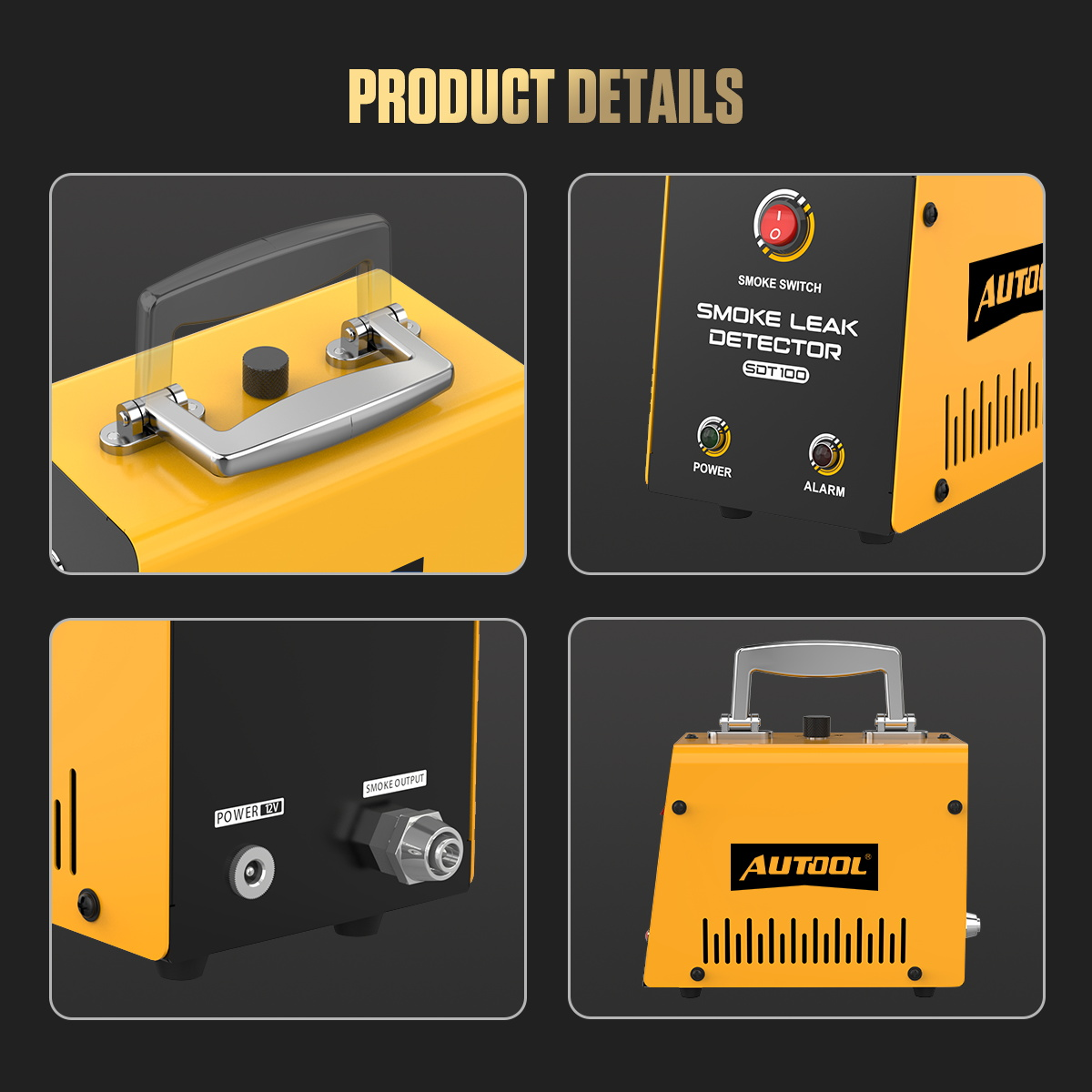
Grouped Controls
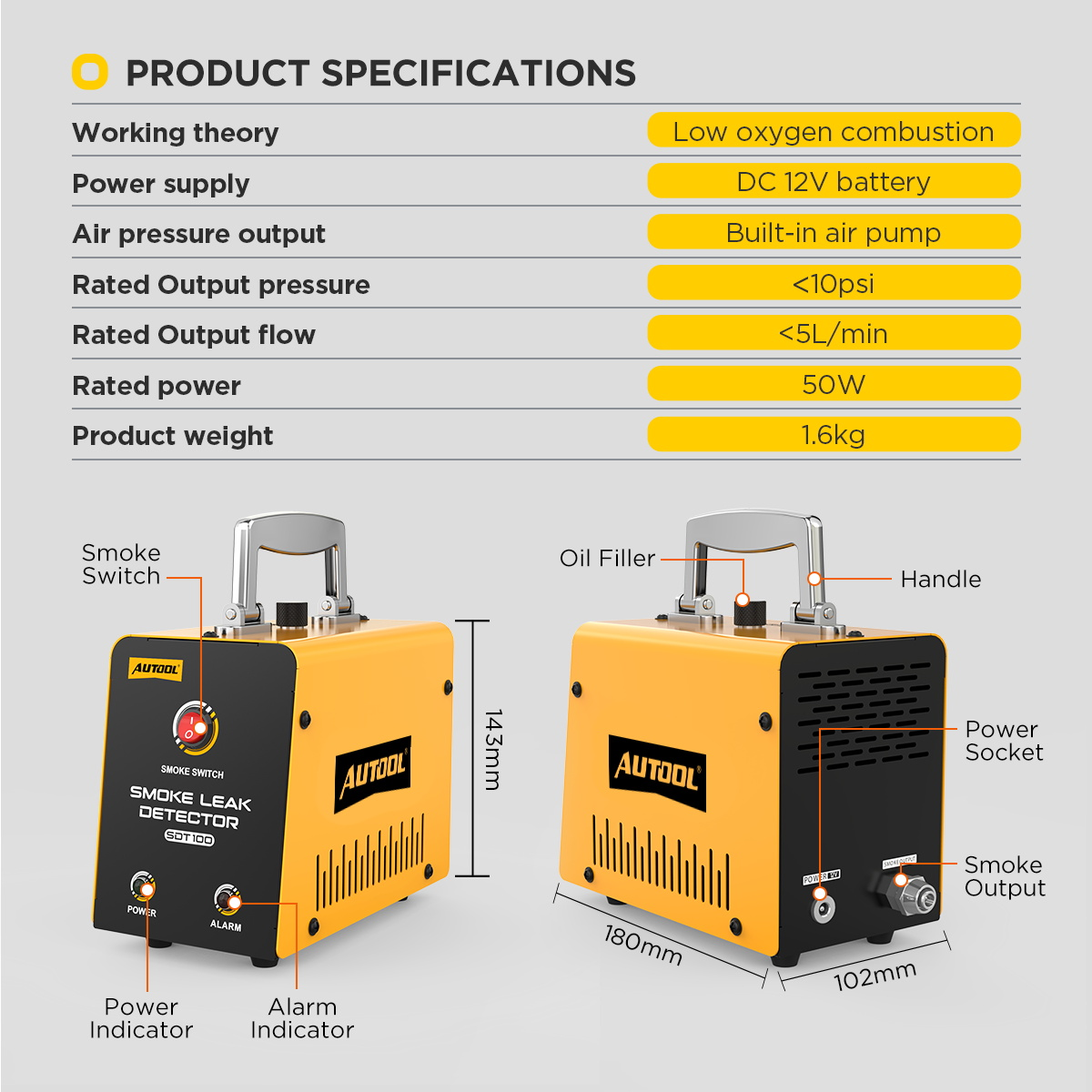
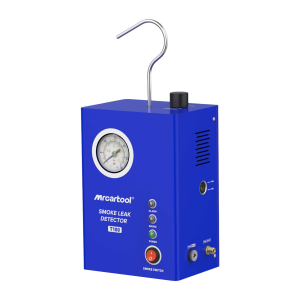
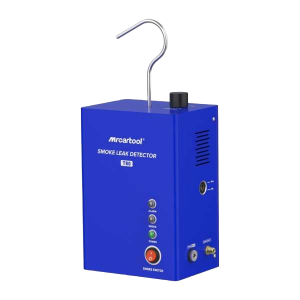
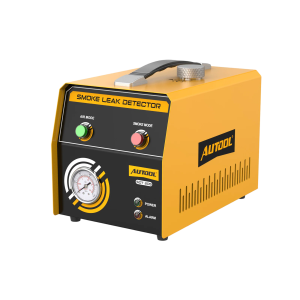
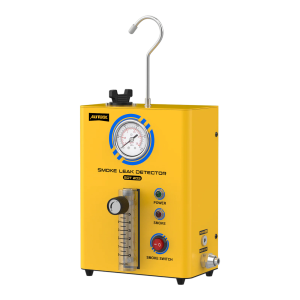
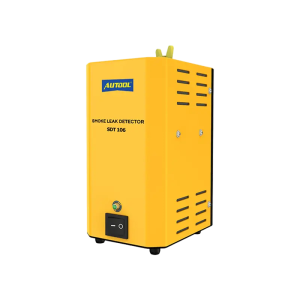
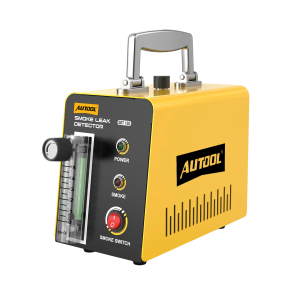
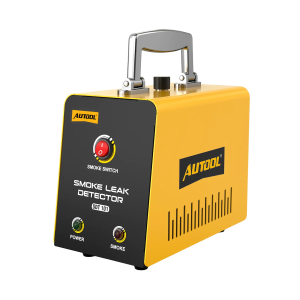
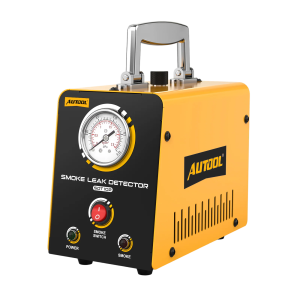
Smoke switch, power and alarm indicators, oil filler, smoke output, power socket and handle sit in one compact layout.
Model Comparison
| SDT60 | SDT100 | SDT102 | |
|---|---|---|---|
| Rated output flow | <5 L/min | <5 L/min | >6 L/min |
| Pressure gauge | Yes | No | Yes |
| Fault indicator light | No | Yes | Yes |
| Rated power | 50 W | 50 W | 48 W |
What’s in the Box
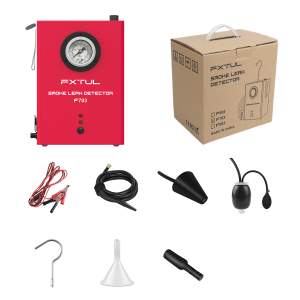
- SDT100 smoke leak detector
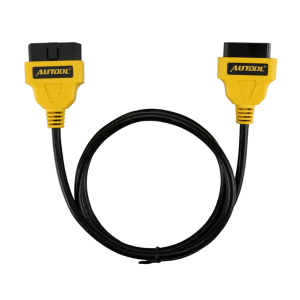
- 12 V battery clamp cable
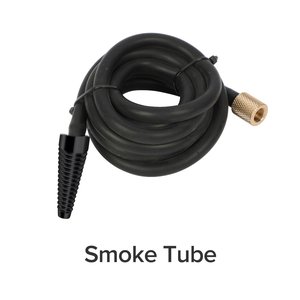
- Smoke output hose
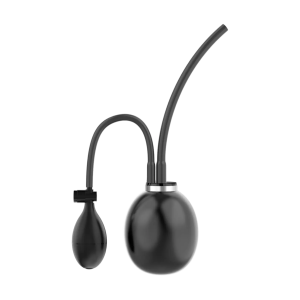
- Cone adapter, red connector, thin hose and airbag adapter
- Empty testing oil bottle
- User manual
How to Use
- Add testing oilFill with baby oil or liquid paraffin; do not overfill.
- Connect the test lineDisconnect the line to be tested and connect it to the detector, hanging the unit if needed.
- Connect 12 V powerClamp to the battery and switch the detector on.
- Locate leaksThe line fills with smoke in about 30 seconds; look for escaping smoke, using a headlamp if necessary.
- Repair and retestRepair the confirmed leak and repeat the same test; continue with the vehicle procedure if no smoke is visible.
Smoke generation, test-oil handling and troubleshooting: SDT100 user manual (PDF)
Good to Know
Caution
- Testing oil is not included; use dedicated smoke oil, liquid paraffin or baby oil.
- Not for direct A/C pressure testing; smoke can only aid inspection of an isolated, separately pressurized A/C line section.
- Never refill testing oil while the unit is running.
- The metal housing gets hot in use; avoid touching it and let the unit cool before restarting after overheat shutdown.
Care
- Refill only when the smoke becomes thin, and drain remaining oil before adding fresh oil.
- The fault indicator shows unit status, not pressure or airflow.


 English
  German
  Spanish