Clean Four Gasoline Injectors, Then Compare Them Side by Side
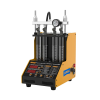
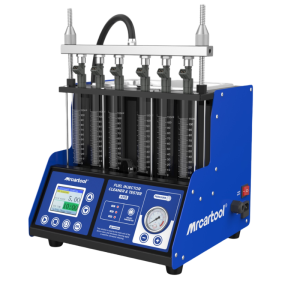
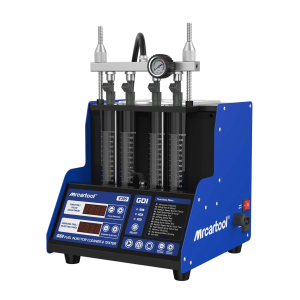
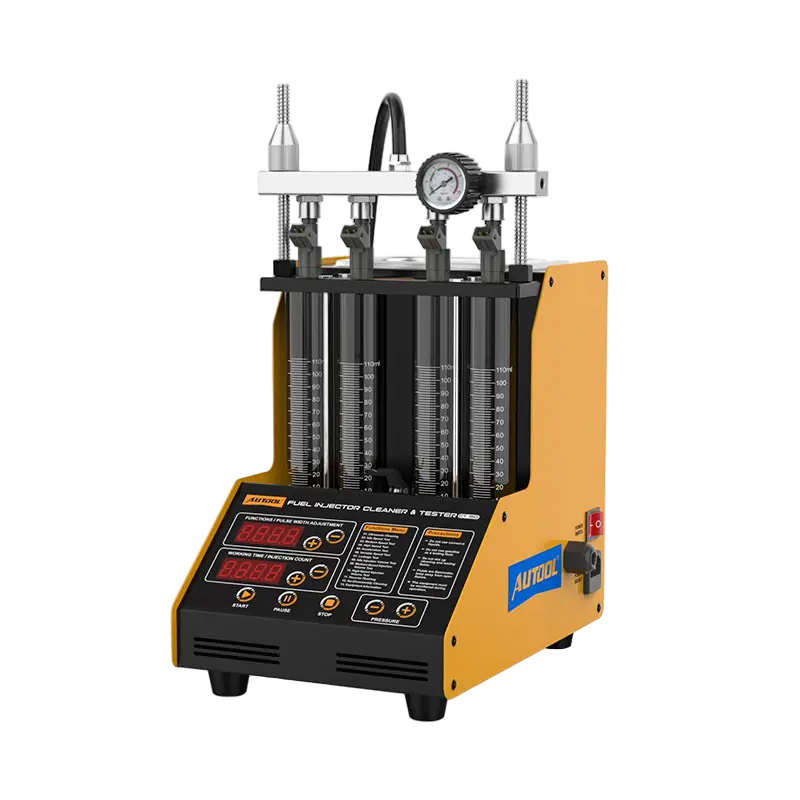
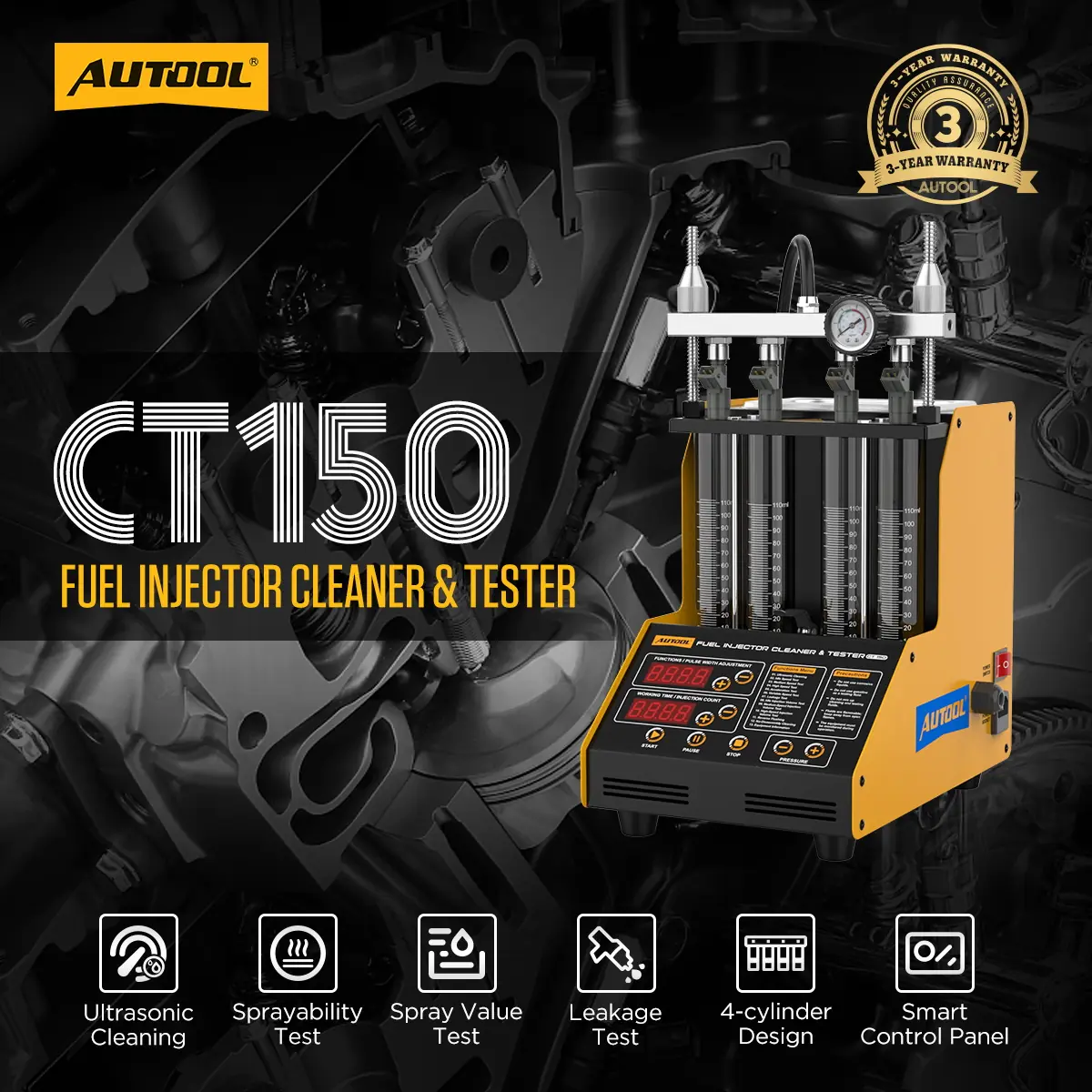
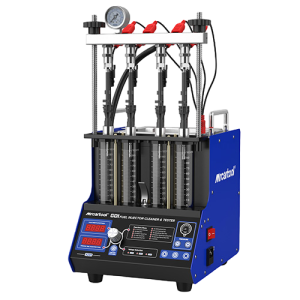
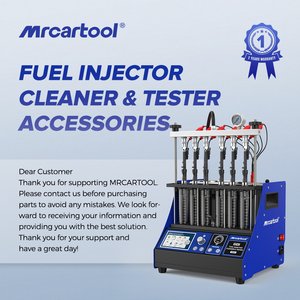
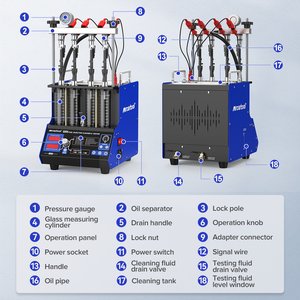
The CT150 ultrasonically cleans up to four standard 12 V gasoline injectors, then runs low-pressure leakage, spray and volume comparisons under matched settings so you can see whether cleaning changed the result. It does not test diesel or GDI injectors and does not heat the cleaning fluid.
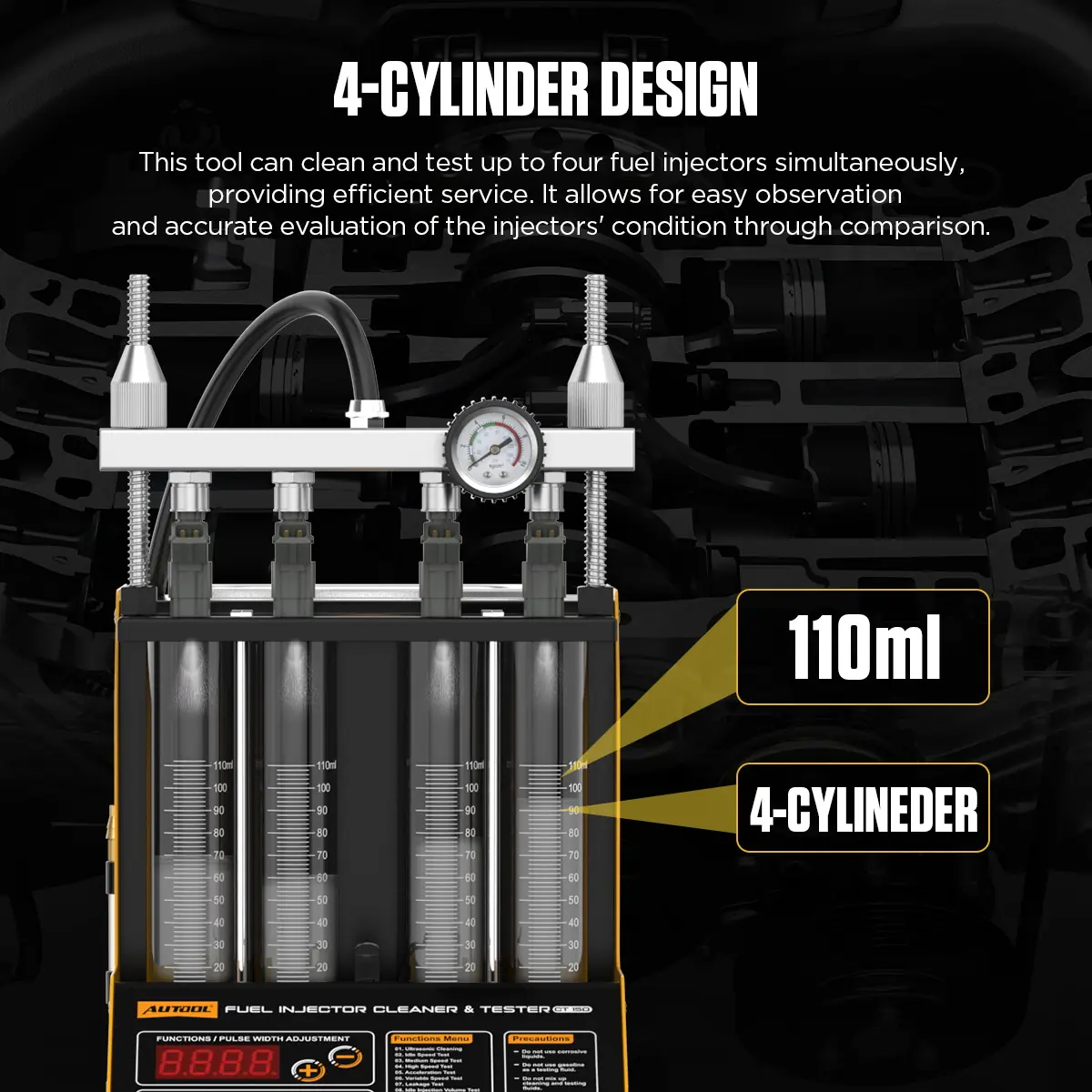
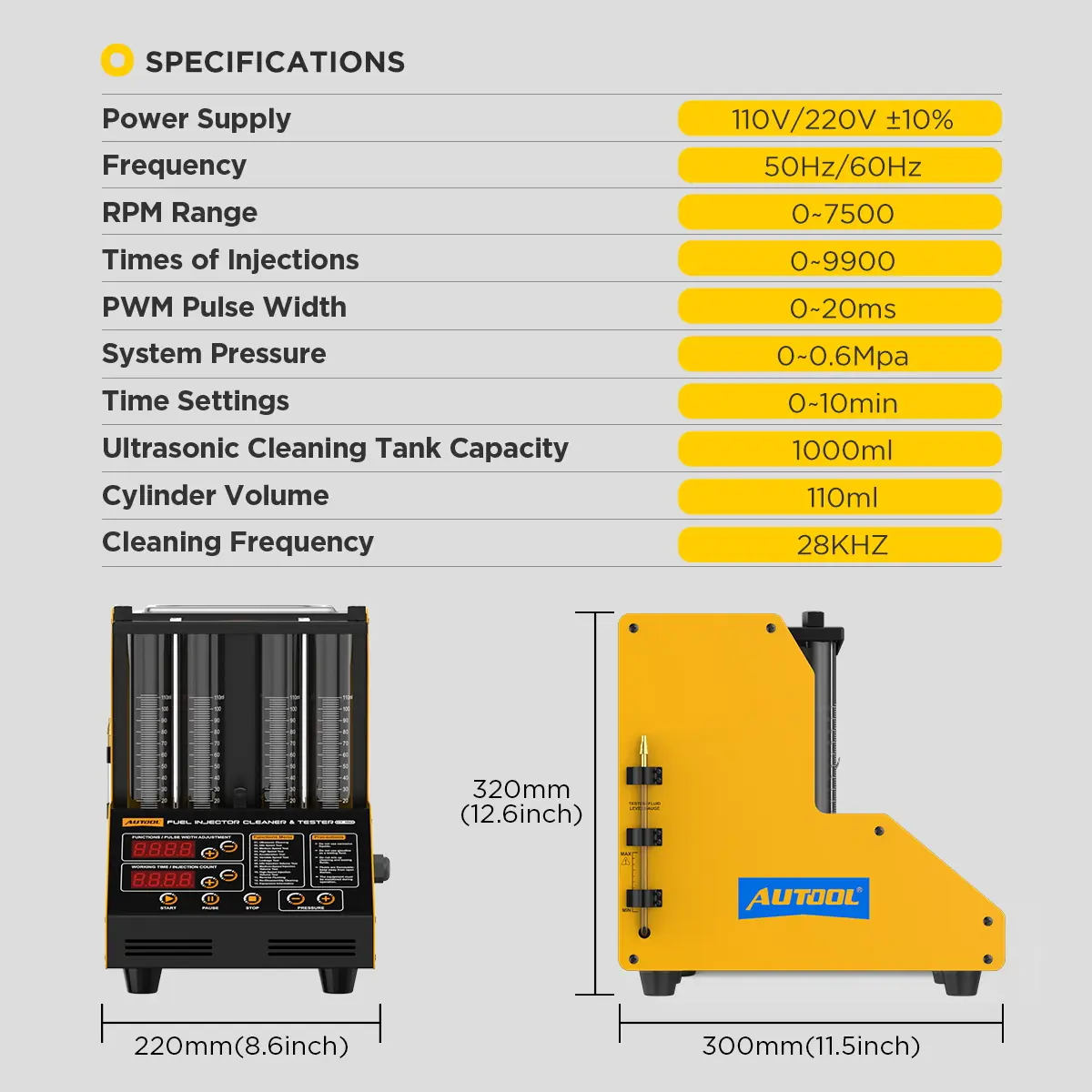
- 4 Injector Positions
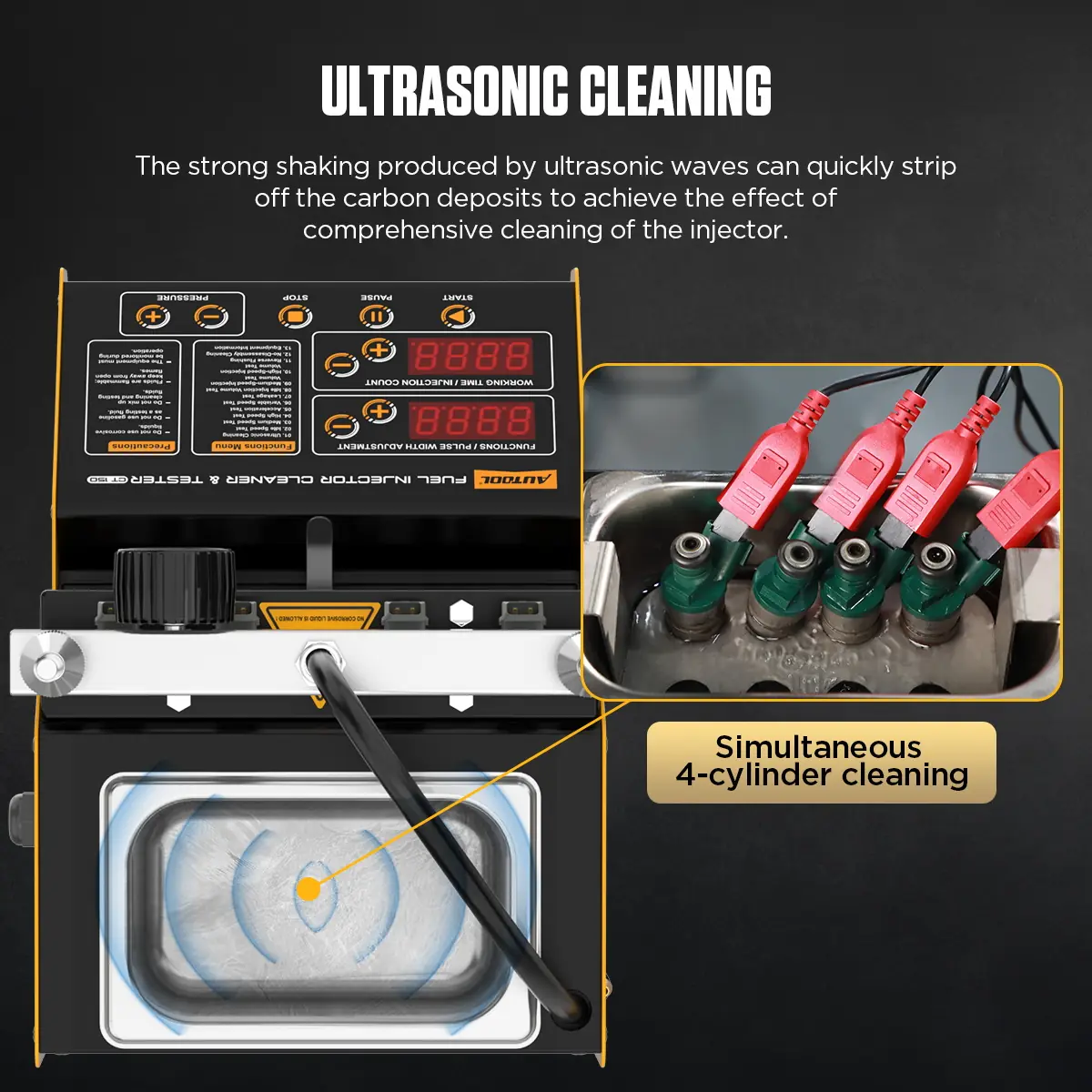
- 1000 mL Ultrasonic Tank
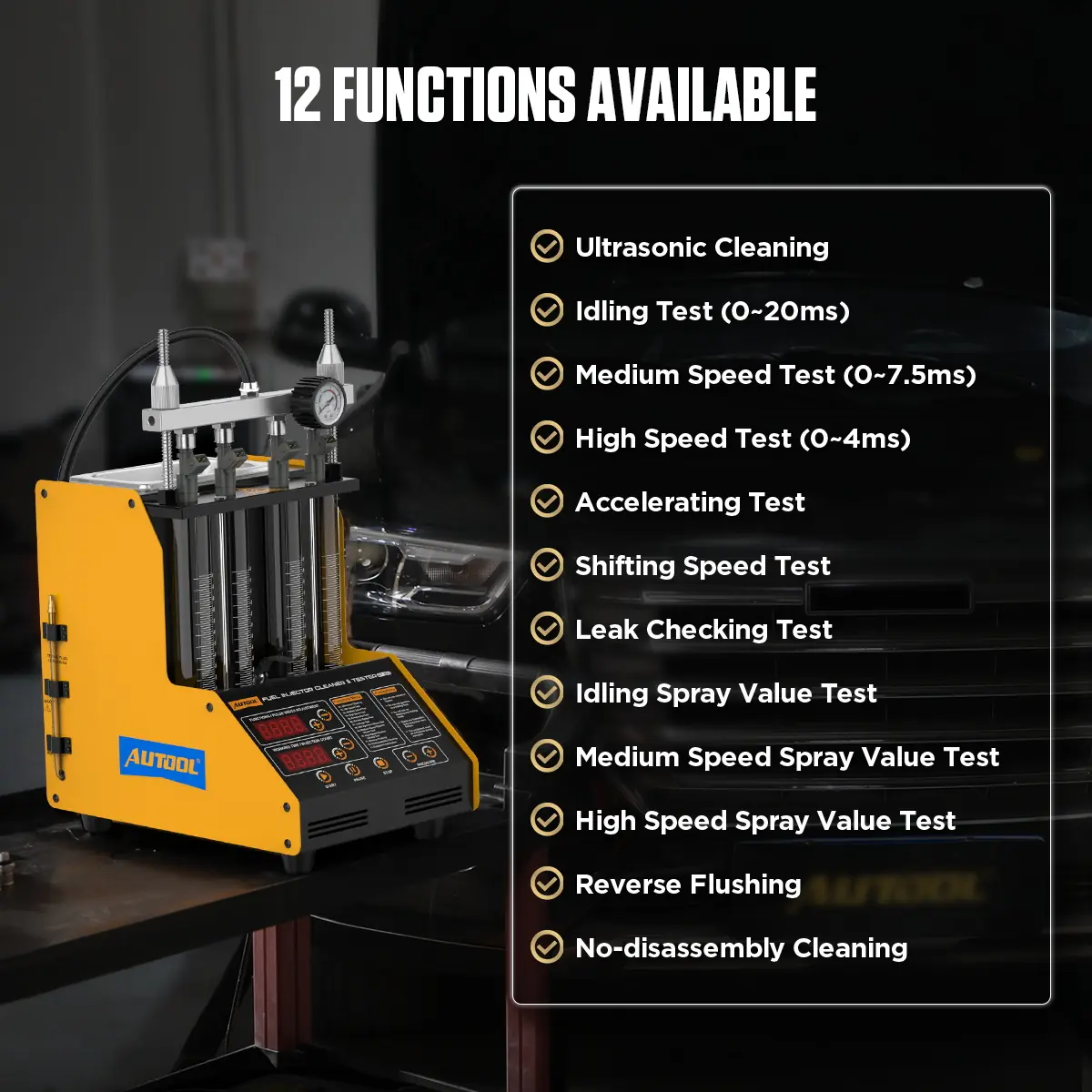
- 12 Functions
- 0–7500 rpm Simulation
Key Features
-
Ultrasonic Cleaning
Loosens deposits from compatible injectors in the tank using approved cleaning fluid, before a matched retest.
-
Four-Position Visual Comparison
Compare spray appearance and collected volume of up to four injectors under the same settings.
-
Leak, Spray, Flow and Blockage Checks
Watch for closed-state dripping, deflected or split spray, and low collected volume that points to a restriction.
-
Simulated Operating Conditions
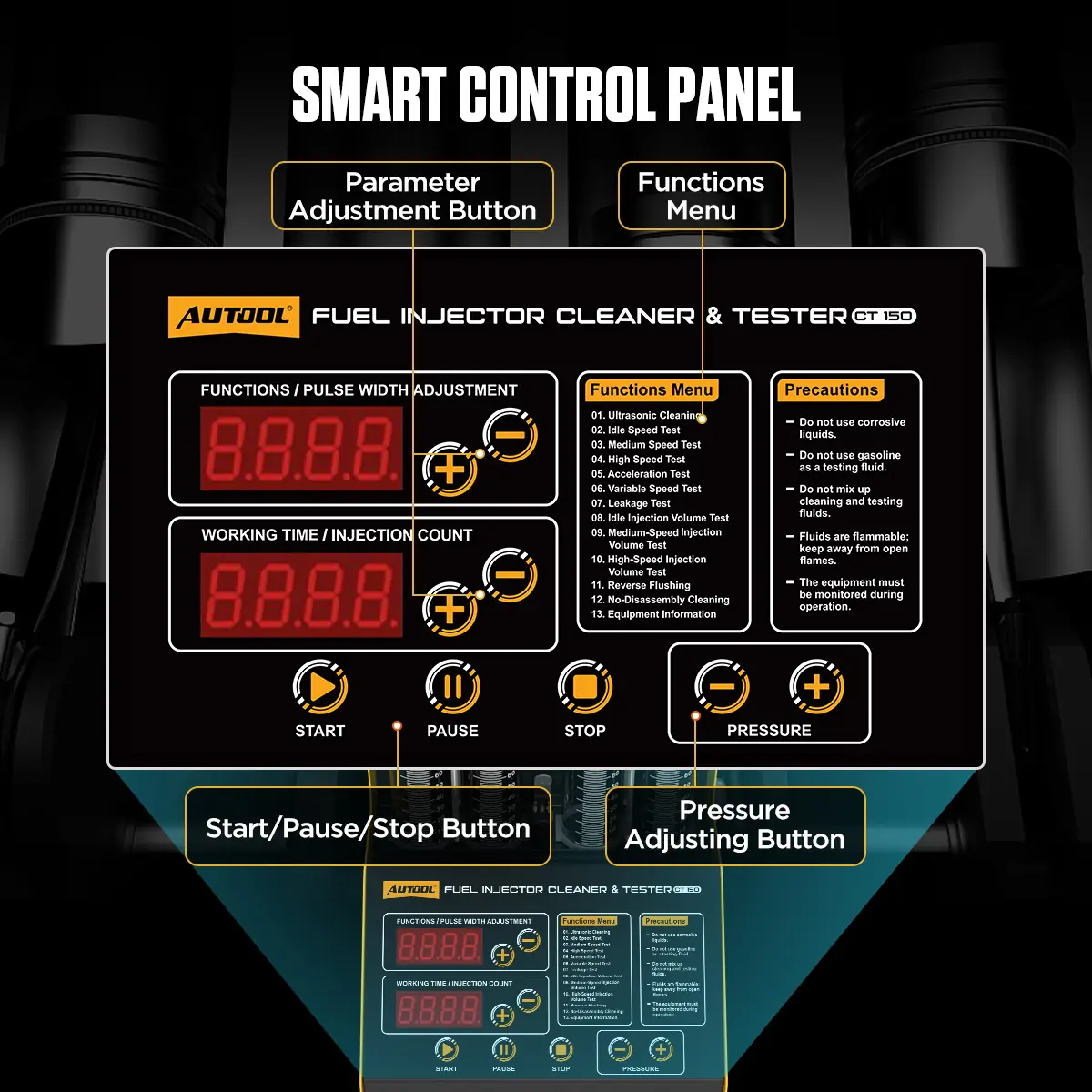
Idle, medium-speed, high-speed, acceleration and variable-speed modes, with pulse width, time or injection count and pressure set from the panel.
-
Reverse Flushing
Back-flush compatible injector designs, then repeat the normal comparison to judge the result.
-
Fuse Protection
An internal fuse interrupts operation on a short circuit; find the cause before restarting.
More Specifications
| Function split | 3 cleaning, 9 testing |
|---|---|
| Fuel pump | 1 built-in |
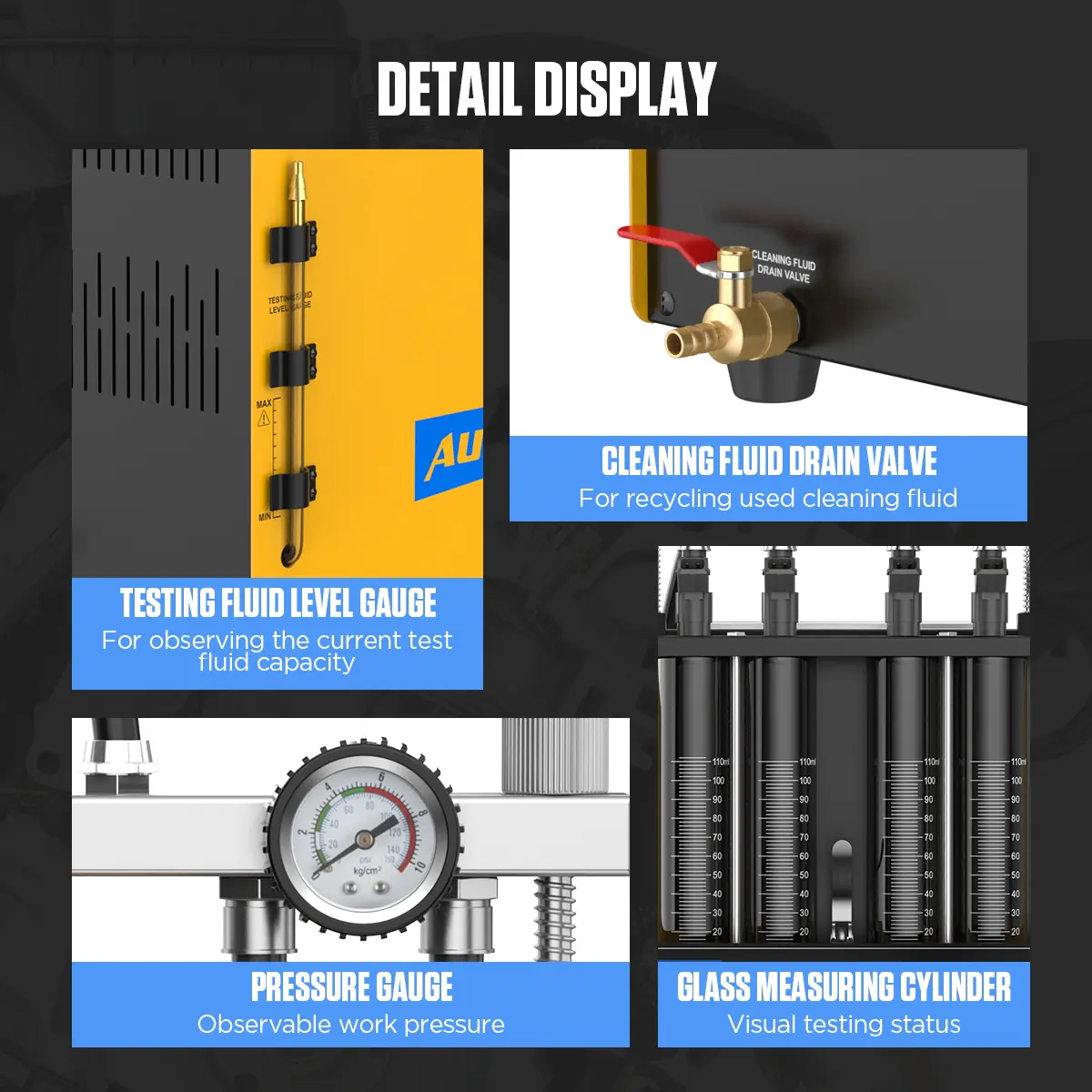
| Displays | LCD and pressure gauge |
| Fluid handling | Test liquid level gauge, cleaning fluid recovery valve |
| Panel language | English or Russian panel version; no in-menu switch |
CT150 vs CT160 vs CT200
| CT150 | CT160 | CT200 | |
|---|---|---|---|
| Injector positions | 4 | 4 | 6 |
| Cleaning tank | 1000 mL | 2000 mL | 1700 mL |
| Fluid heating | No | Yes, 45 °C | No |
| Adapter types | 3 | 5 | 3 |
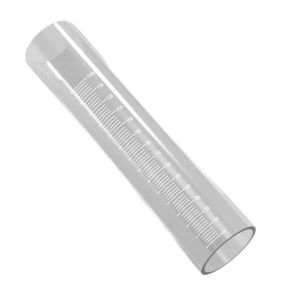
| Test tube volume | 110 mL | 100 mL | 110 mL |
What’s in the Box
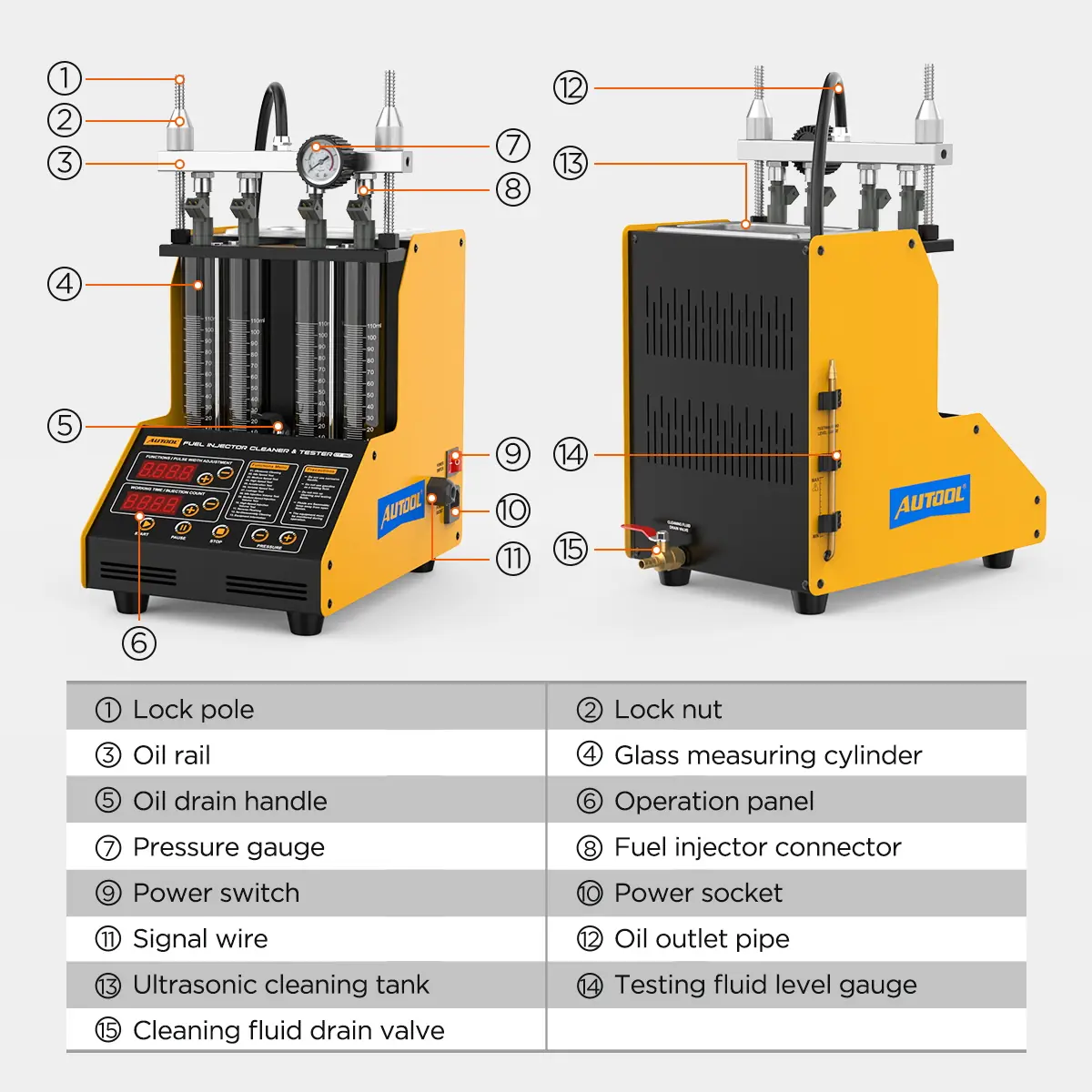
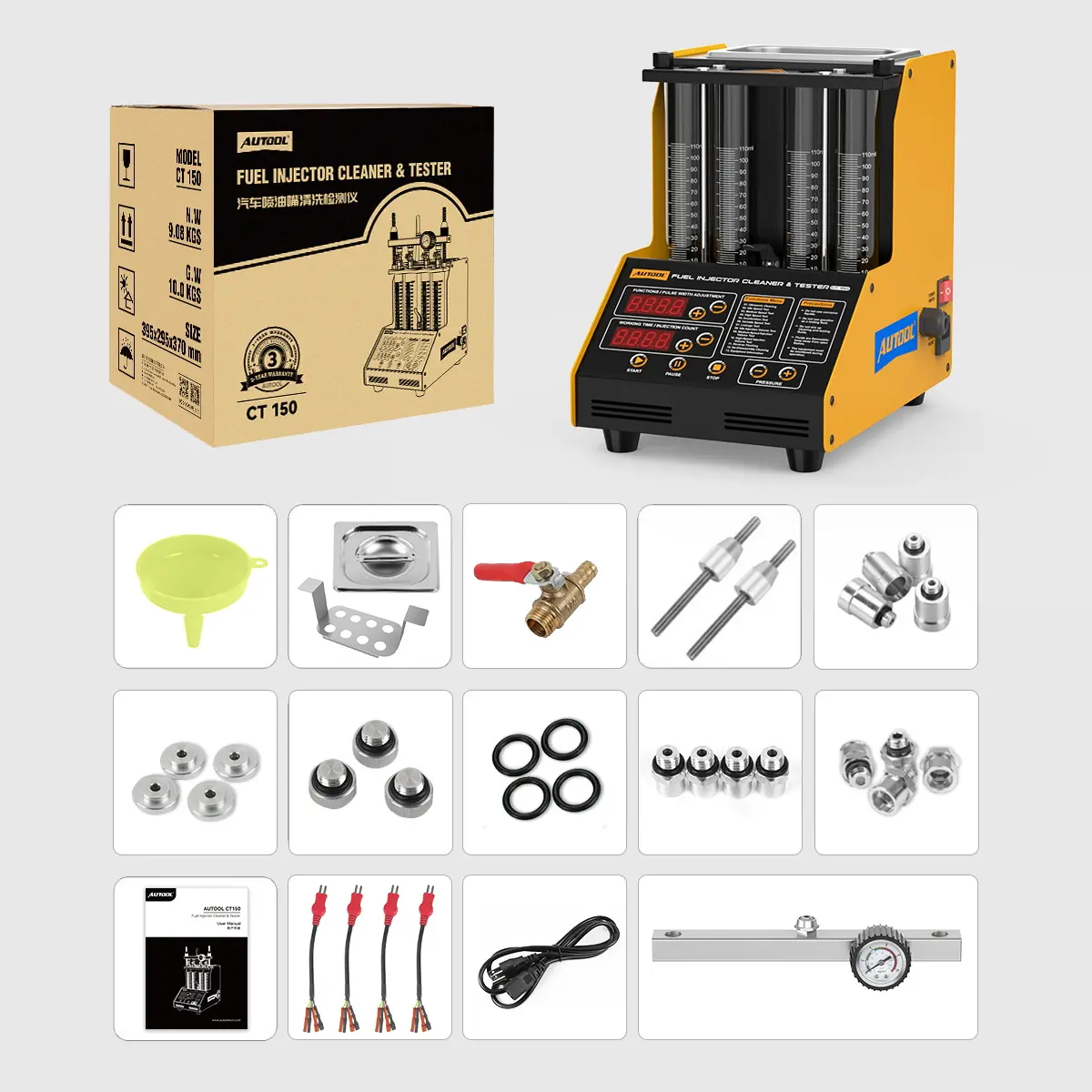
- CT150 fuel injector cleaner and tester
- Power cable and injector signal harnesses
- Fuel rail assembly with pressure gauge
- Funnel, ultrasonic tank cover and drain valve parts
- Adapter connectors, position plugs, O-rings, seals and fittings
- User manual
How to Use
- Record a baselineNote each injector’s position and the fluid, pressure, pulse, mode and time; test before cleaning where useful.
- Clean the exteriorRemove loose dirt with a suitable cleaner before the ultrasonic bath.
- Run ultrasonic cleaningFill the tank with approved fluid below the pulse connector, connect the pulse lead and run the cleaning program.
- Mount and fillSecure up to four injectors, plug unused positions and add non-corrosive test fluid.
- TestRun leakage, spray, volume, simulated-speed and reverse-flush modes as needed.
- Retest under matched conditionsRepeat with the same positions and settings and record whether the difference changed.
Setup, test modes and troubleshooting: CT150 user manual (PDF)
Good to Know
Caution
- Never run the ultrasonic tank dry; it can damage the ultrasonic system.
- Never use cleaning liquid as test fluid. It can corrode rubber parts, cause leaks and damage the machine.
- Testing is limited to compatible standard 12 V gasoline injectors. Diesel injectors may be ultrasonically cleaned only where the injector maker permits it; diesel and high-pressure GDI testing need dedicated equipment.
- Cleaning and test liquids are flammable: work in a ventilated area away from ignition sources and stop if leaks or abnormal heating occur.
Care
- Confirm injector part number, resistance, connector, seals and adapter fit before testing.
- When testing one injector, seal the other three positions with the plugs and check all seals before pressurizing.
- Choose the correct 110 V or 220 V input and regional plug before ordering.
FAQ
What cleaning fluid should I use?
Professional injector ultrasonic cleaning fluid gives the intended effect. Engine carbon cleaning fluid can also be used, and 75%+ medical alcohol is an alternative with a weaker result.
Can the CT150 prove an injector is within specification?
No. It compares injectors under the same low-pressure settings. Use the injector specification or service procedure when a defined pass limit is required.
The bench result is balanced but the engine still misfires. What next?
Continue with ignition, compression, intake-leak, fuel-supply, wiring and control-system checks.
Can it clean injectors or a throttle body without removal?
Yes, with optional accessories sold separately. Confirm the kit and application before ordering.


 English
  German
  Spanish