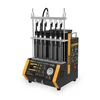
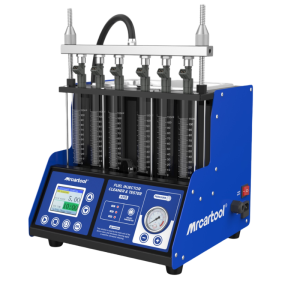


Clean and Compare Six Injectors With Selectable Drive Voltage
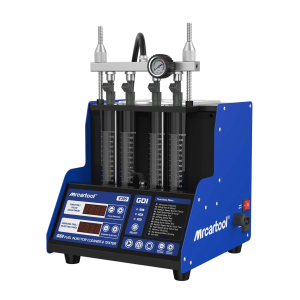
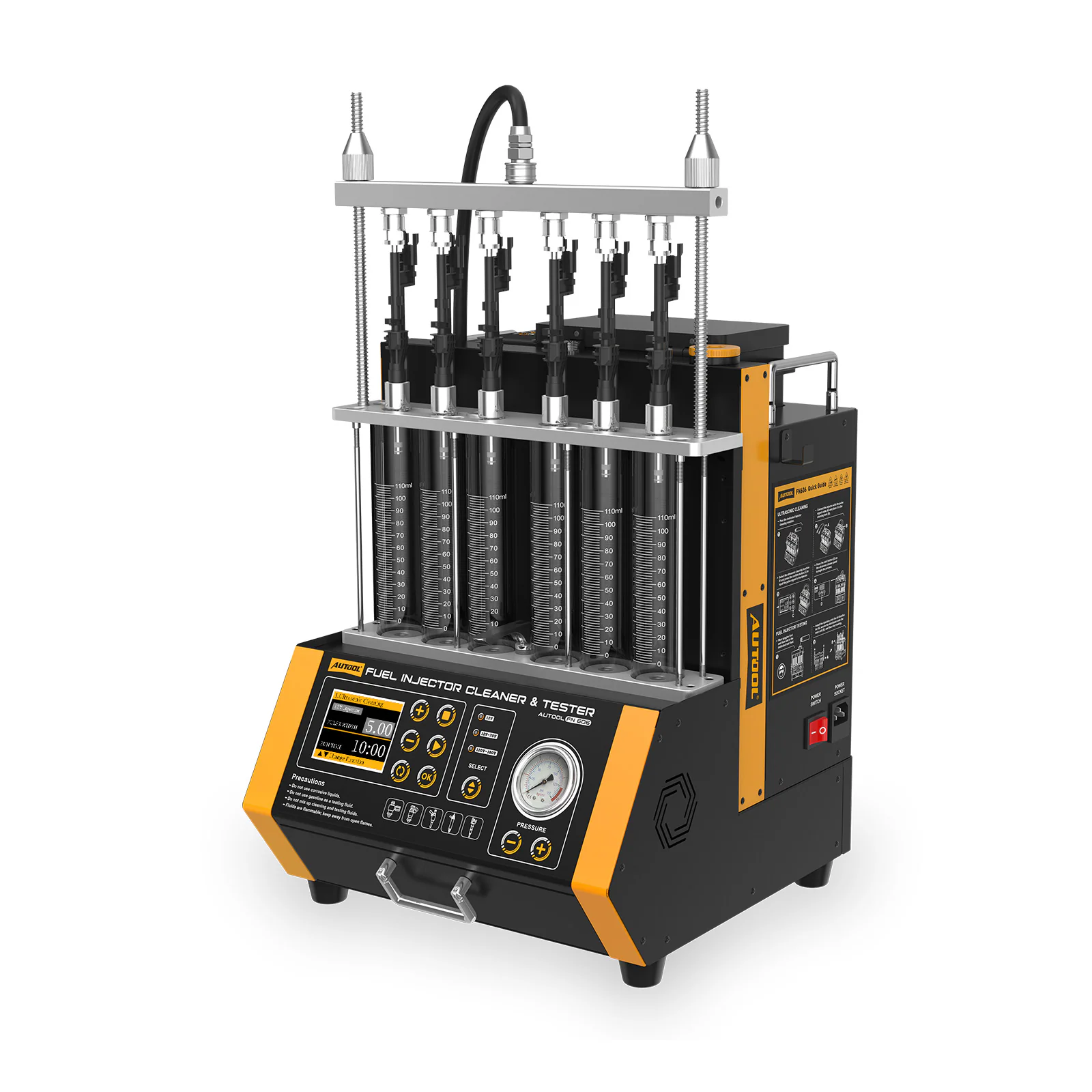
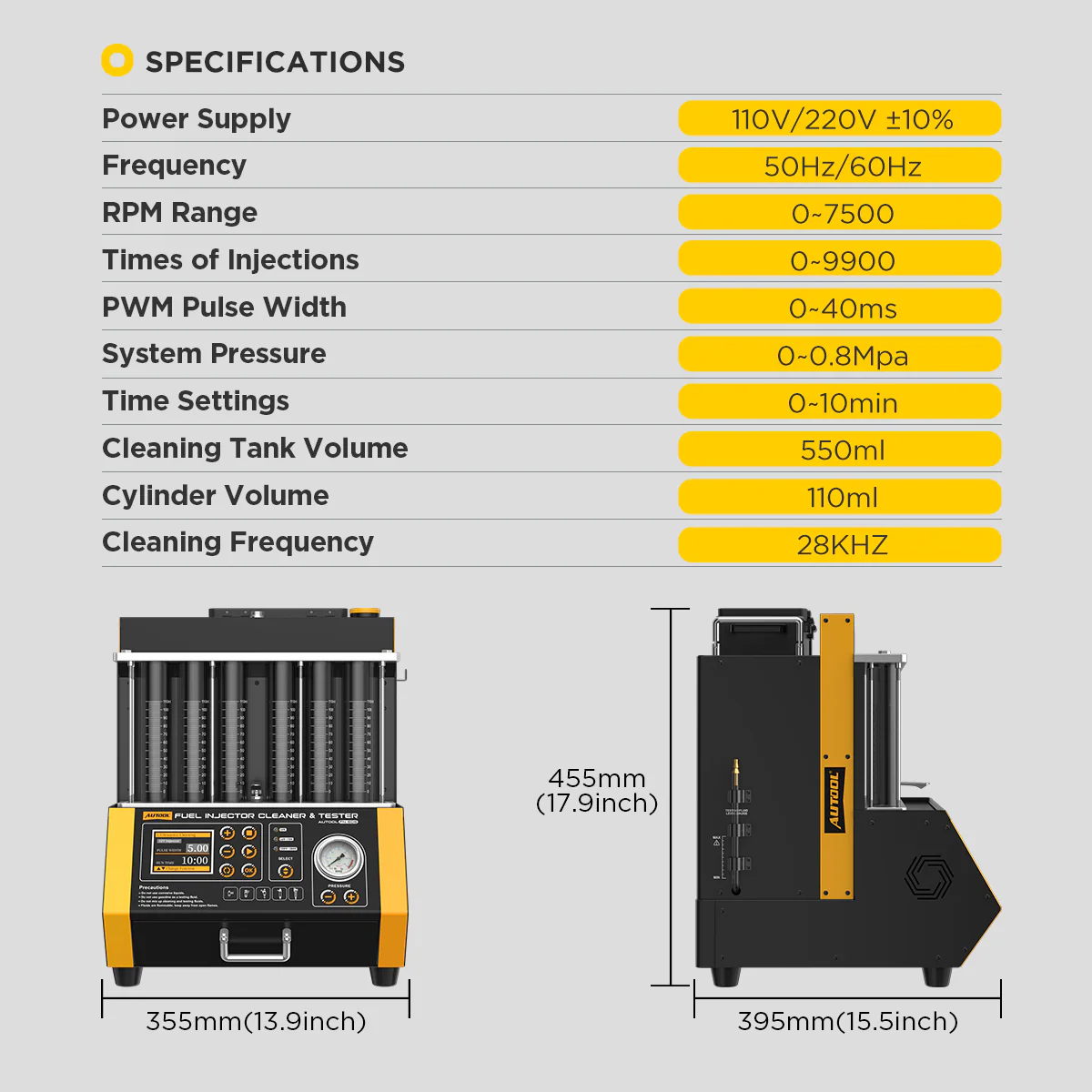
The FN606 tests up to six standard gasoline, EFI, FSI or compatible GDI injectors side by side for spray, leakage and delivered volume, and cleans them in a detachable heated ultrasonic unit. Bench pressure tops out at 0.8 MPa, so it is for controlled comparison, not full-pressure GDI testing.
- 6 Injectors
- 3 Drive Ranges
- 0–40 ms Pulse
- 550 ml Detachable Cleaner
- 3 Cleaning + 12 Tests
Hauptmerkmale
-
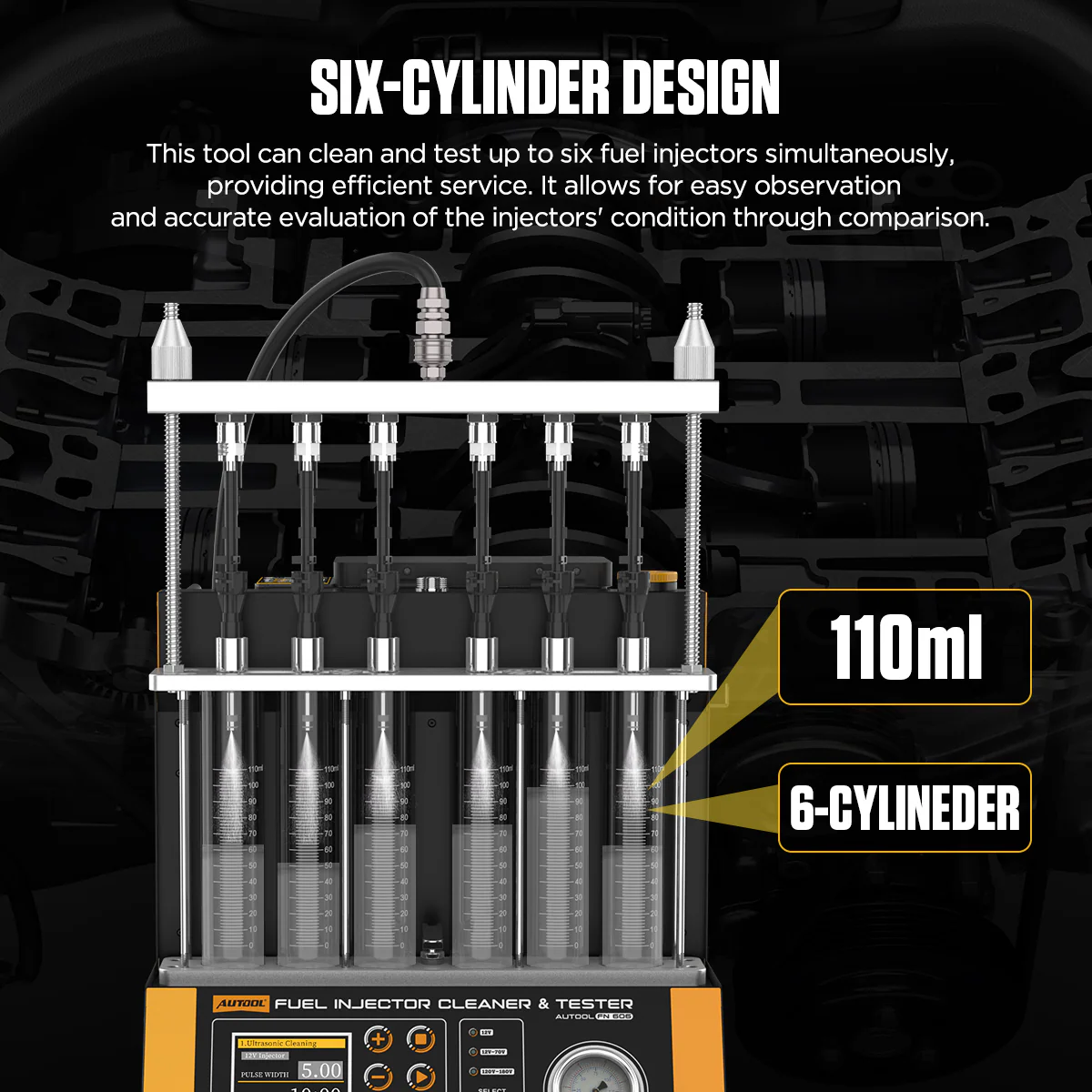
Six-Position Comparison
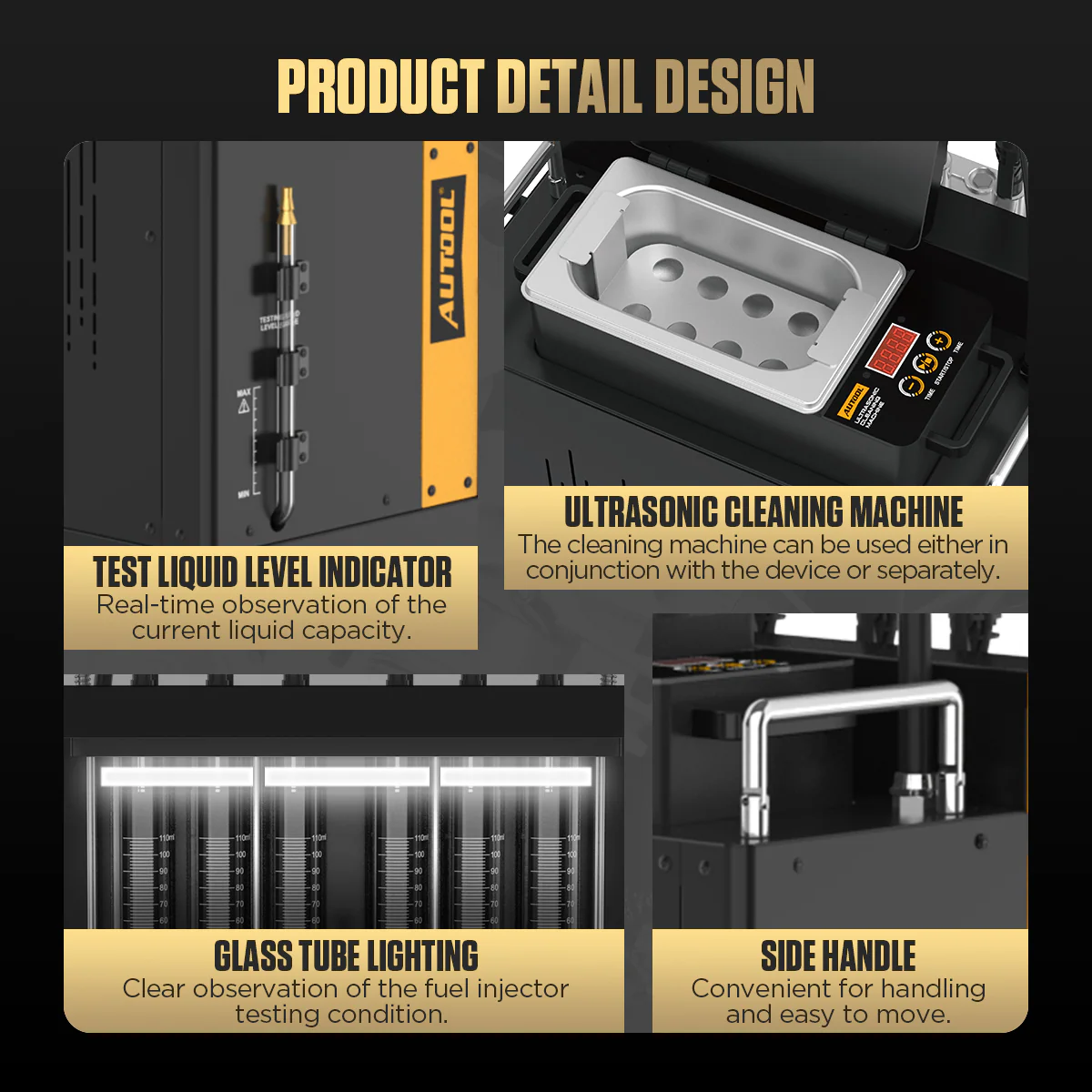
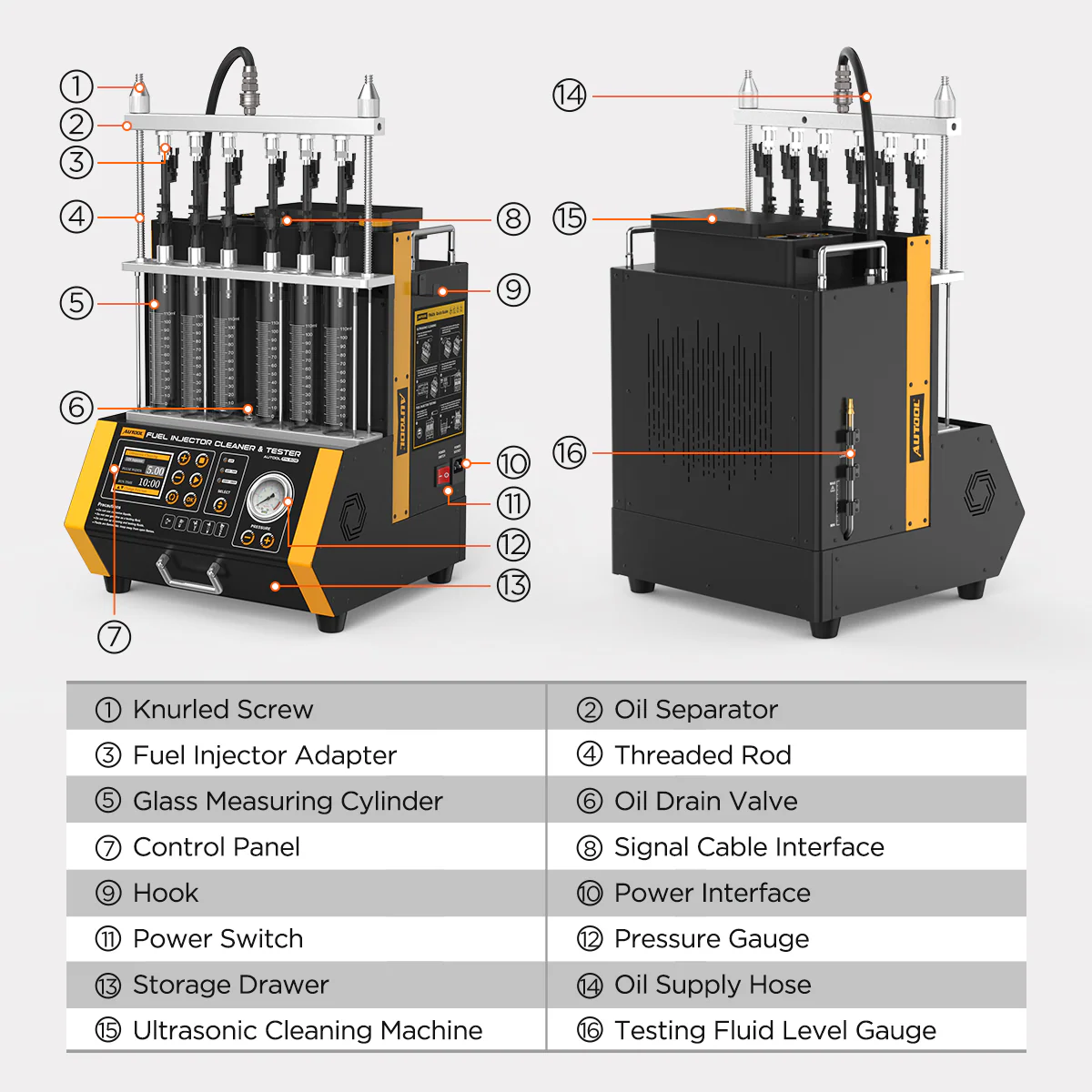
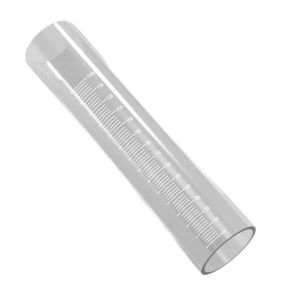
Six transparent 110 ml cylinders show each injector’s delivery next to the others under the same settings.
-
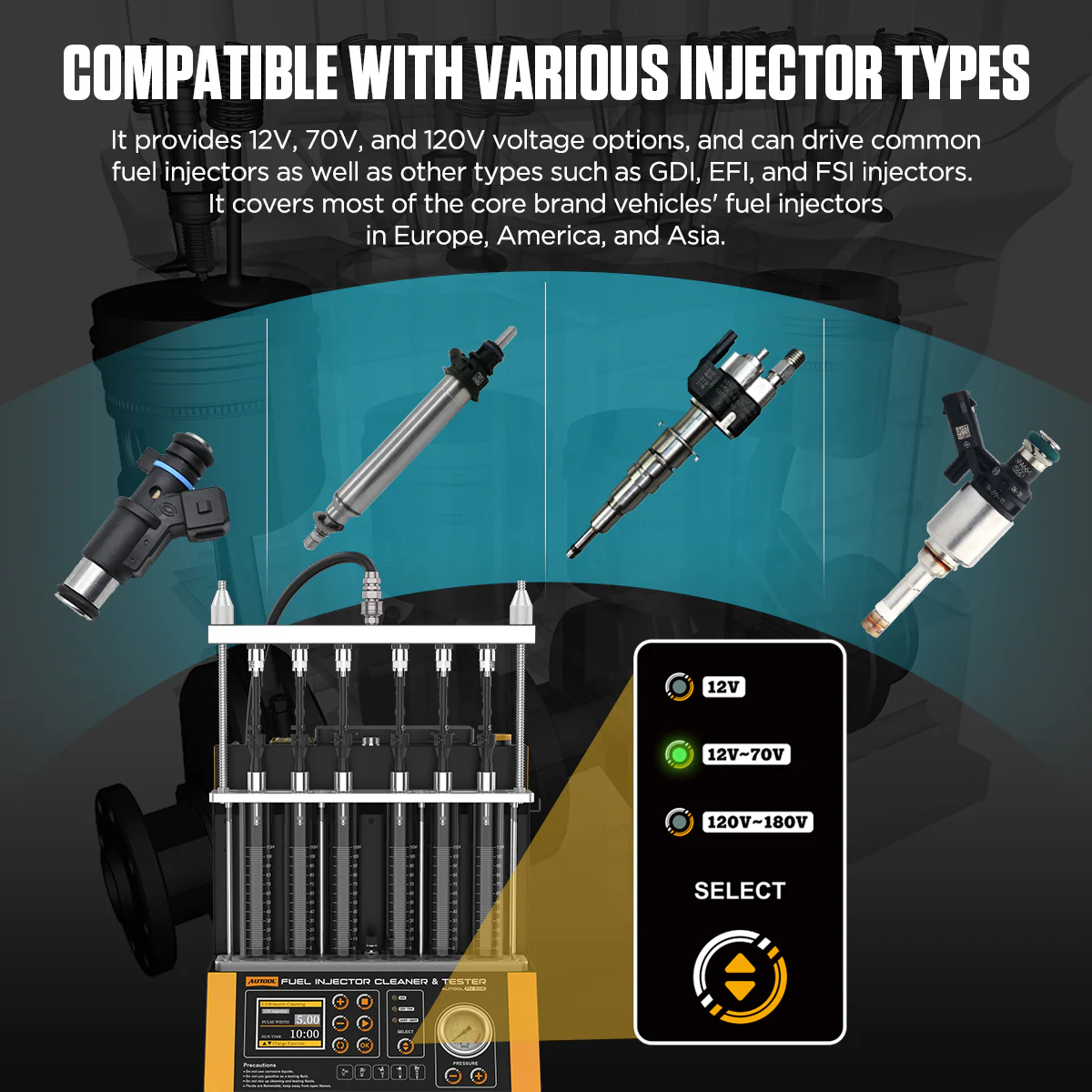
Drive Range to Suit the Injector
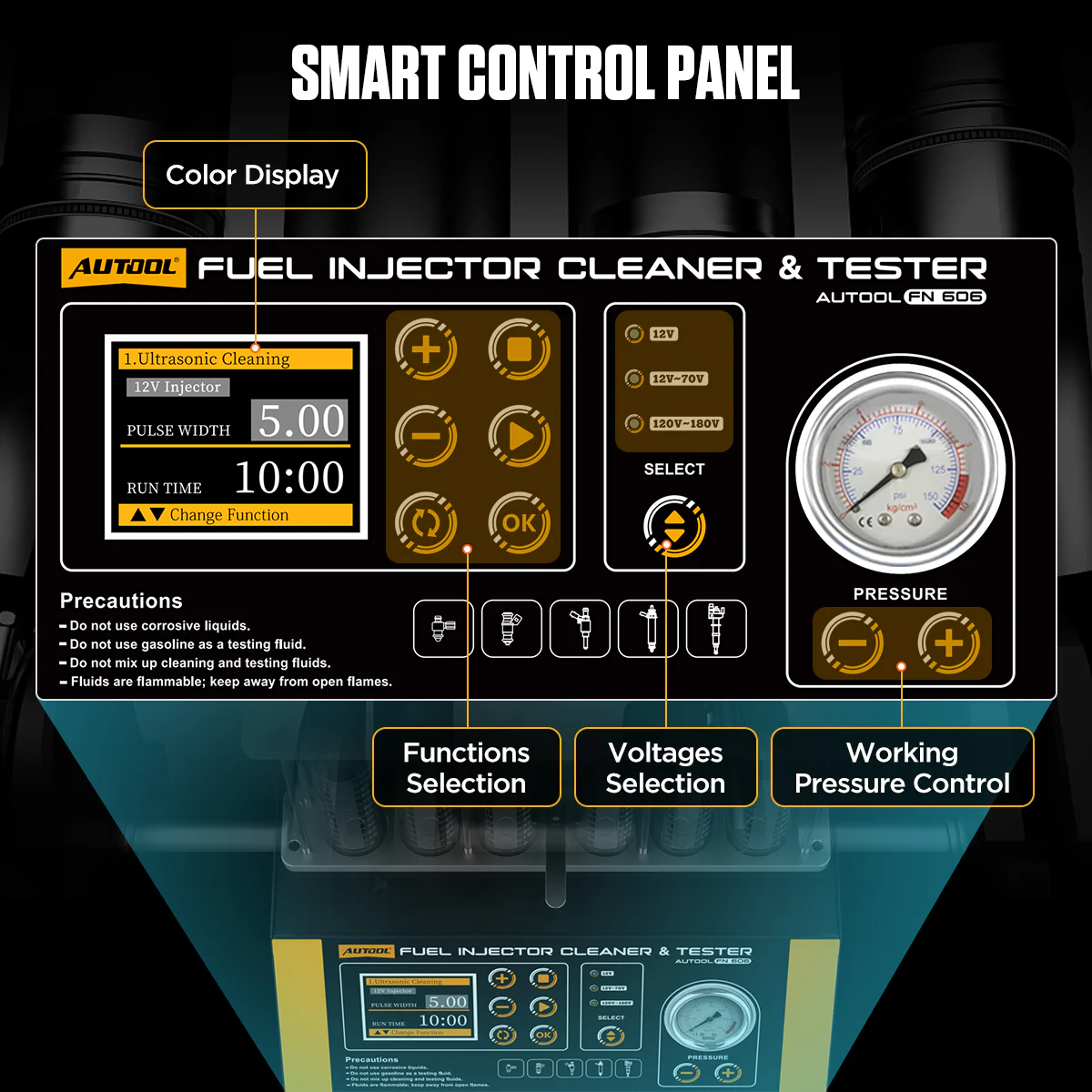
Select 12 V, 12–70 V or 120–180 V to match the injector specification before energizing.
-
Fine Pulse Control
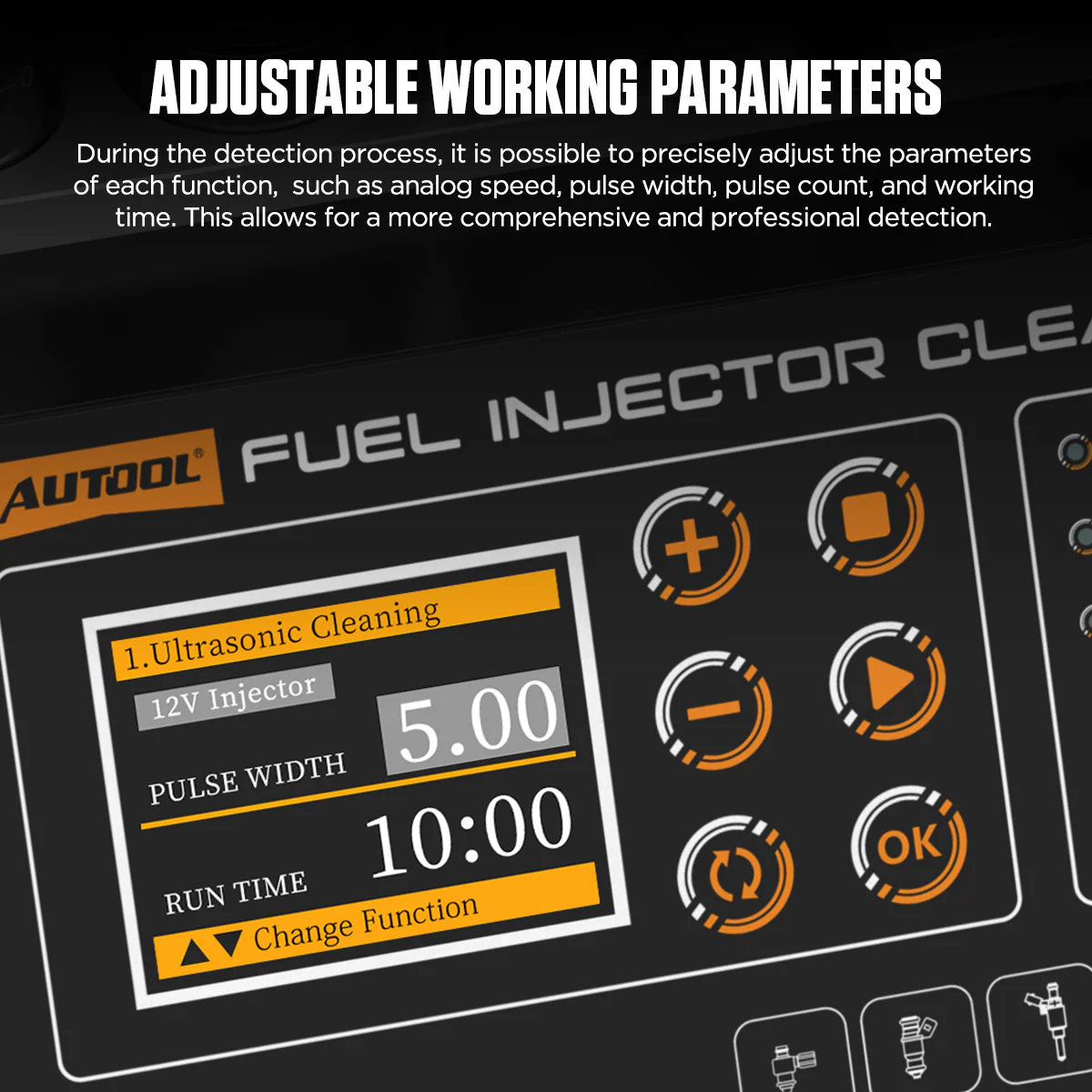
Set pulse width from 0 to 40 ms in 0.1 ms steps, with speed simulation up to 7,500 RPM.
-
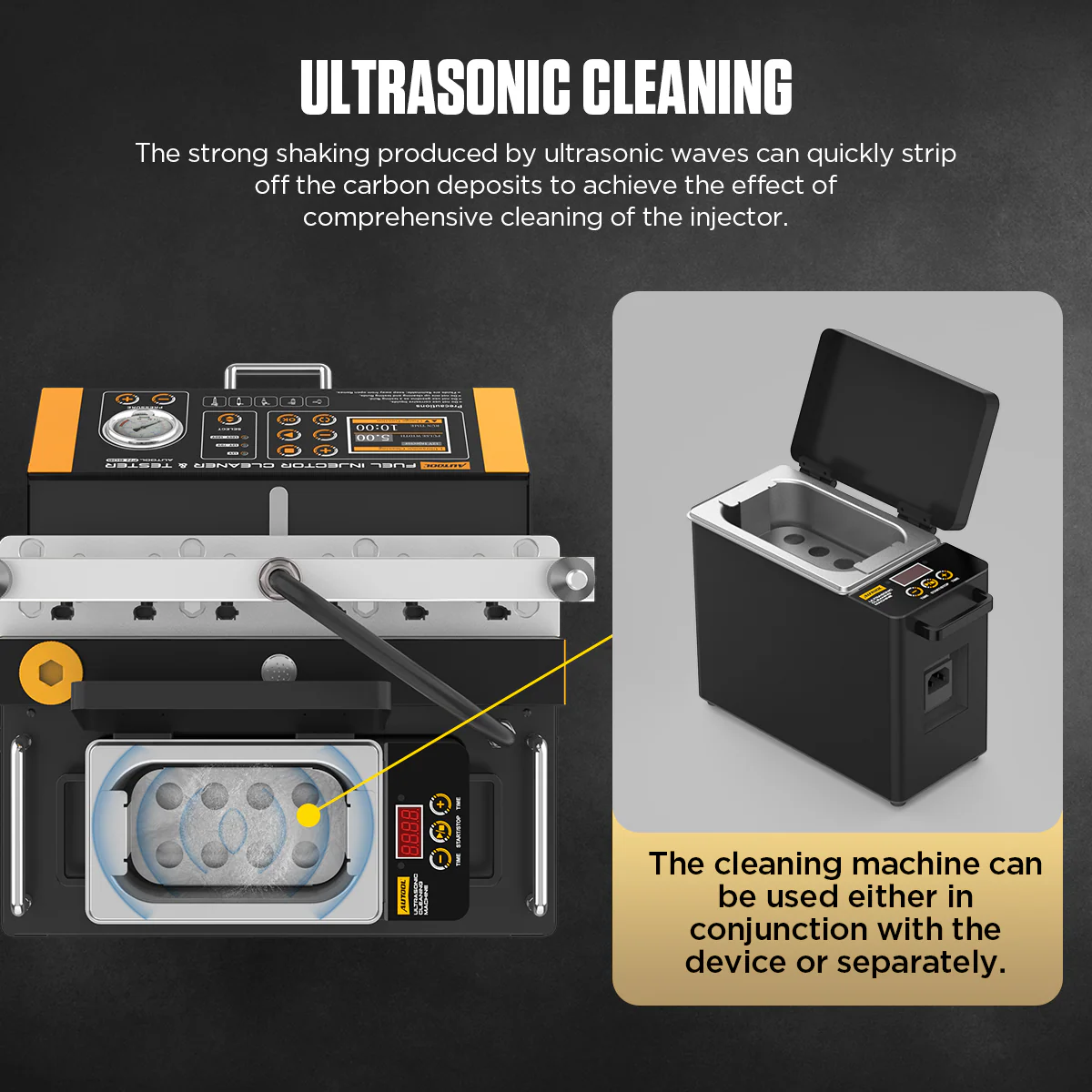
Standalone Ultrasonic Cleaner
The 550 ml unit lifts out and runs on its own at 28 kHz, heating the cleaning fluid to 50 °C.
-
Three Cleaning Methods
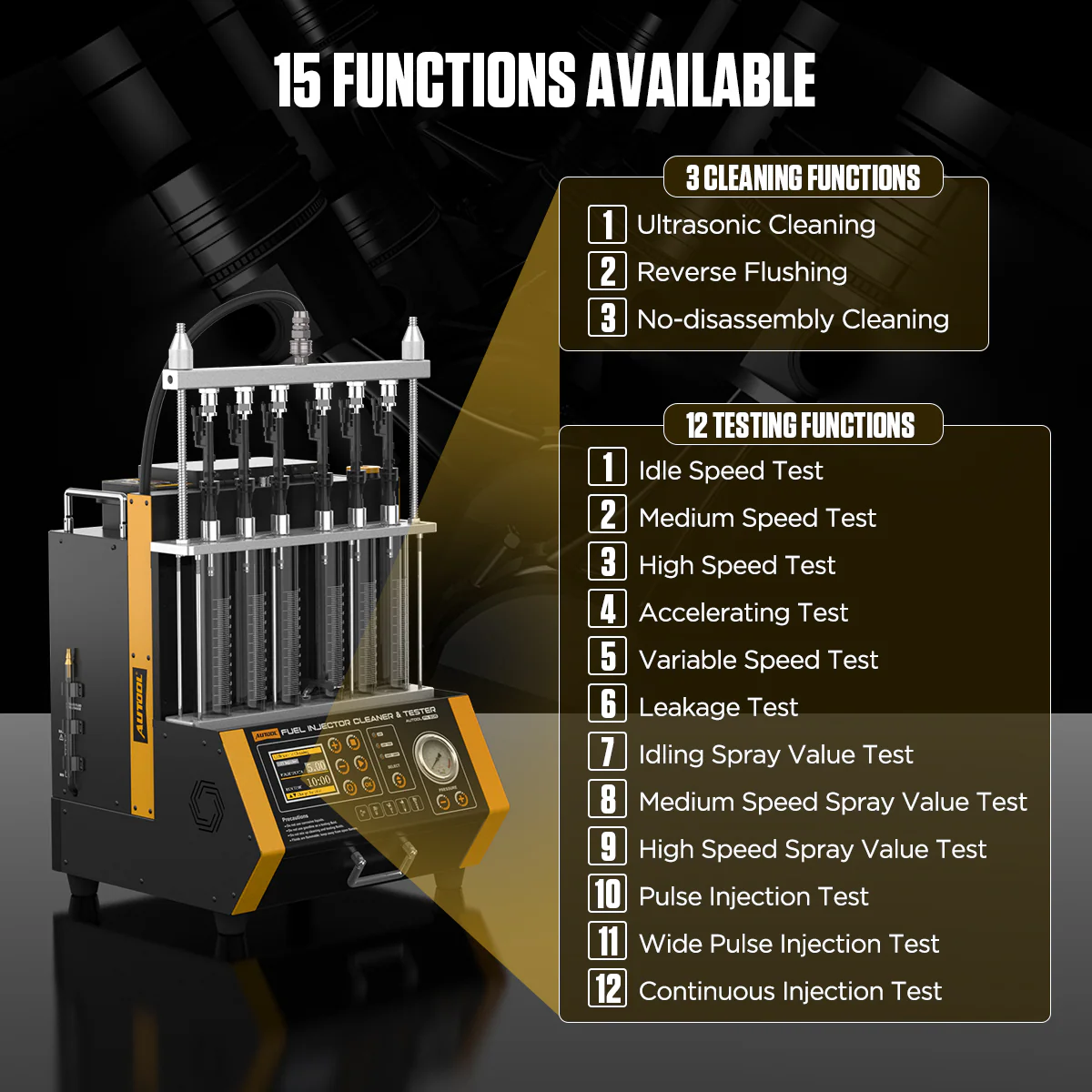
Ultrasonic cleaning, reverse flushing for suitable top-feed injectors, and no-disassembly cleaning with optional adapters.
-
Twelve Test Functions
Covers speed conditions, acceleration, variable speed, sealing, sprayability, spray shape and flow balance.
-
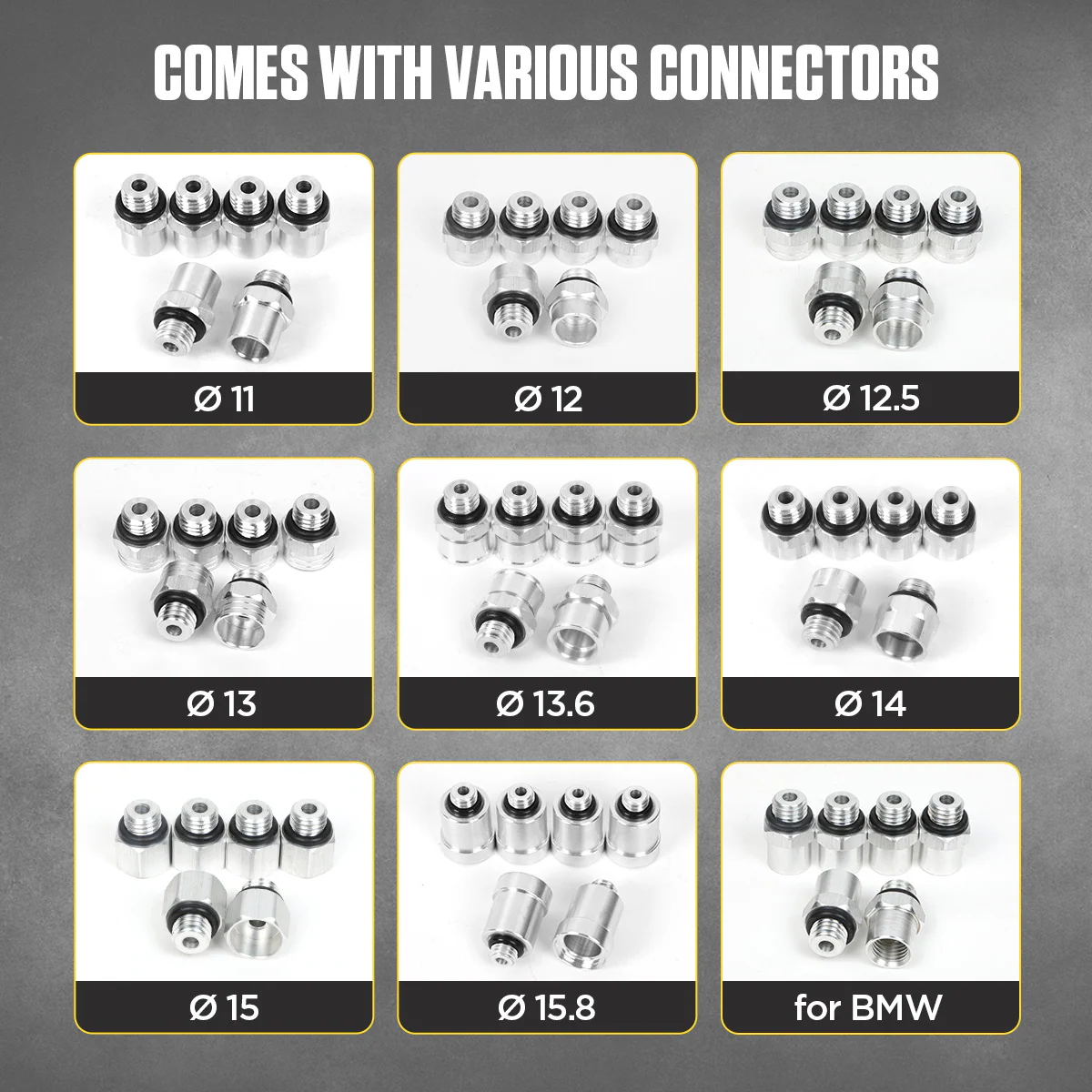
Nine Adapter Types
Includes a BMW adapter for different injector connections; confirm fit for each part number.
-
GDI Self-Protection
A protection function helps guard compatible GDI injectors during testing.
Model Comparison
| FN603 | FN606 | FN608 | |
|---|---|---|---|
| Injector positions | 6 | 6 | 8 |
| System pressure | 0–0.55 MPa | 0–0.8 MPa | 0–0.8 MPa |
| Pulse width | 0–20 ms | 0–40 ms, 0.1 ms steps | 0–40 ms, 0.1 ms steps |
| Drive voltage | 12/70/120 V | 12 V / 12–70 V / 120–180 V | 12 V / 12–70 V / 120–180 V |
| Ultrasonic tank | 2,000 ml, 45°C, integrated | 550 ml, 50°C, standalone | 550 ml, 50°C, standalone |
| Test functions | 10 | 12 | 12 |
What’s in the Box
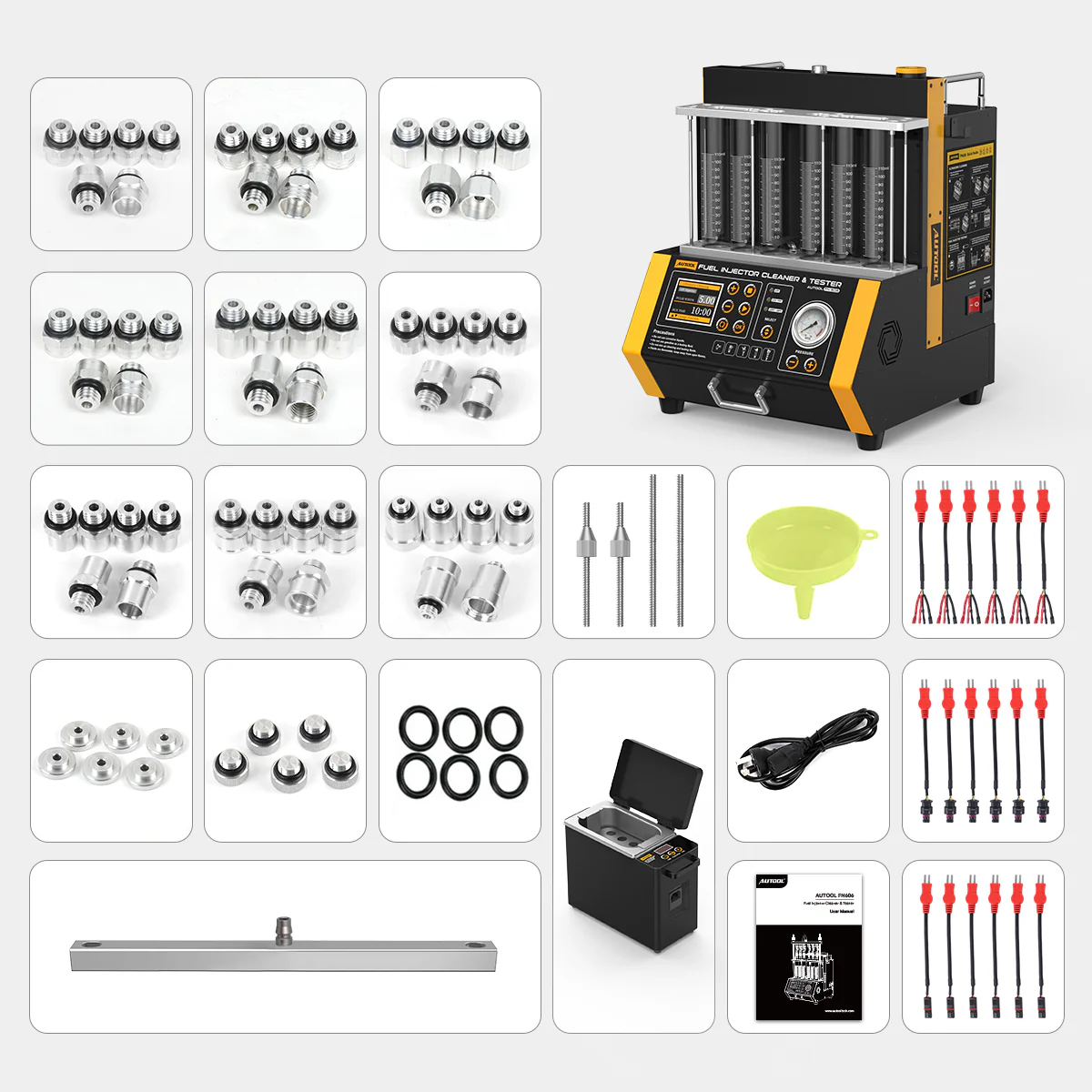
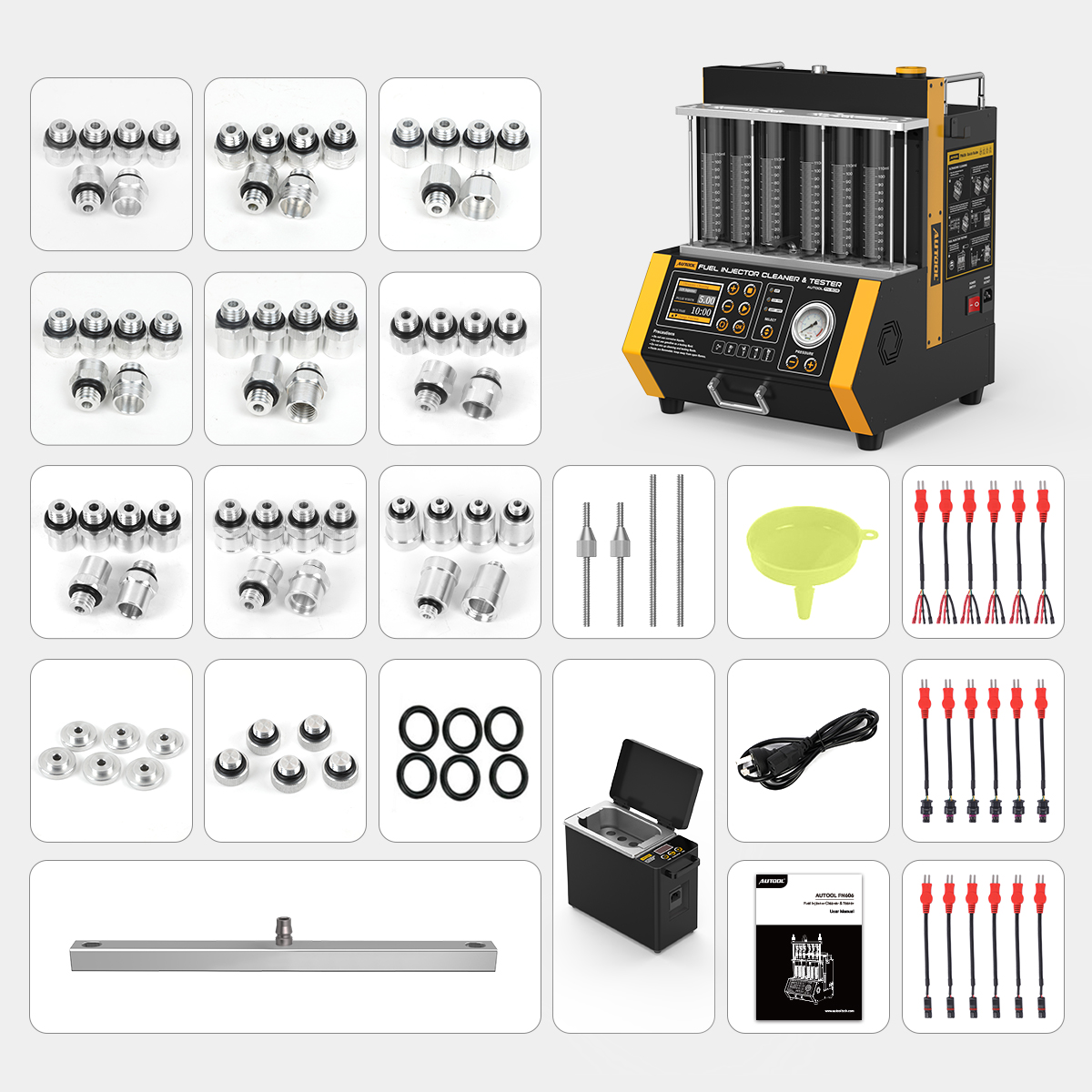
- FN606 main unit with one fuel pump
- Standalone 550 ml heated ultrasonic cleaner
- Nine injector adapter groups
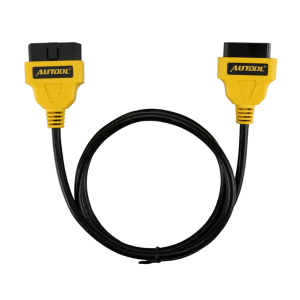
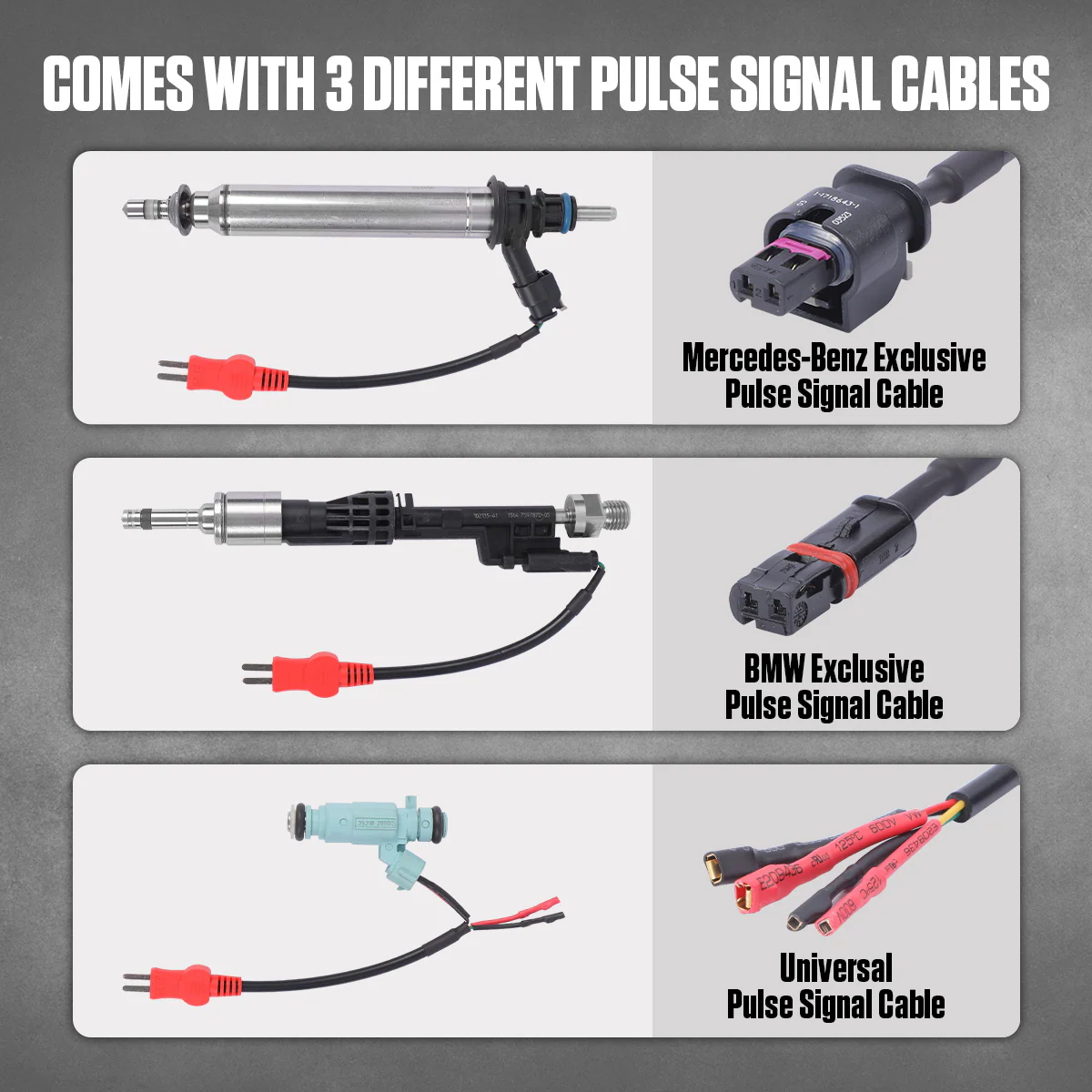
- Pulse signal cables in three six-lead harness styles
- Rail, fixture rods, caps and O-rings
- Filling funnel, power cord and user manual
Anwendung
- Identify the injectorRecord part numbers and confirm feed style, seals, adapter and drive range before connecting.
- Prepare fluidsFill the ultrasonic unit with approved cleaning fluid and the test circuit with non-corrosive test fluid.
- Install and leak-checkFit the adapters, rail and seals, and handle unused positions as the manual specifies.
- Record a baselineRun a leakage, spray or delivery test within the 0–10 minute timer and note voltage, pressure, pulse, speed and time.
- CleanUse heated ultrasonic cleaning, top-feed reverse flushing or the optional no-removal adapters.
- RetestRepeat the same settings and compare each injector with its baseline and with the group.
- Decide the next stepDocument improvement, no change, leakage or imbalance before refitting, further diagnosis or replacement.
Drive-range selection, test modes and troubleshooting: FN606 user manual (PDF)
Good to Know
Caution
- Match the drive range to the injector specification and confirm the requirement before selecting a higher range.
- A poor adapter or seal fit can leak, skew readings or damage parts.
- Never run the ultrasonic cleaner dry. Add the approved fluid volume before heating or starting it.
- Keep fluids and vapor away from flame, sparks and hot surfaces, wear eye protection and ventilate the area.
- Stop the machine and release pressure before removing injectors, rails, hoses or fittings.
- Use the 110 V or 220 V version that matches your supply, with a grounded outlet.
Care
- If one injector reads oddly, check its adapter, seal, rail and connection, then repeat the test before acting on it.
- Record dripping in the leakage test and low delivered volume as separate findings.
FAQ
Can it reverse-flush any injector?
No. Reverse flushing is limited to suitable top-feed injectors.
Does no-disassembly cleaning need extra adapters?
Yes. It is an additional function that requires special adapters.
Are the cylinder readings calibrated?
Use them for group and before/after comparison. Apply calibrated limits only when approved data and matching test conditions are available.
Can it confirm full GDI performance?
No. The 0.8 MPa bench supports controlled comparison; on-engine GDI symptoms need high-pressure, hot or loaded testing with suitable equipment.








 English
  German
  Spanish