
Clean Petrol Fuel, Throttle and Intake Paths Without Removing Injectors
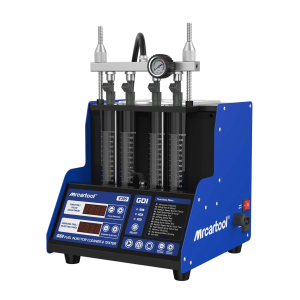
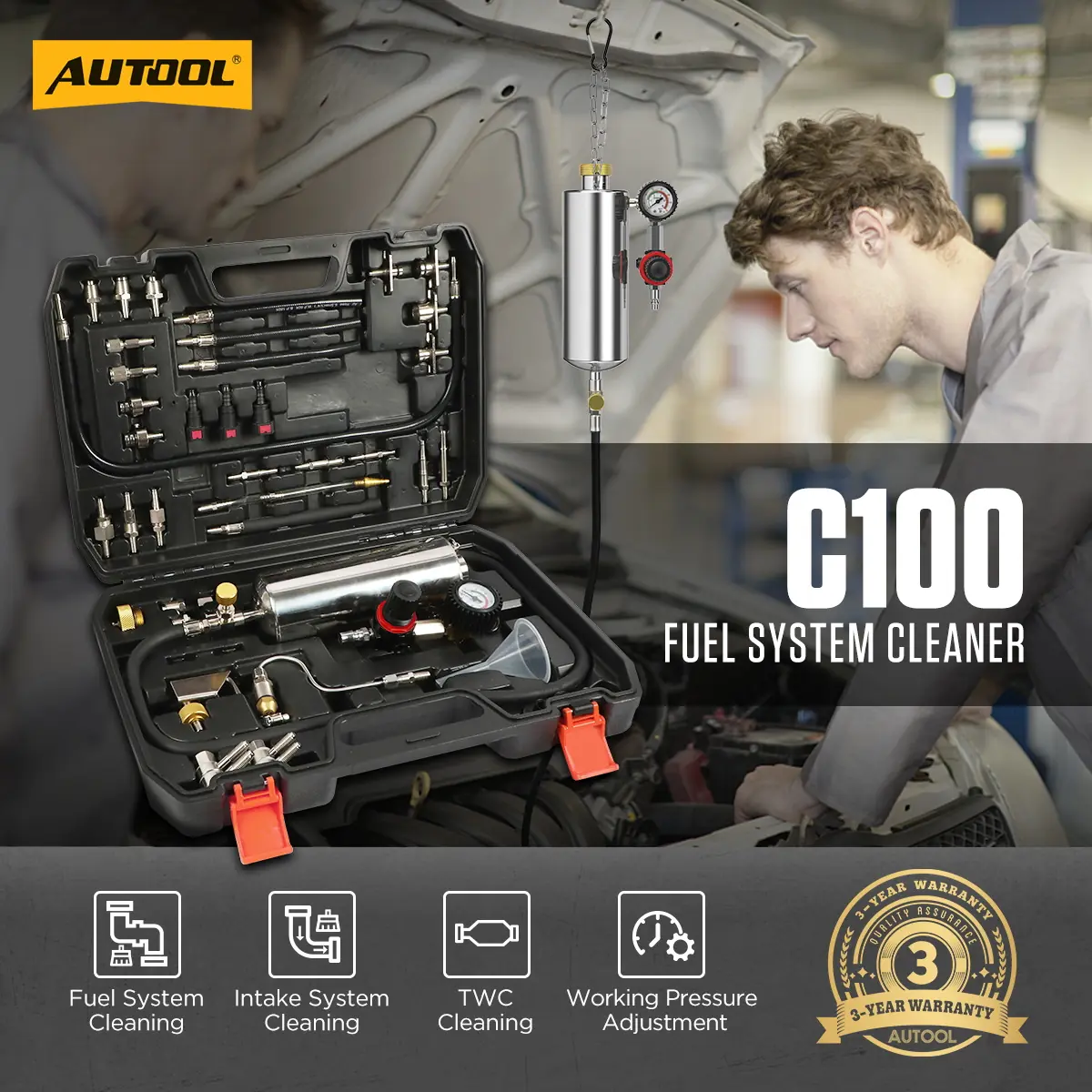
The C100 delivers detergent under regulated pressure through supported petrol EFI fuel circuits, the throttle area and the manual-defined intake/TWC path, with the injectors left in place. It needs a regulated external air supply and is not for diesel or high-pressure GDI testing.
- 3 Service Paths
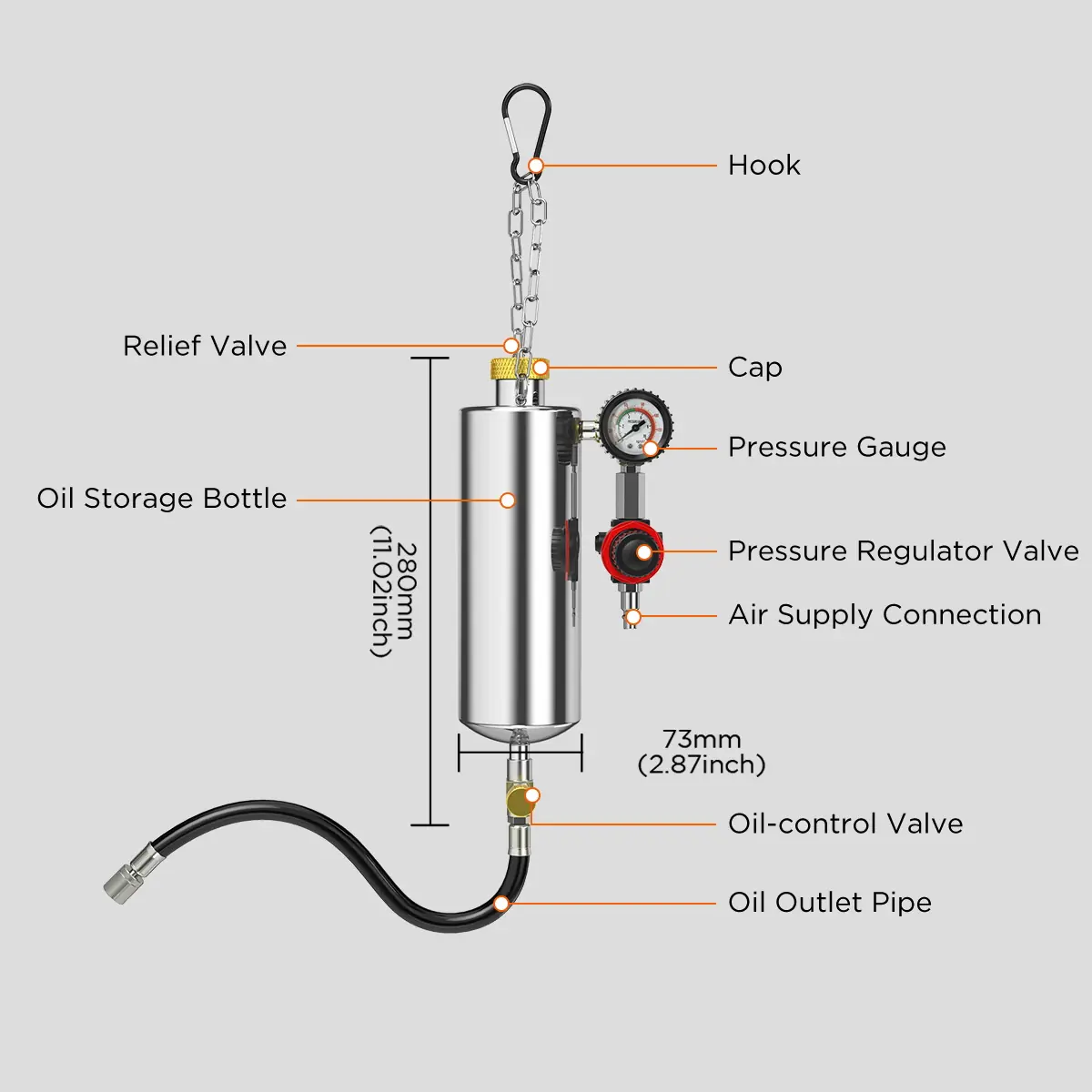
- Gauge + Regulating Valve
- EFI 40–50 PSI
- Throttle 1–5 PSI
- Vehicle Adapter Set
Hauptmerkmale
-
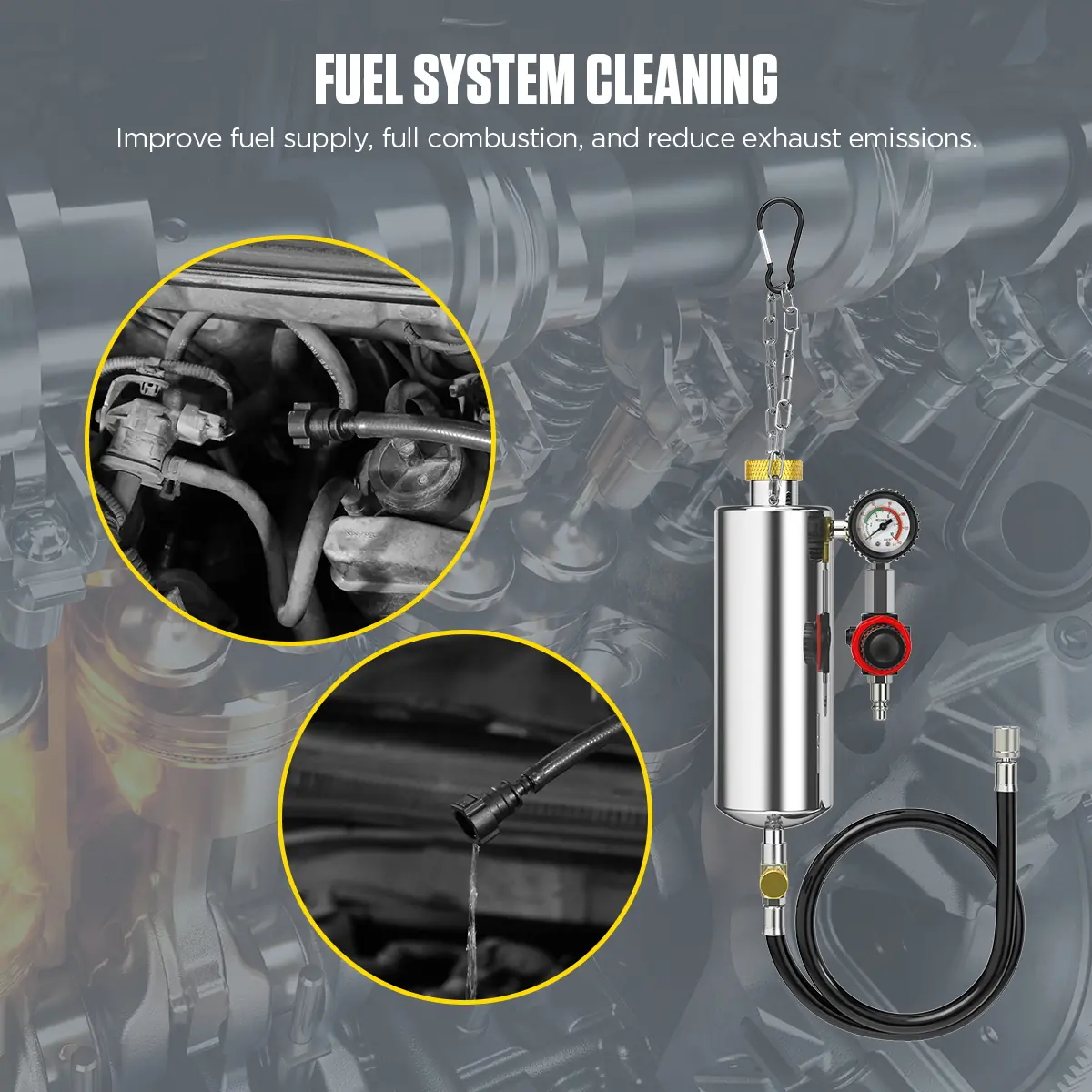
On-Vehicle Fuel-Circuit Flushing
Routes detergent through supported EFI injectors, fuel lines, throttle-related passages and other fuel-system parts without removing the injector assembly.
-
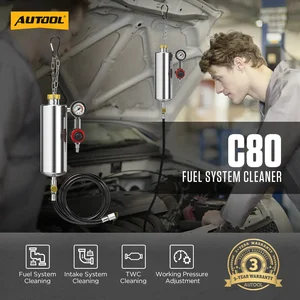
Throttle Cleaning
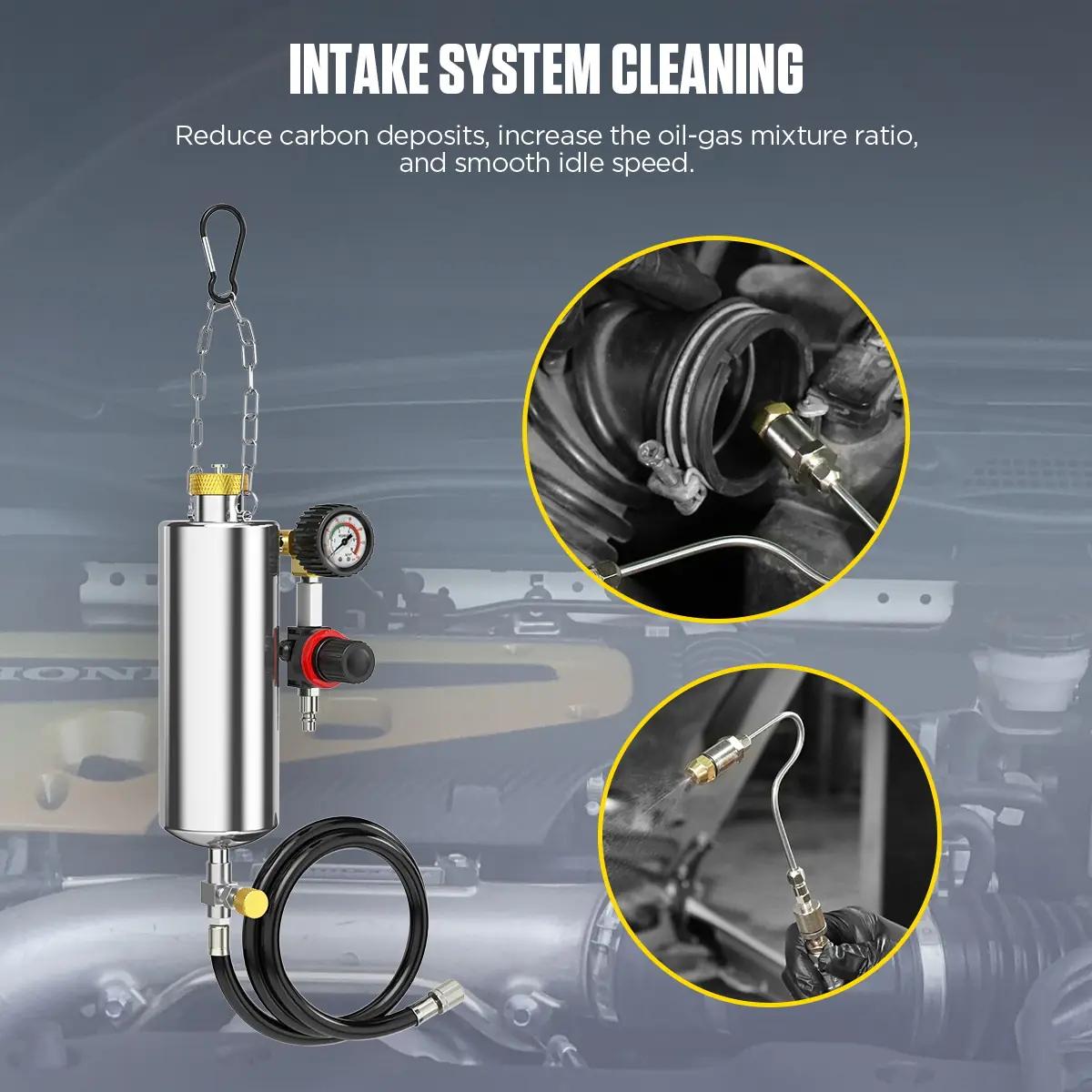
The spray-nozzle setup supports the manual’s low-pressure throttle procedure.
-
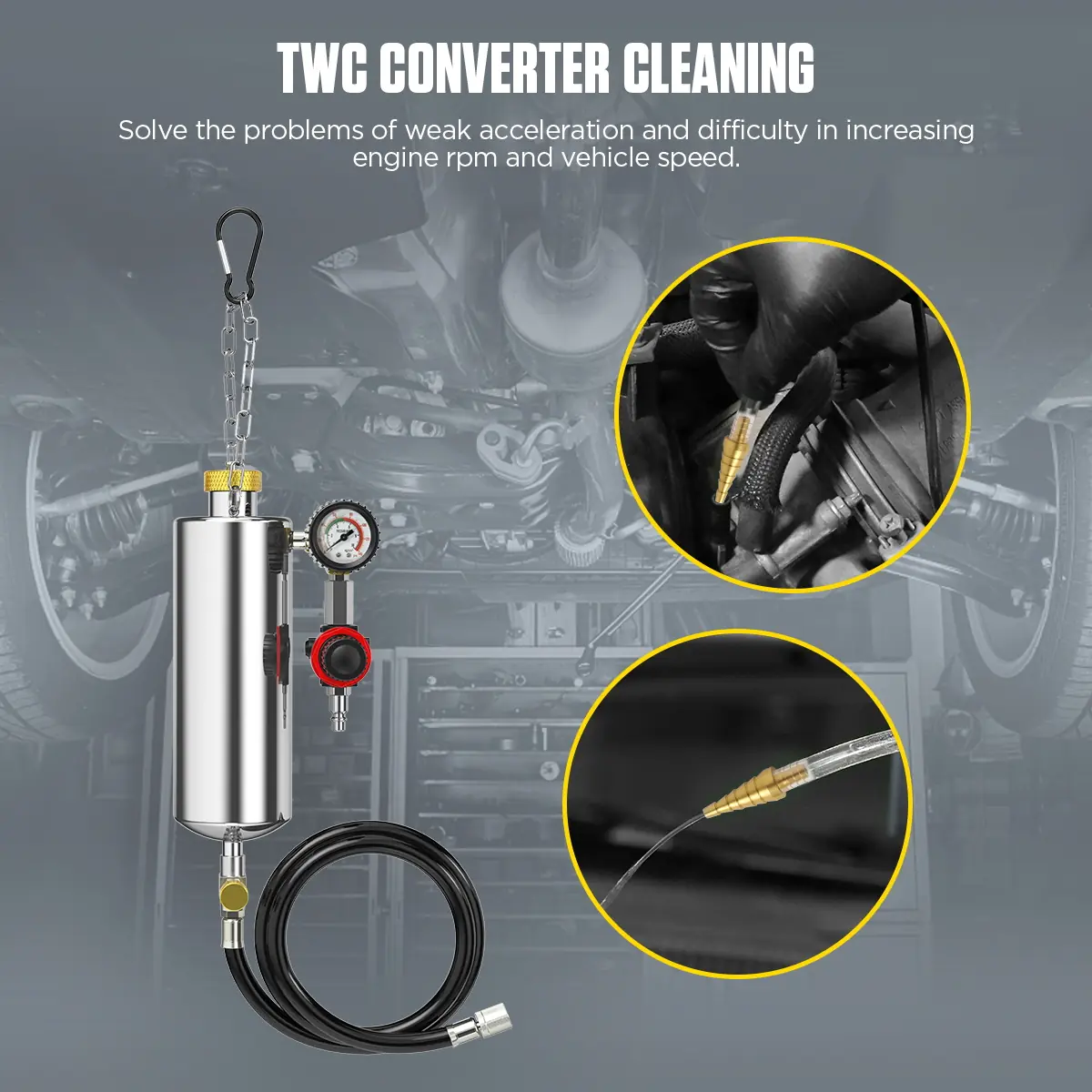
Intake and TWC-Related Cleaning
Dedicated TWC joints and an intake-vacuum connection support the manual’s gradual detergent-feed procedure; no emissions result is guaranteed.
-
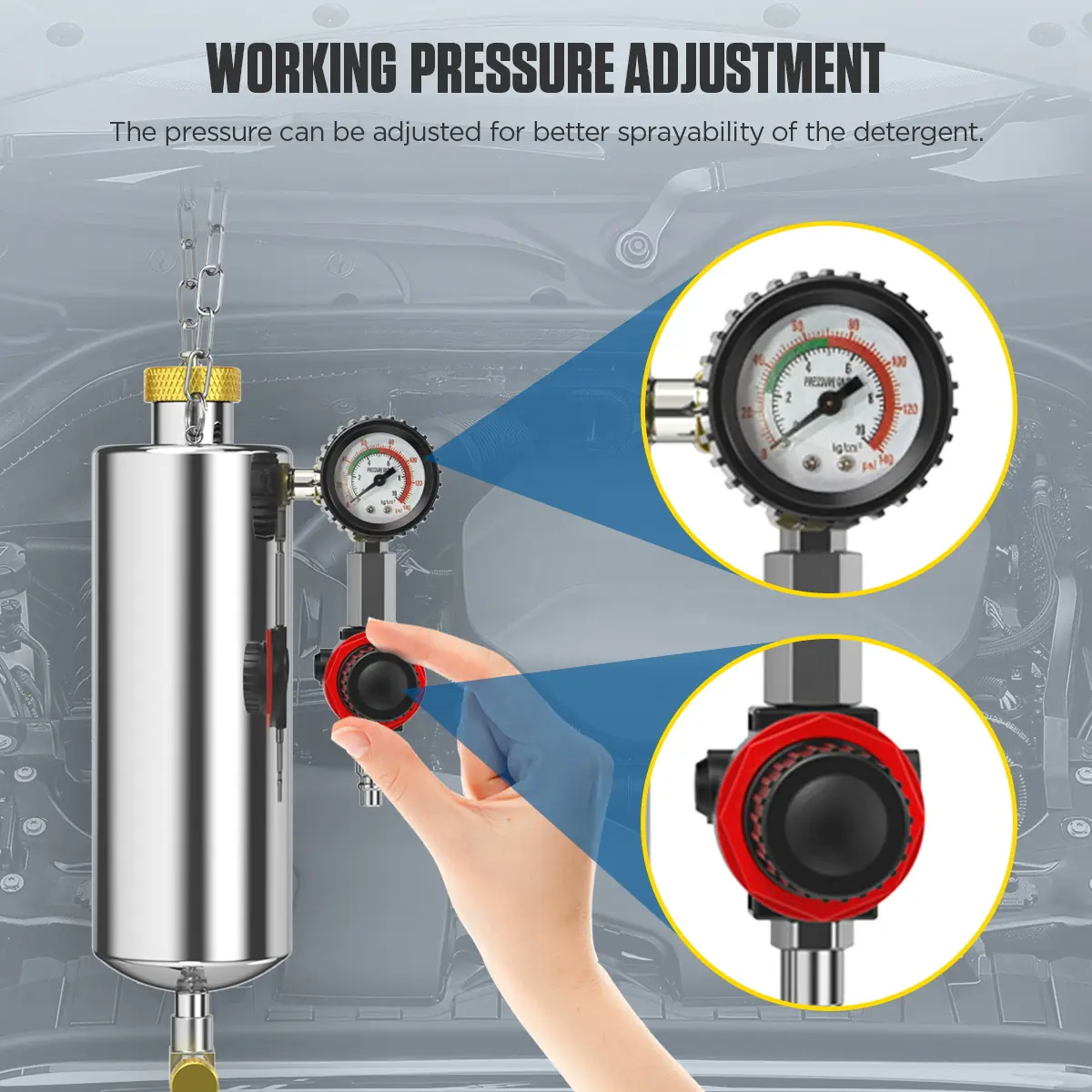
Adjustable Pressure
The gauge and regulating valve set delivery pressure for controlled cleaning through the selected path.
-
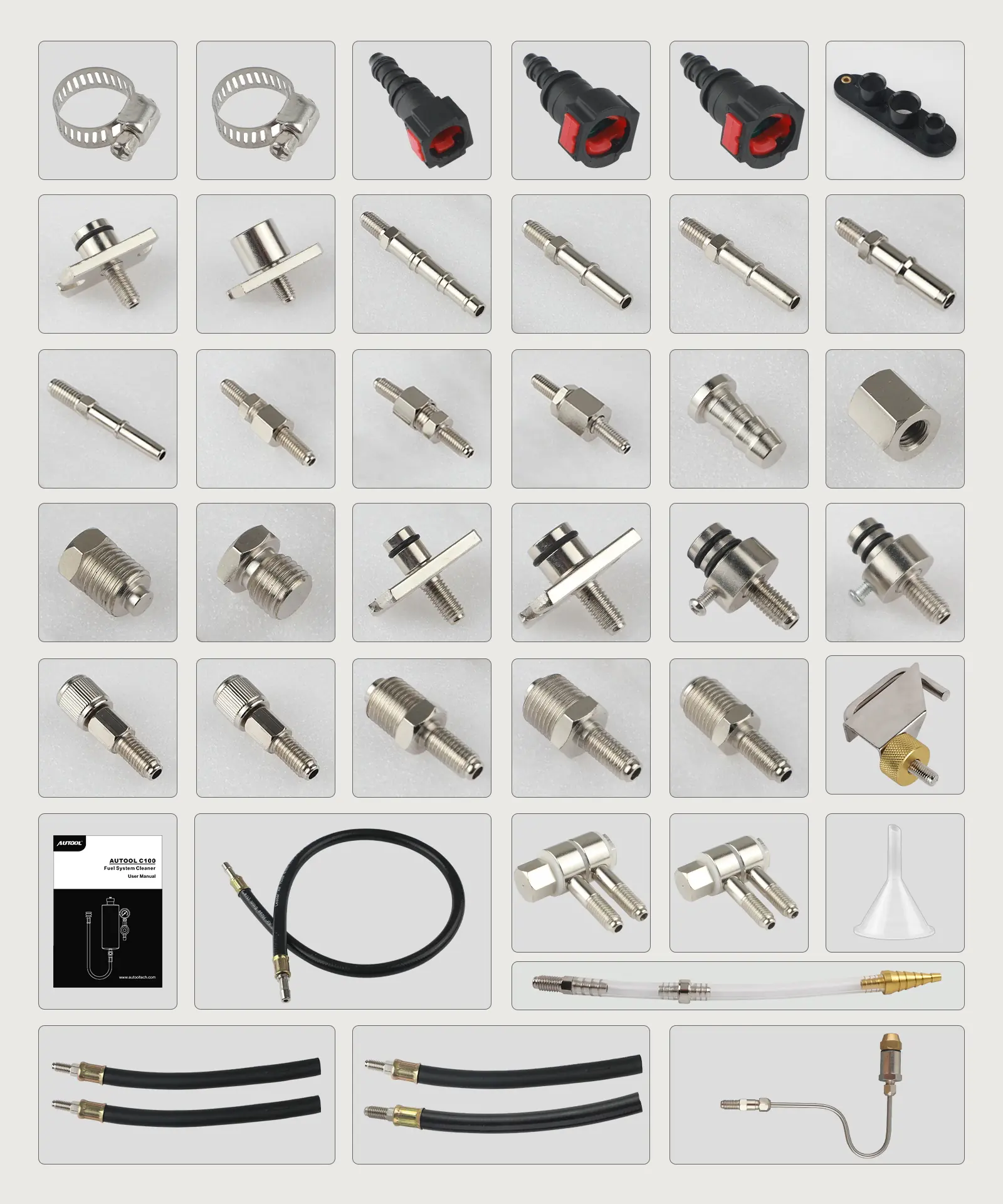
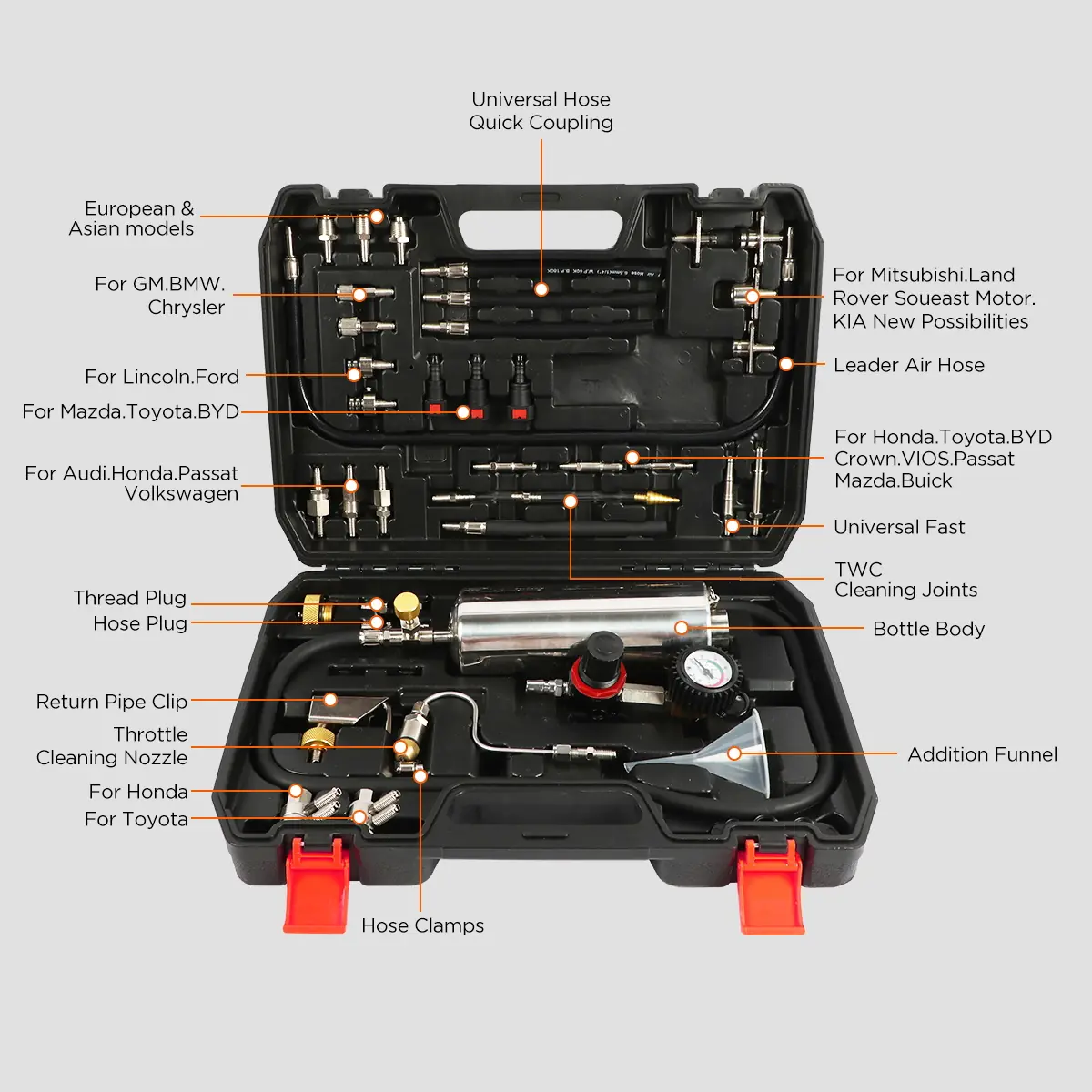
Broad Adapter Set
Hoses, couplings, plugs, clamps, nozzles and vehicle adapters fit many European, Asian and US petrol cars and light trucks once fitment is confirmed.
-
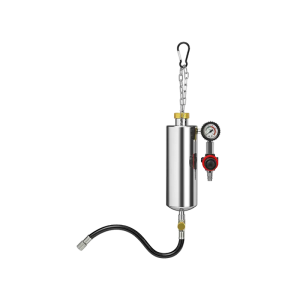
Integrated Vessel
The bottle body combines fluid storage, gauge, regulation and controlled output for vehicle-side work.
More Specifications
| Fuel-circuit connection | Approved petrol inlet/return arrangement; external air, fuel-system detergent, matching adapters |
|---|---|
| Throttle connection | Spray nozzle at the throttle area; external air, approved detergent |
| TWC/intake connection | Dedicated joint into the approved intake-vacuum path; pressure per current manual |
What’s in the Box
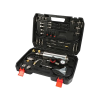
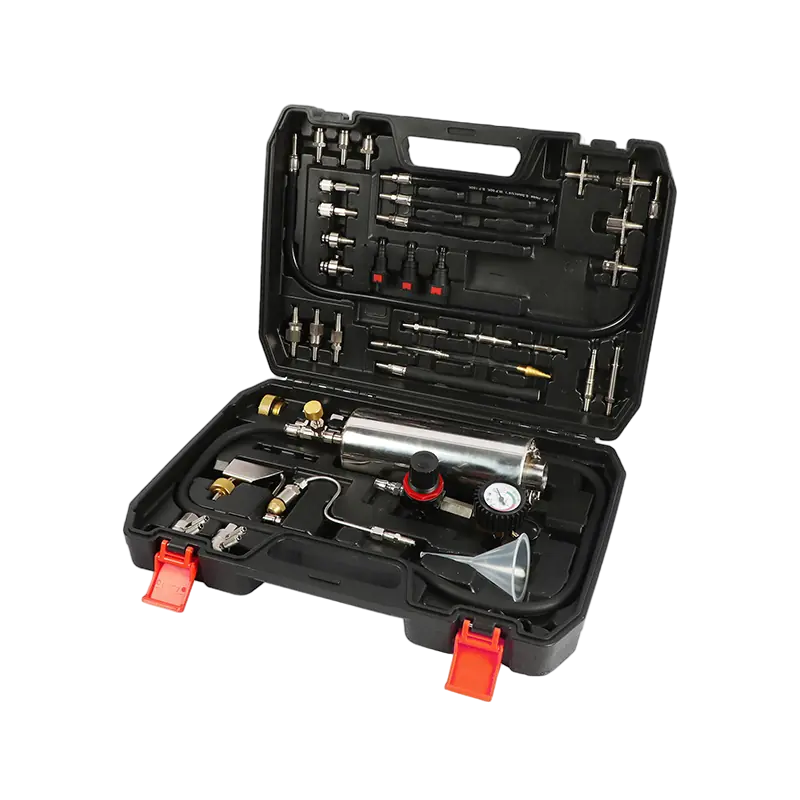
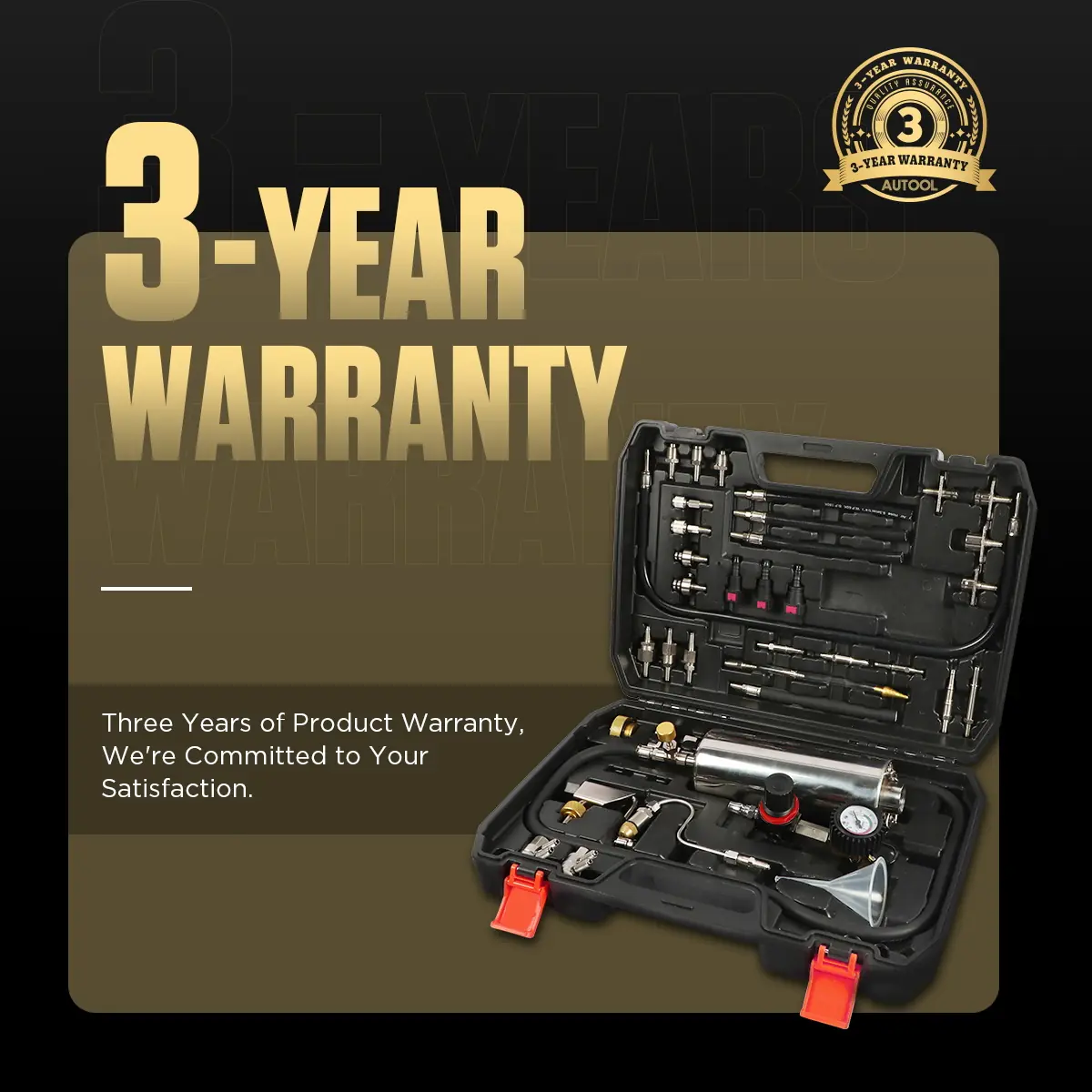
- C100 bottle body with pressure gauge and regulating valve
- Universal hose quick coupling, leader air hose, universal fast connector, hose plug and thread plug
- Vehicle adapters for European, Asian and US connection styles
- Throttle cleaning nozzle and TWC cleaning joints
- Addition funnel, return-pipe clip and hose clamps
Anwendung
- Select the service pathConfirm petrol-system compatibility and choose the fuel circuit, throttle nozzle or TWC/intake connection.
- Identify and isolate linesUse service information to identify inlet and return lines, pick adapters and isolate the fuel supply as required.
- Connect the C100Attach the outlet, return-side plug or alternate connection for the vehicle layout; wrap opened connectors.
- Add detergent and airAdd the task-specific detergent, connect regulated air and set the pressure for the chosen path.
- Check for leaksInspect every connection before starting the engine; do not proceed if anything leaks.
- Run the procedureFeed detergent gradually per the manual’s timing and engine-speed instructions.
- Depressurize and restoreStop the engine, relieve bottle pressure, reconnect original lines and leak-check again.
Adapter selection, pressure control and procedures: C100 user manual (PDF)
Good to Know
Caution
- Requires a regulated external compressed-air source; never apply a pressure just because the gauge can show it.
- Stop the engine immediately if fuel or detergent leaks, and keep ignition sources away with fire protection at hand.
- Route exhaust outdoors and secure the vehicle in neutral or park with the brake applied during engine-running steps.
- After throttle cleaning, initialize the throttle position with a scan tool where required, or a warning lamp and stored DTC may result.
- On vehicles with no fuel return hose, follow the manual to disable the fuel pump and use the correct stopper or adapter.
Care
- Wear eye protection, gloves and protective clothing, and follow the detergent’s SDS for handling and disposal.
- Store the C100 dry, away from heat and humidity, and avoid rubbing the housing on rough surfaces.

 English
  German
  Spanish