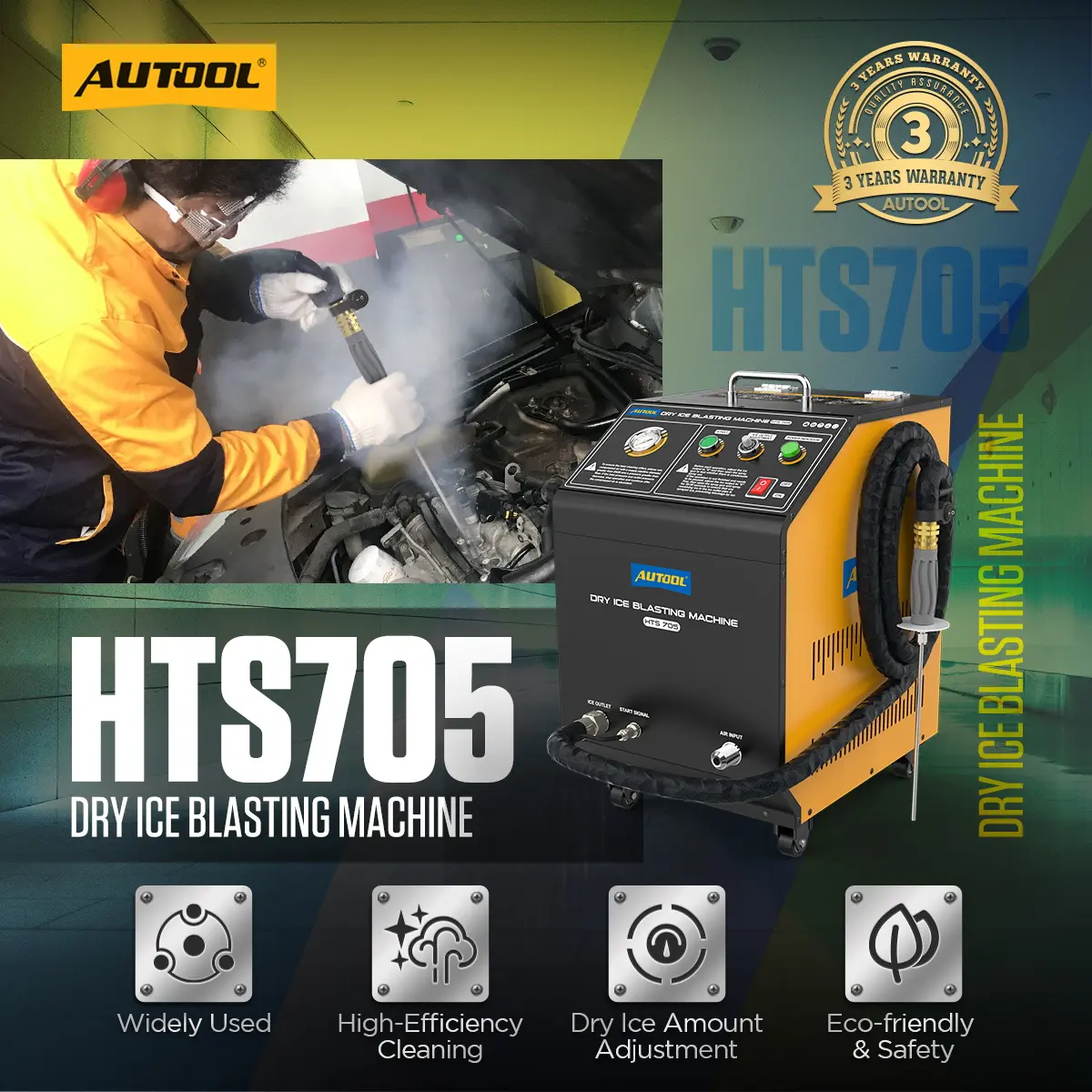
Dry Ice Cleaning for Engine Bays and Intake Parts Without Water or Solvent
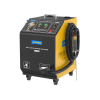
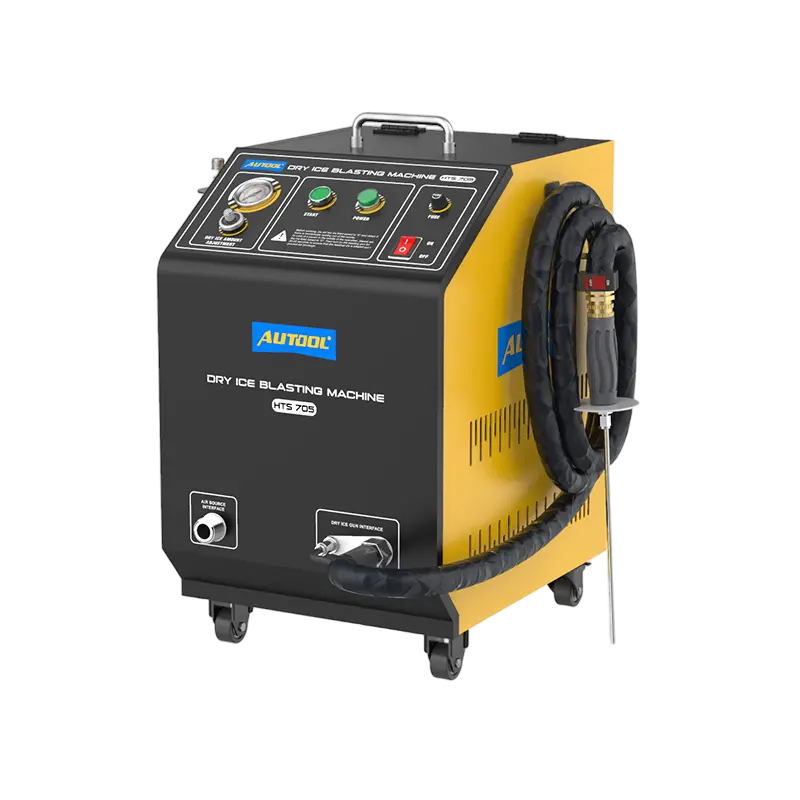
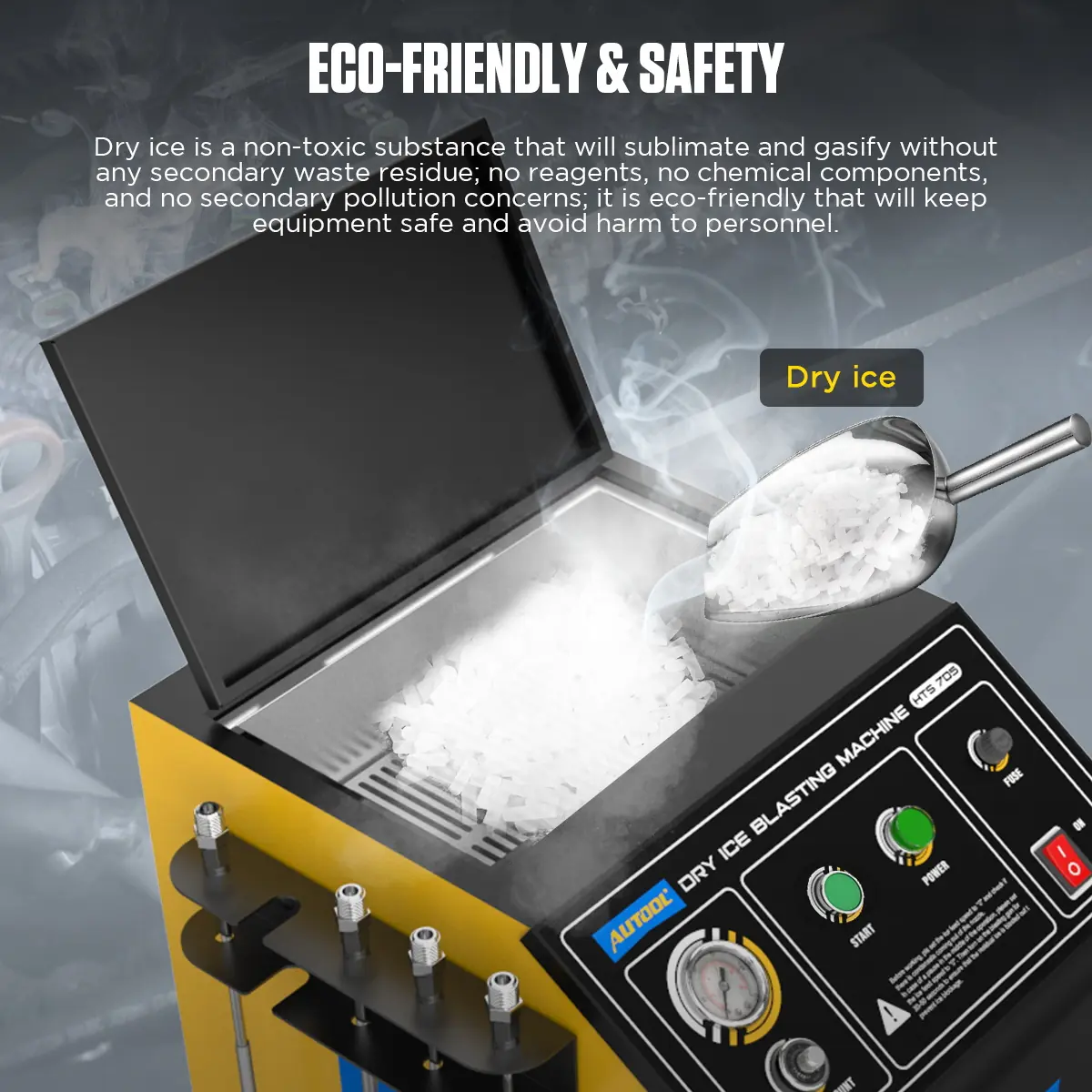
The HTS705 uses compressed air to blast dry ice pellets that loosen carbon, oil and dirt through impact and cold shock, then sublimate without leaving blasting media behind. Compressed air and dry ice are supplied separately, and loosened debris still needs collecting.
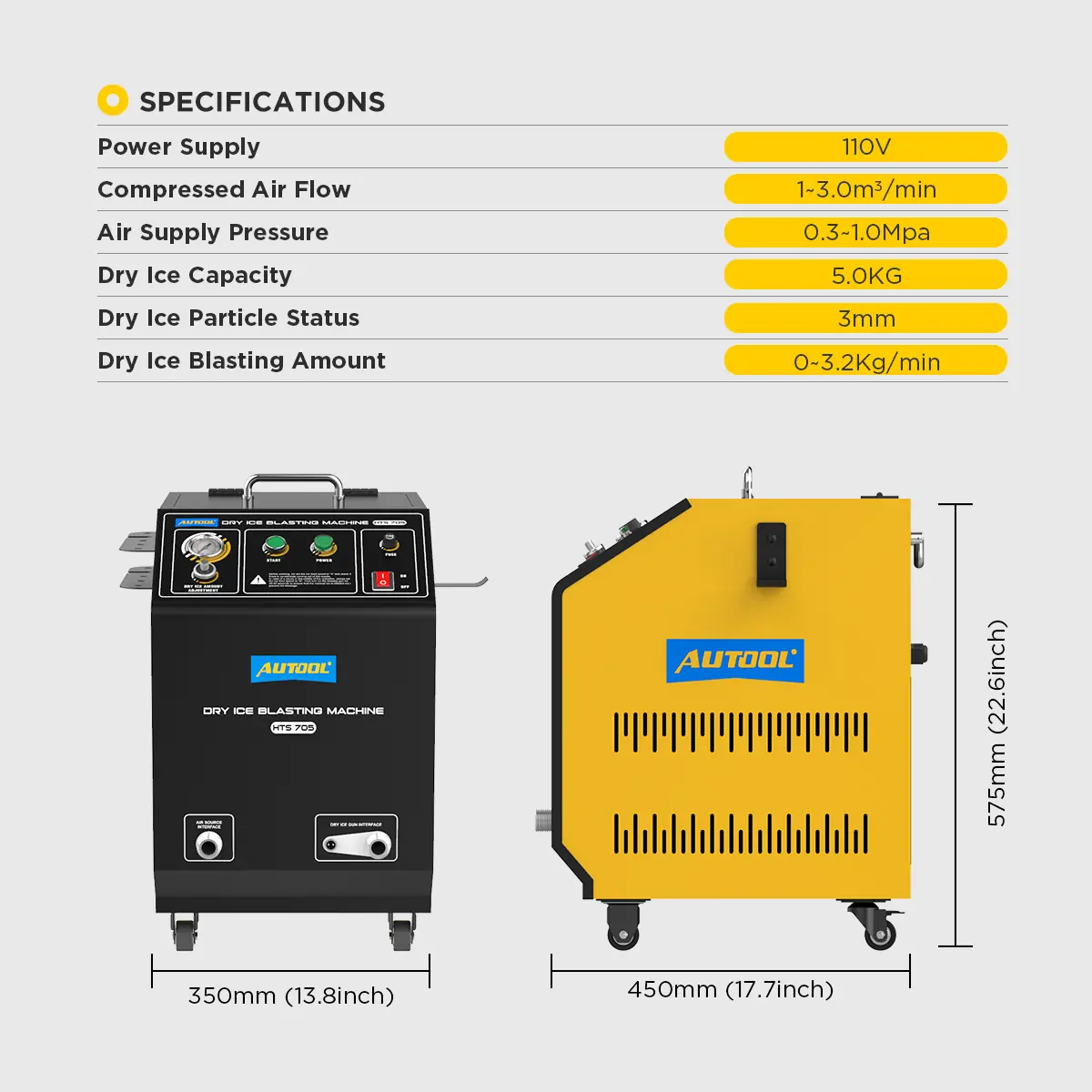
- 5 kg Hopper
- 3 m Blast Hose
- 3 mm Pellets Recommended
- Adjustable Ice Delivery
- 550 W
Hauptmerkmale
-
Dry, Physical Cleaning
Impact, cold shock and sublimation loosen suitable contaminants without water or chemical solvent. Dry ice is about -78.5 °C, which makes carbon and attached dirt brittle.
-
Adjustable Ice Delivery
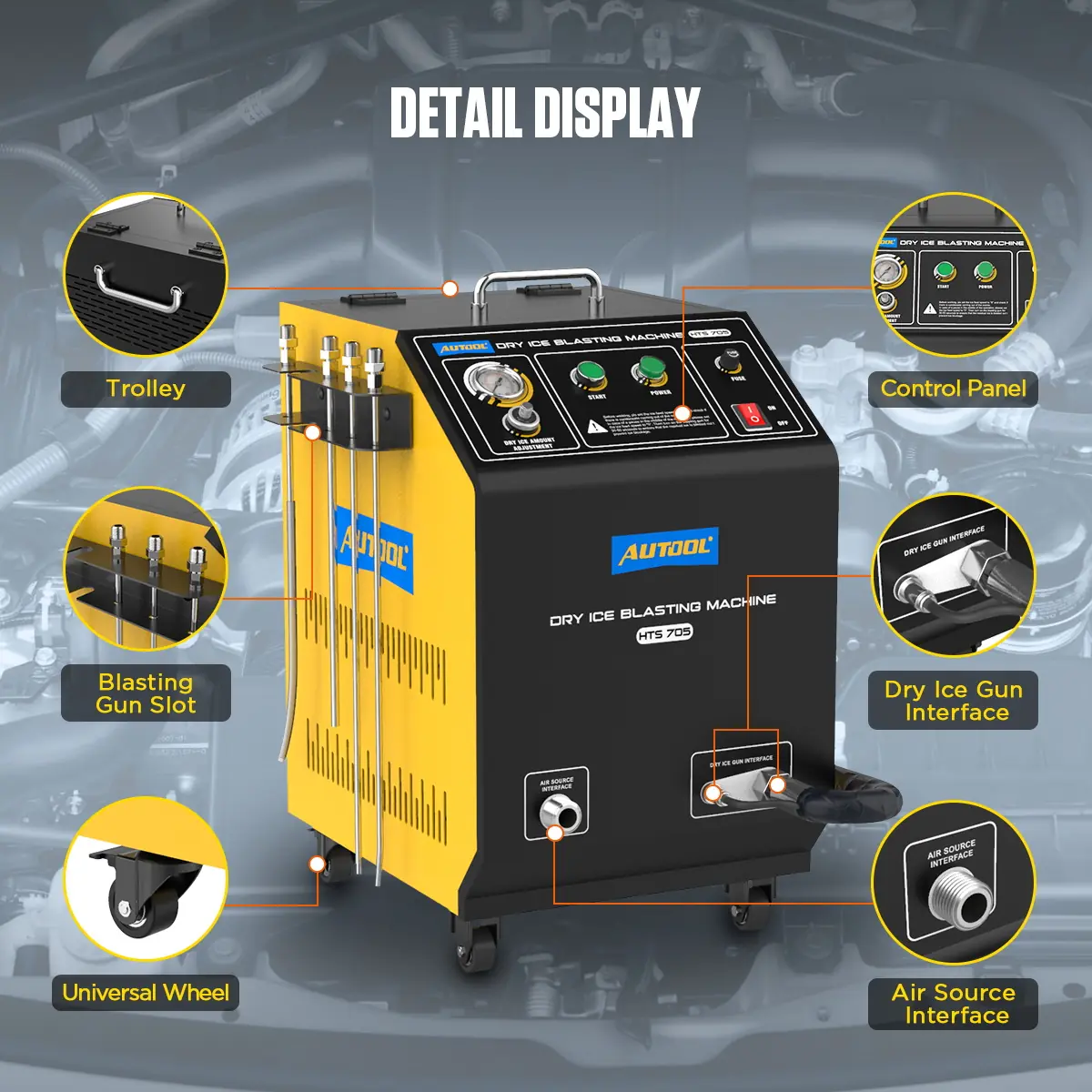
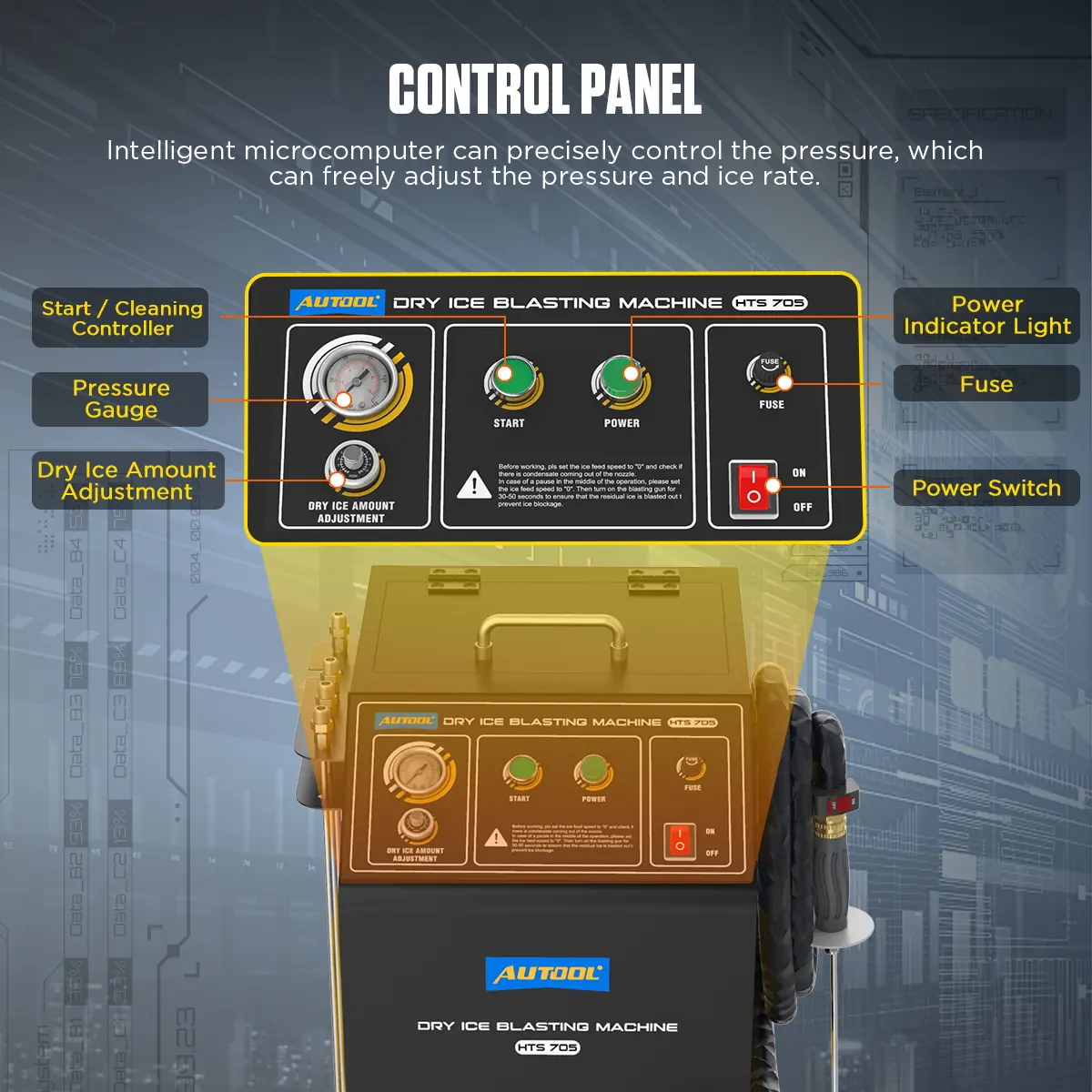
The control panel carries pressure monitoring, dry ice amount adjustment, start/cleaning control, power switch, fuse and power indicator, so output can be tuned to the surface.
-
Air Treatment and Spiral Feed
Air treatment and ice separation help reduce moisture-related clumping and keep delivery consistent.
-
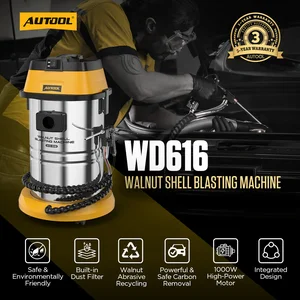
Less Abrasive Than Walnut Media
No solid media is left on suitable components, and less chemical residue reaches equipment than with solvent cleaning.
-
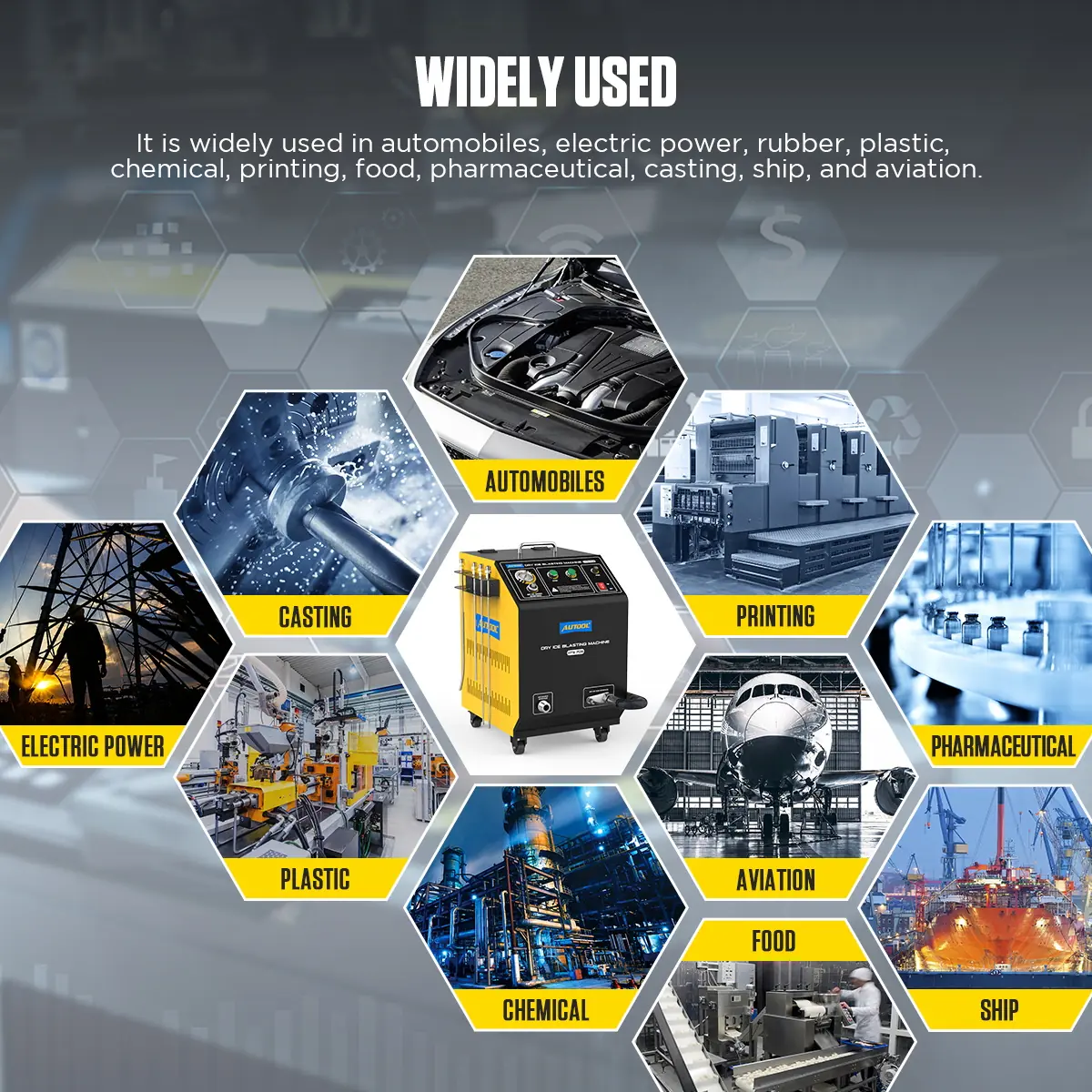
Automotive and Workshop Use
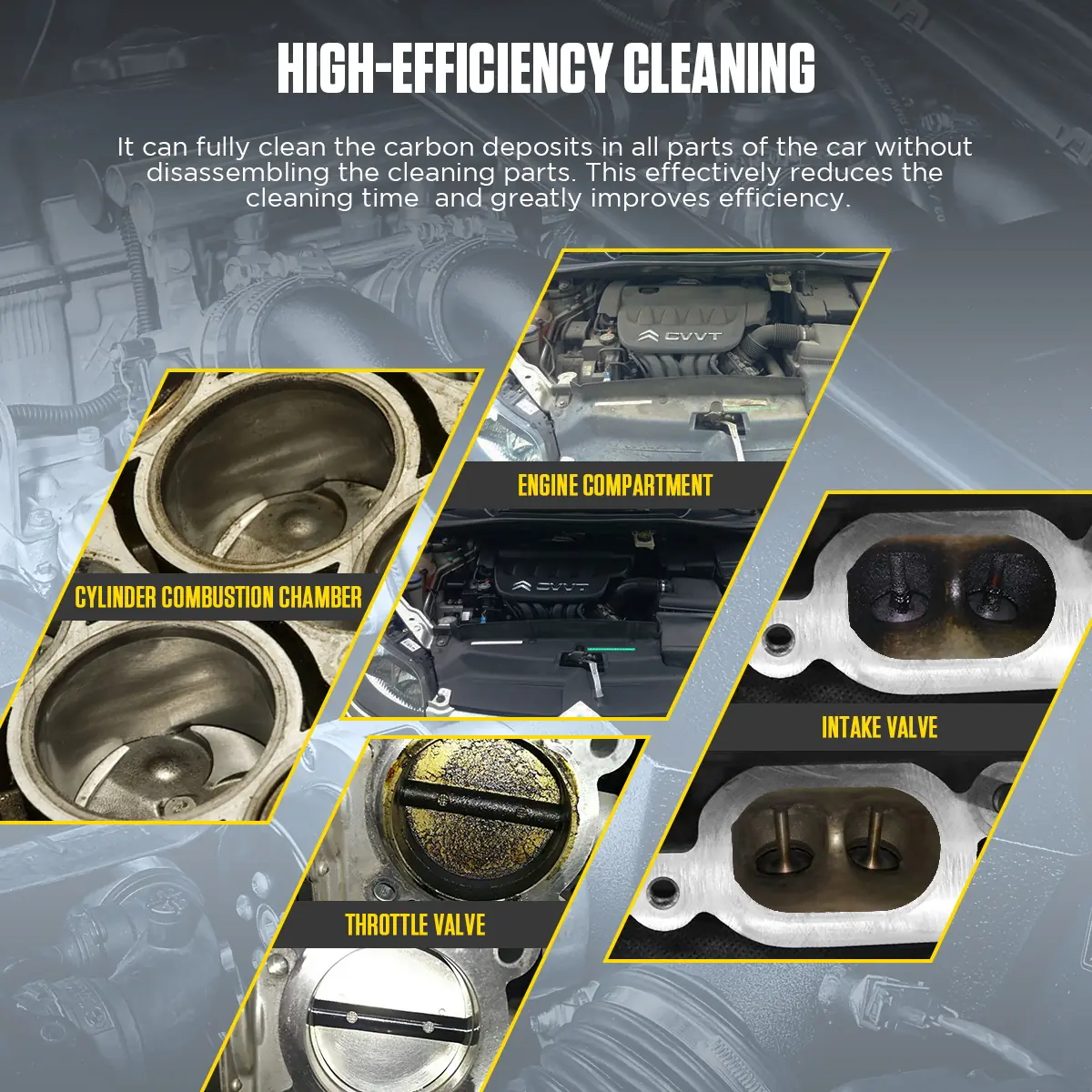
Engine bays, throttle and intake components, wheel hubs and underbody parts, plus workshop surfaces, once material and access have been checked.
Model Comparison
| HTS705 | HTS708 | HTS709 | |
|---|---|---|---|
| Dry ice capacity | 5 kg | 7.5 kg | 7.5 kg |
| Pressure gauges | Single | Single | Dual |
| Pellet guidance | 3 mm preferred; up to 8 mm with model guidance | 3 mm preferred; up to 8 mm with model guidance | 3 mm preferred; up to 5 mm with model guidance |
What’s in the Box
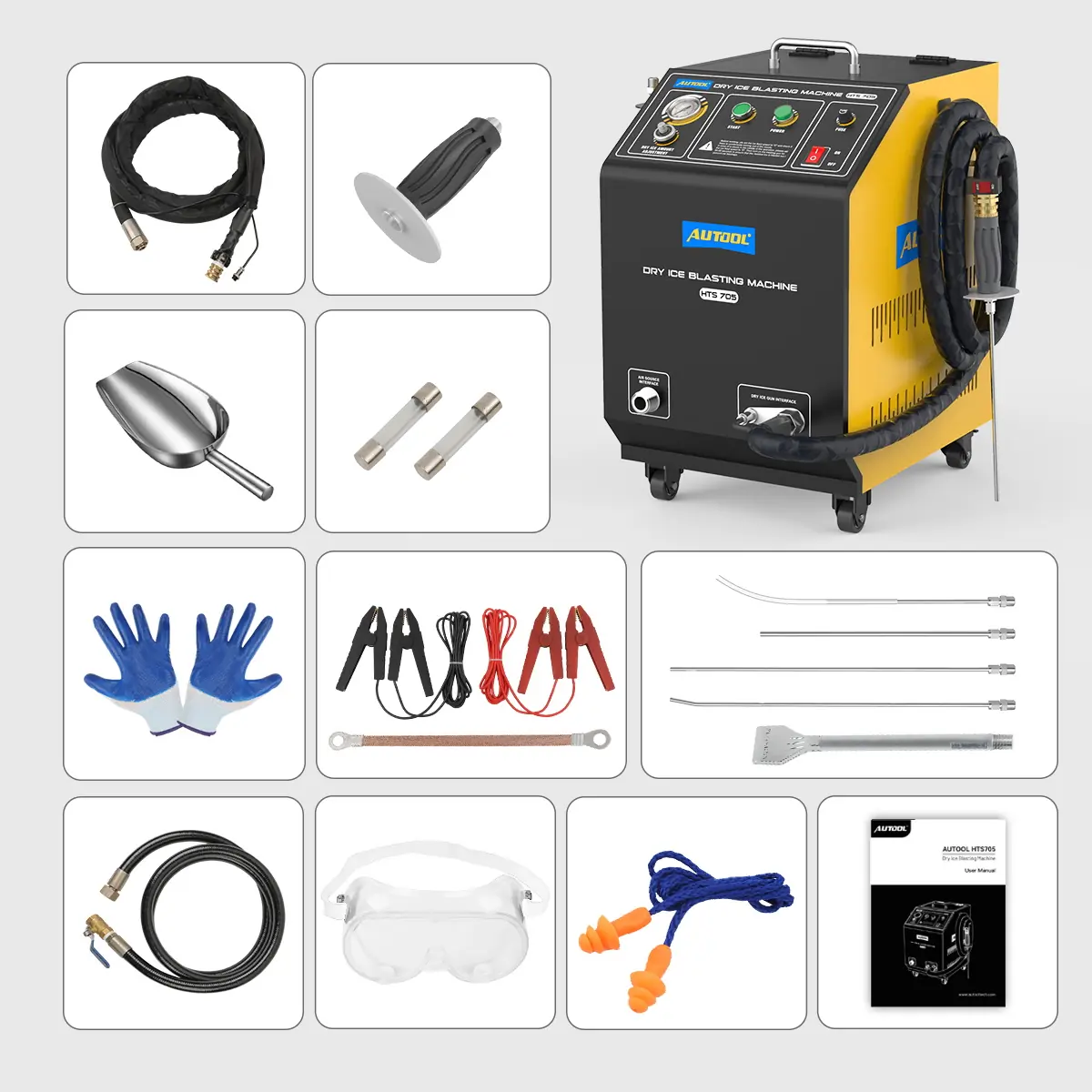
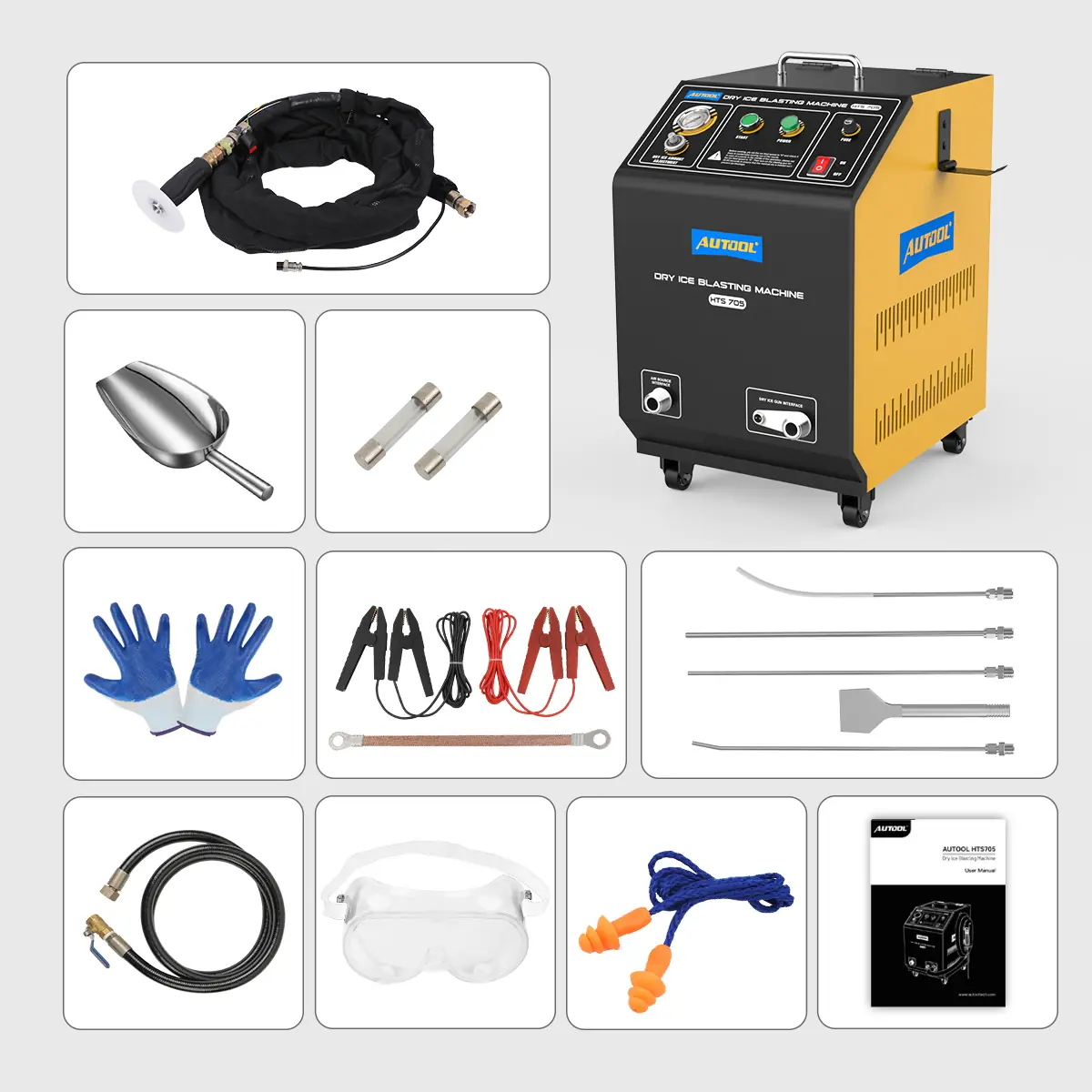
- HTS705 main unit
- Intake hose
- Ice outlet pipe with signal line and switch
- Rotatable ice spray handle and spray barrel
- Ice scoop
- Fuses
- Ground clip wire and ground wire connector
- Safety goggles, gloves and earplugs
- User manual and certificate
Anwendung
- Prepare suppliesArrange dry compressed air, grounded power at the correct voltage, fresh dry ice and CO₂-safe ventilation.
- Inspect and testSecure all connections, check for loose parts and test air and output from zero before loading ice.
- Load dry iceAdd a suitable amount of 3 mm pellets, close the lid and keep foreign material out.
- Set and test outputStart with a conservative setting on a small approved area before increasing output.
- Clean the targetKeep a safe distance and angle, watch air and ice delivery, and collect loosened contaminant.
- Clear the feed pathSet ice output to zero and run the gun for 30–50 seconds, or as the manual directs, before shutdown.
- Disconnect and inspectTurn off power, disconnect air and check the hose and nozzle for moisture, wear or blockage.
Loading, delivery adjustment, air preparation and troubleshooting: HTS705 user manual (PDF)
Good to Know
Caution
- An external air compressor is required and not included; confirm dynamic pressure and flow at the gun, not only the compressor rating.
- Dry ice can cause cold burns and releases CO₂: work in a well-ventilated area with gloves, goggles, hearing protection, protective clothing and closed-toe shoes.
- Never point the gun at people; switch off the drive power of moving equipment before cleaning; do not operate in rain or wet locations.
- Not recommended for car interiors, soft trim or delicate surfaces unless a professional confirms the application. Test coatings, plastics, rubber, labels and sensors first.
- Do not shut down with dry ice left in the line; clear it first to prevent blockage.
Care
- Before each run, set ice feed to 0 and check whether condensed water sprays from the nozzle.
- Keep foreign objects out of the dry ice tank when filling.
- Use compressed air free of oil and water; long use can wear the inside of the dry ice pipe.
FAQ
How much dry ice does an engine clean use?
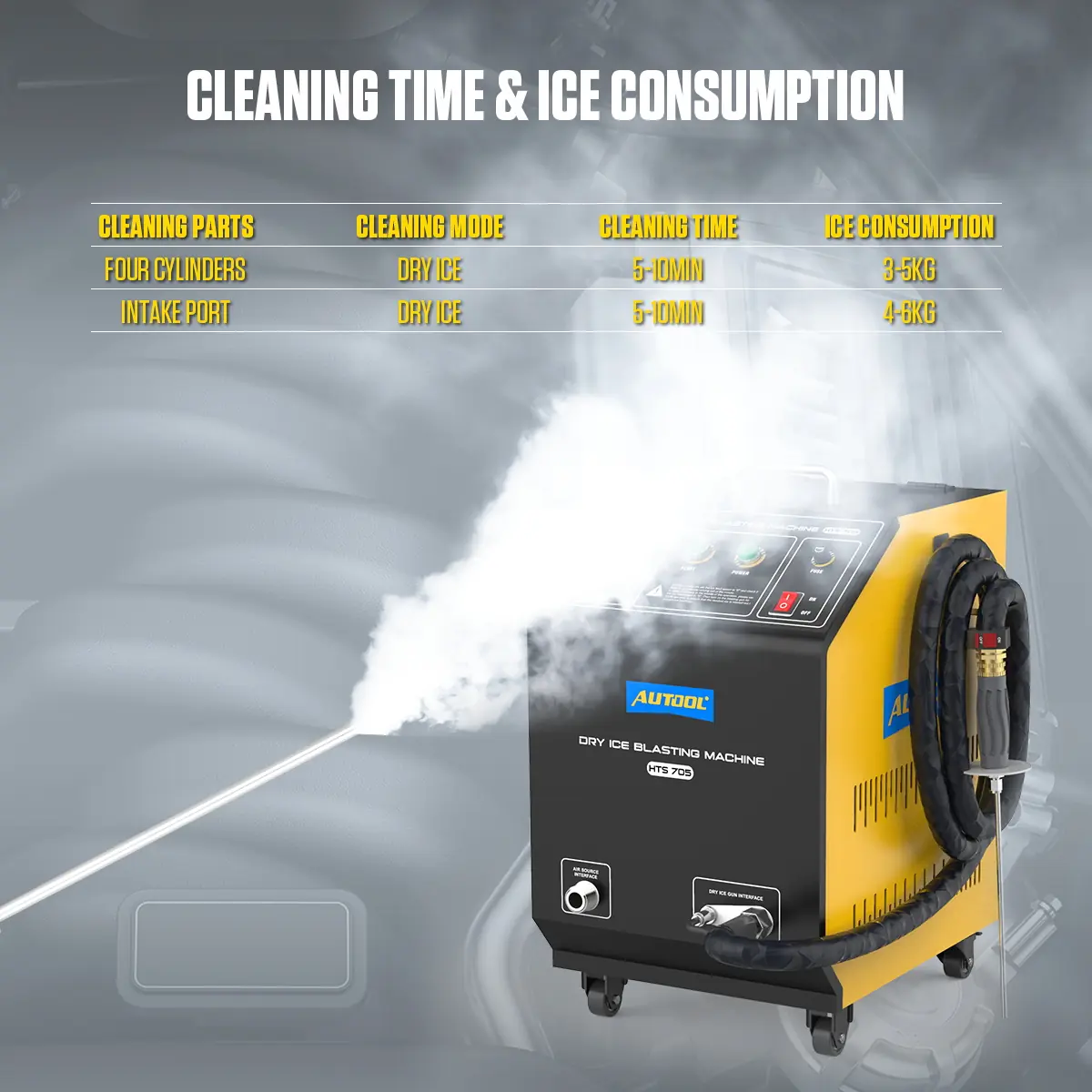
It varies with buildup, area, air supply and technique. Reference examples are about 5–10 minutes and 3–5 kg for four cylinders, or 5–10 minutes and 4–6 kg for intake-port cleaning; these are not fixed figures.
Can it remove rust or paint?
It removes loose rust, surface oxidation and weakly bonded paint. It will not remove deep or pitted rust or strongly bonded coatings, and it is not a white-metal finishing process.
Air comes out of the pipe but no ice. What should I do?
Residual ice may have blocked the outlet pipe. Set ice discharge to 0, open the gun and run for about 3 minutes, then set discharge to about 20–30% and check whether output returns.
What if ice is blocked in the hopper?
Stop, open the cover and remove some ice if overfilled. Check that the vibration pump works; condensation can cake the ice, and the steel bar in the center of the funnel may need moving up and down by hand.
Why is the cleaning effect weak?
Check air pressure and flow first, then the delivery path: a thin or long supply hose and restrictive quick connectors cause pressure loss.




 English
  German
  Spanish