







Lead-Acid and Lithium Battery Testing With Drain Monitoring and Printed Reports
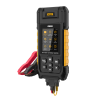
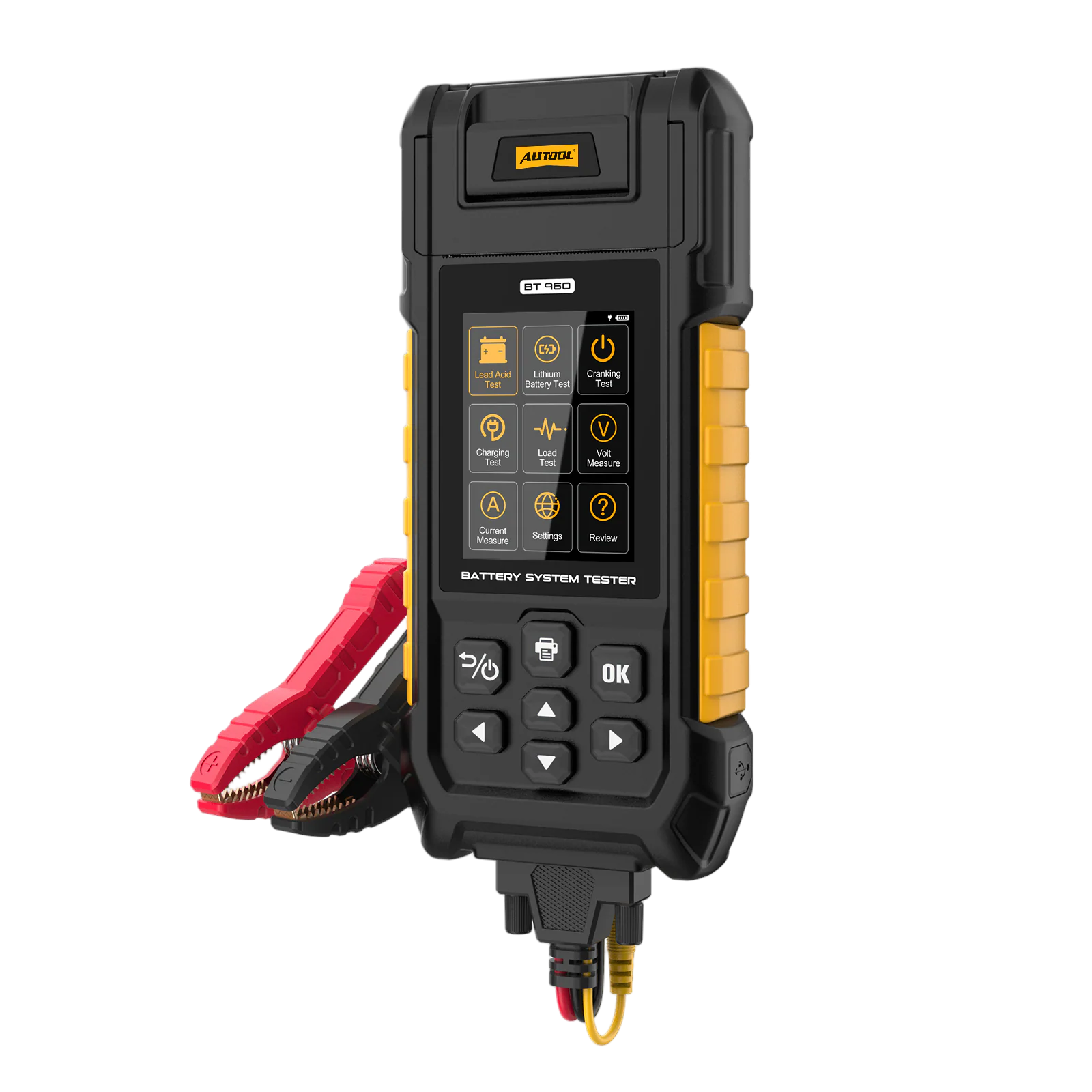
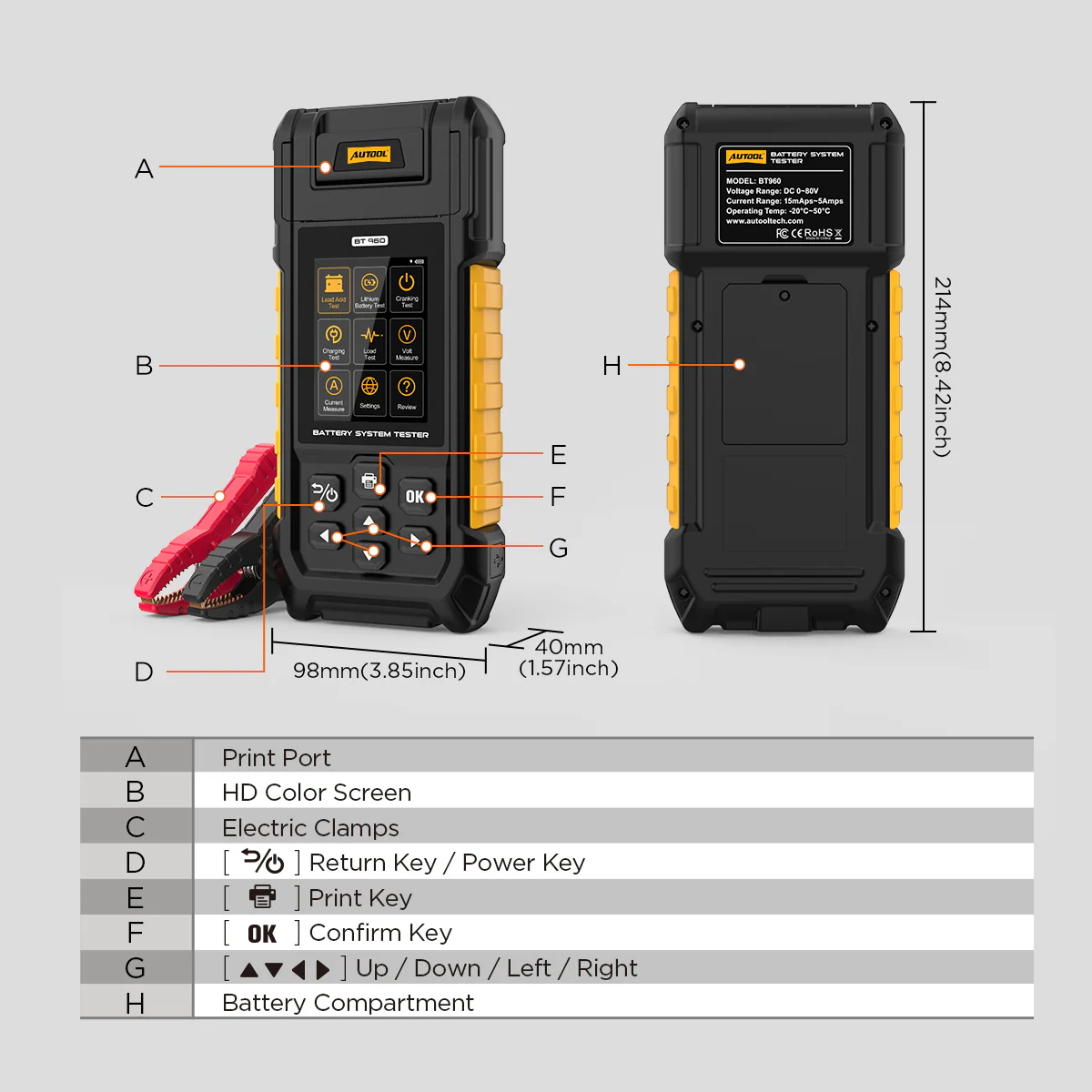
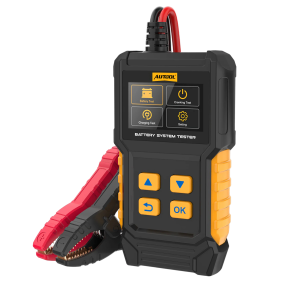
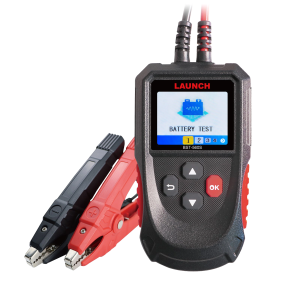
The AUTOOL BT960 tests supported lead-acid and listed lithium batteries on 12 V and 24 V systems, checks cranking, charging and loaded-system voltage, records small-current waveforms for drain investigations and prints customizable reports.
- Lead-Acid + Lithium
- 12 V / 24 V Systems
- Leakage Waveform Records
- Custom Printed Reports
- AAA or Type-C Power
Key Features
-
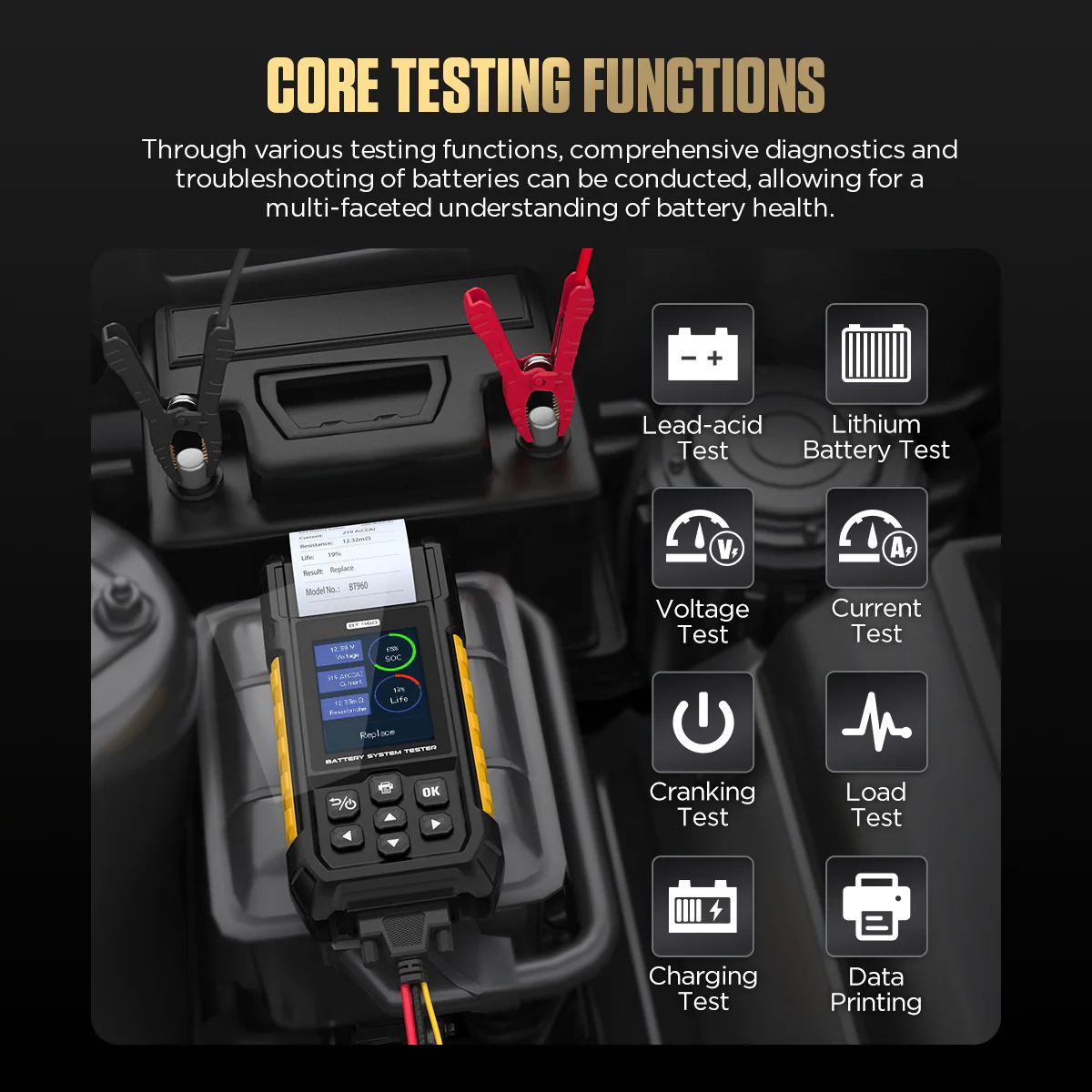
Battery and System Tests
Battery, cranking, charging, running system voltage with loads switched on, voltage, current, leakage and data-record checks through on-screen prompts. The loaded-system menu is not a high-current resistive load test.
-
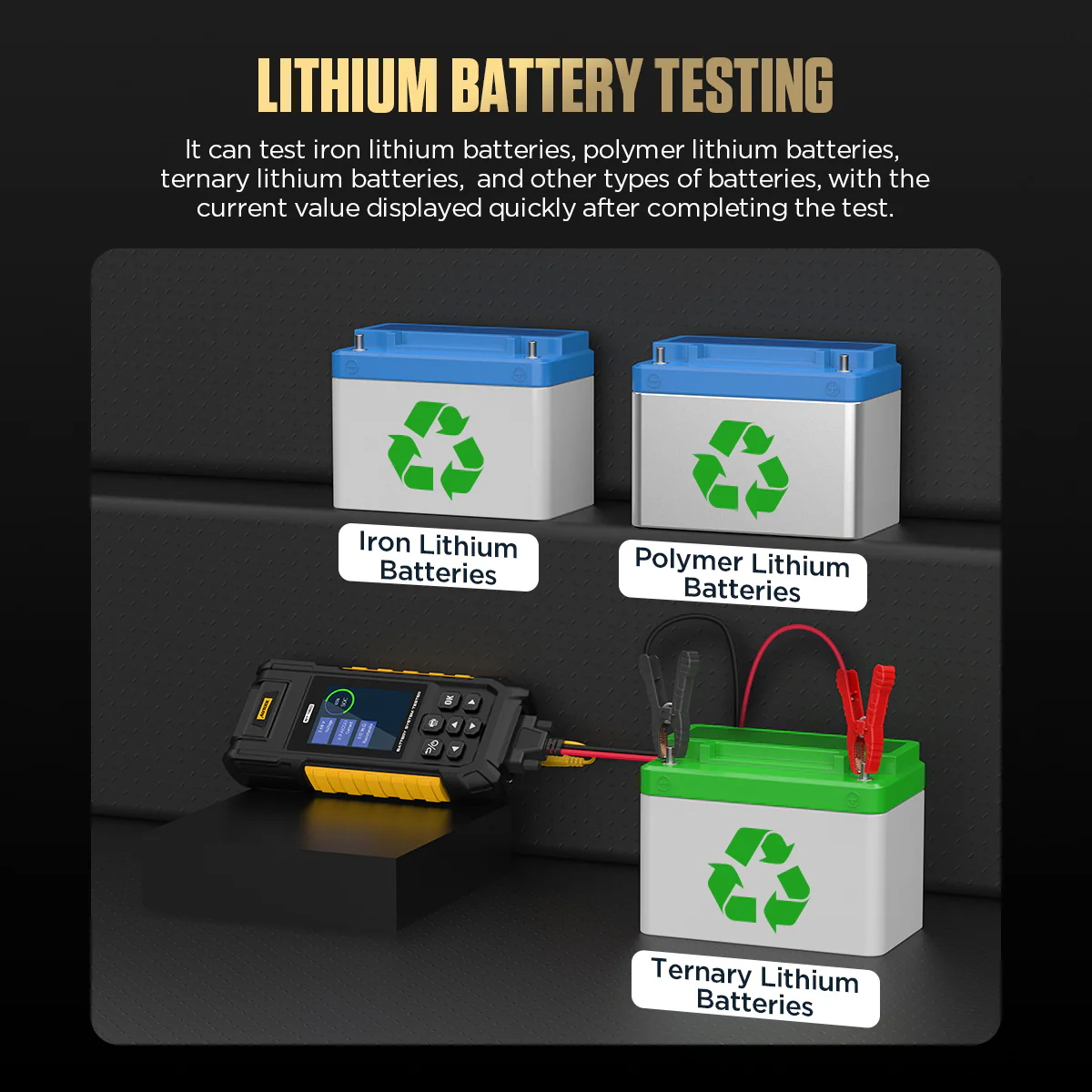
Lithium Battery Coverage
Test options for lithium iron phosphate, lithium polymer, ternary lithium and other listed lithium batteries, alongside flooded, AGM, EFB and GEL lead-acid types.
-
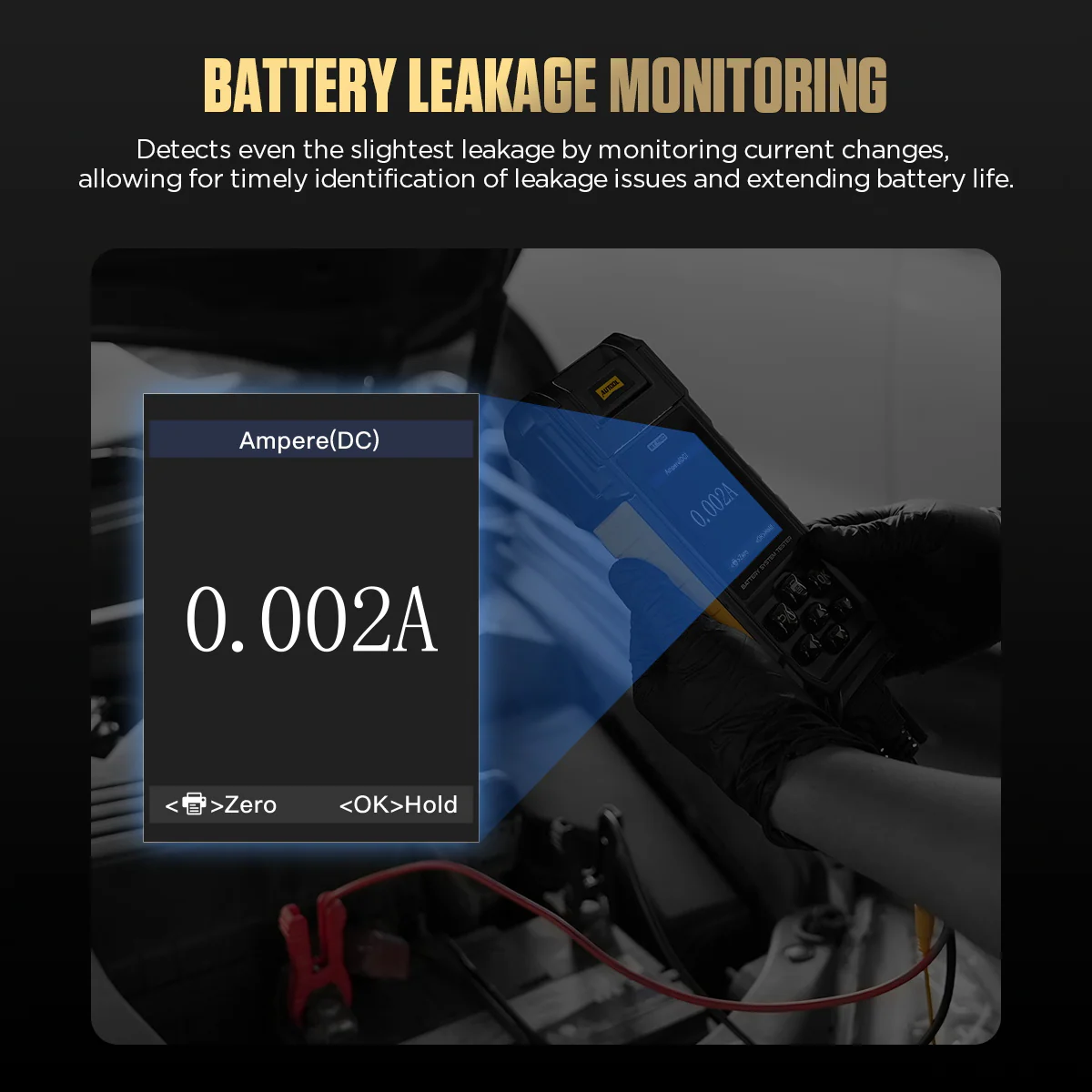
Drain and Leakage Monitoring
Watch small changes in total current through the negative-side connection to investigate battery drain, abnormal standby current and charging-related issues.
-
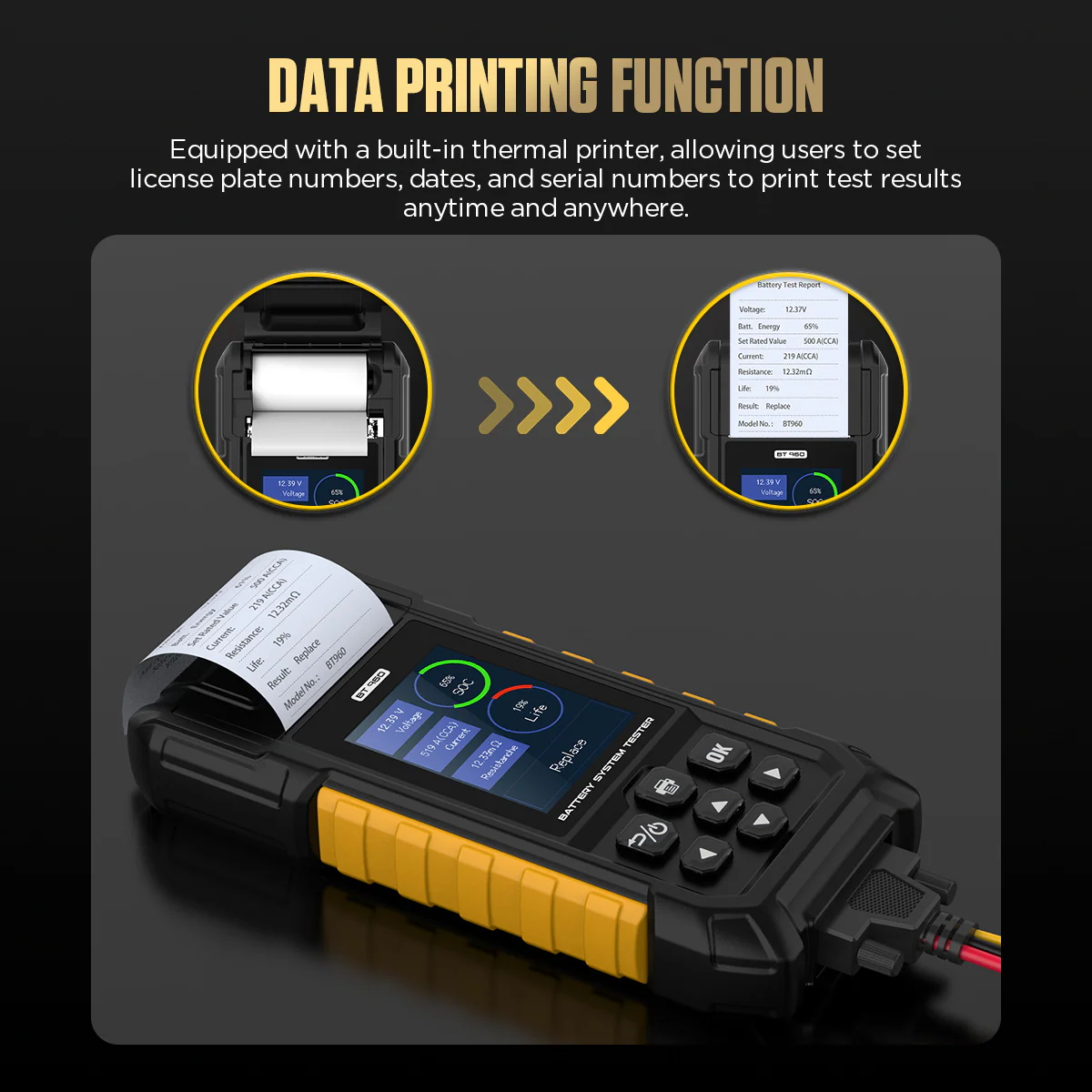
Customizable Printed Reports
The ink-free thermal printer prints test reports on site, with license plate number, date and serial number added for the work order or customer.
-
Temperature Context
The built-in sensor tracks ambient temperature. A battery working temperature of 20–25 °C is generally recommended; the display does not automatically compensate results.
-
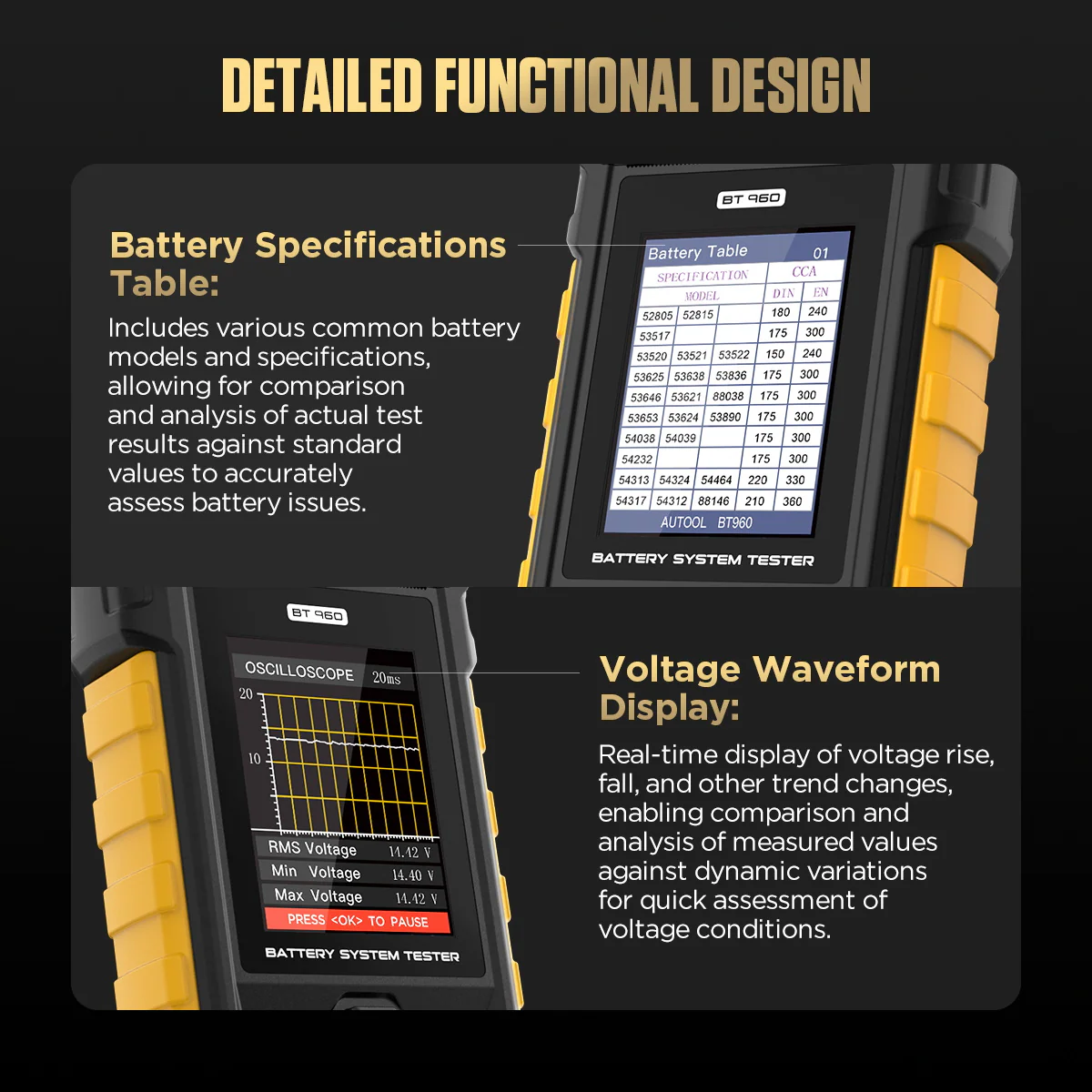
Waveform and Specification Reference
Review the voltage waveform and the battery specifications table for more detailed checks.
-
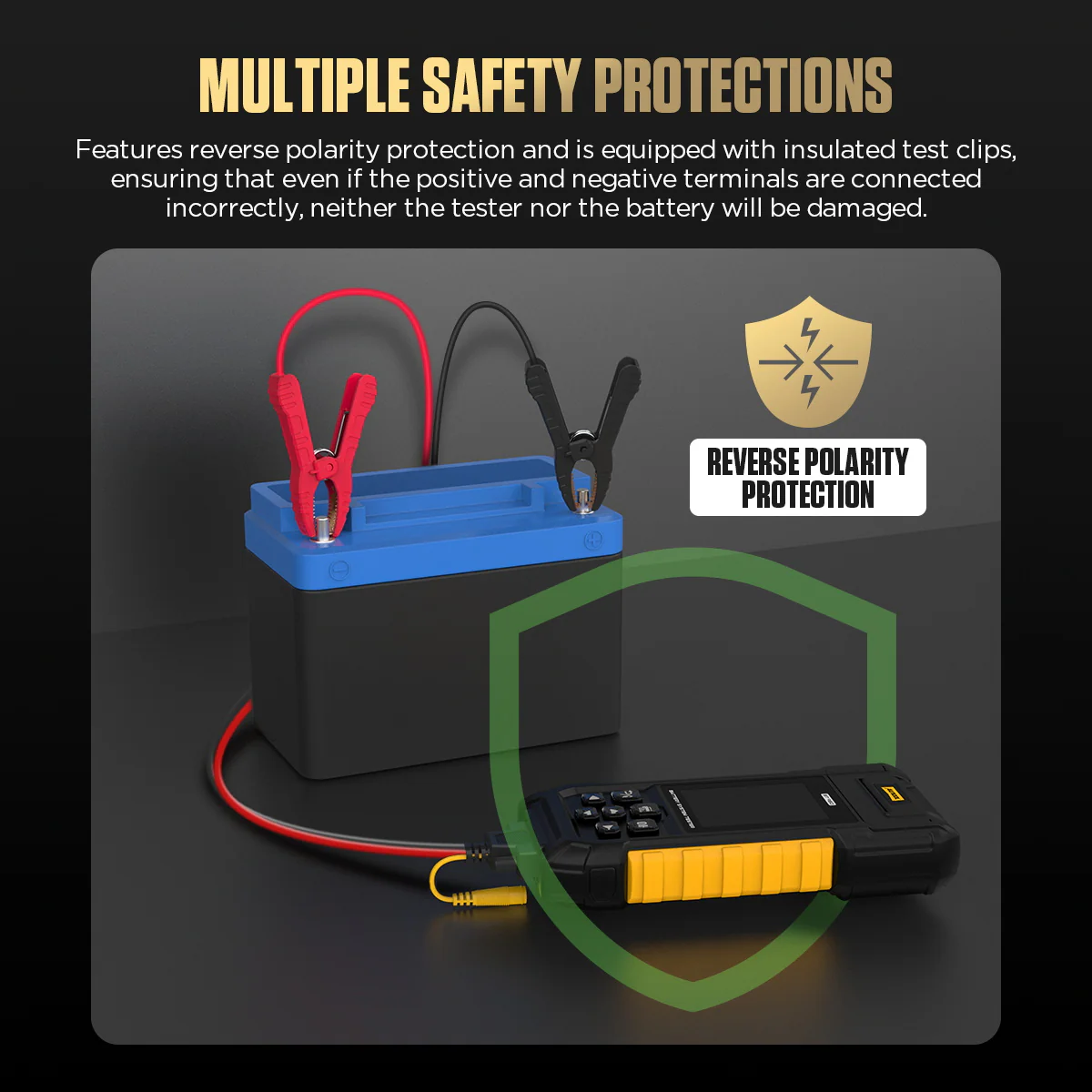
Reverse Connection Protection
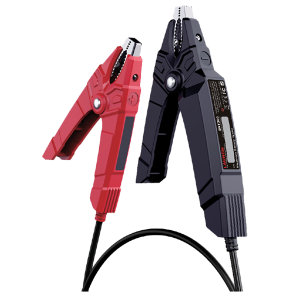
Reverse-polarity protection and insulated clips help protect the battery and tester if the clamps are swapped.
BT760 vs BT880 vs BT960
| BT760 | BT880 | BT960 | |
|---|---|---|---|
| Lithium batteries | No | No | Yes |
| Leakage current monitoring | No | Yes | Yes |
| Thermal monitor | No | Yes | Yes |
| Voltage test range | 8–30 V | 8–30 V | 0–80 V |
| Software upgrade | No | Yes | Yes |
| Languages | 14 | 18 | 14 |
What’s in the Box
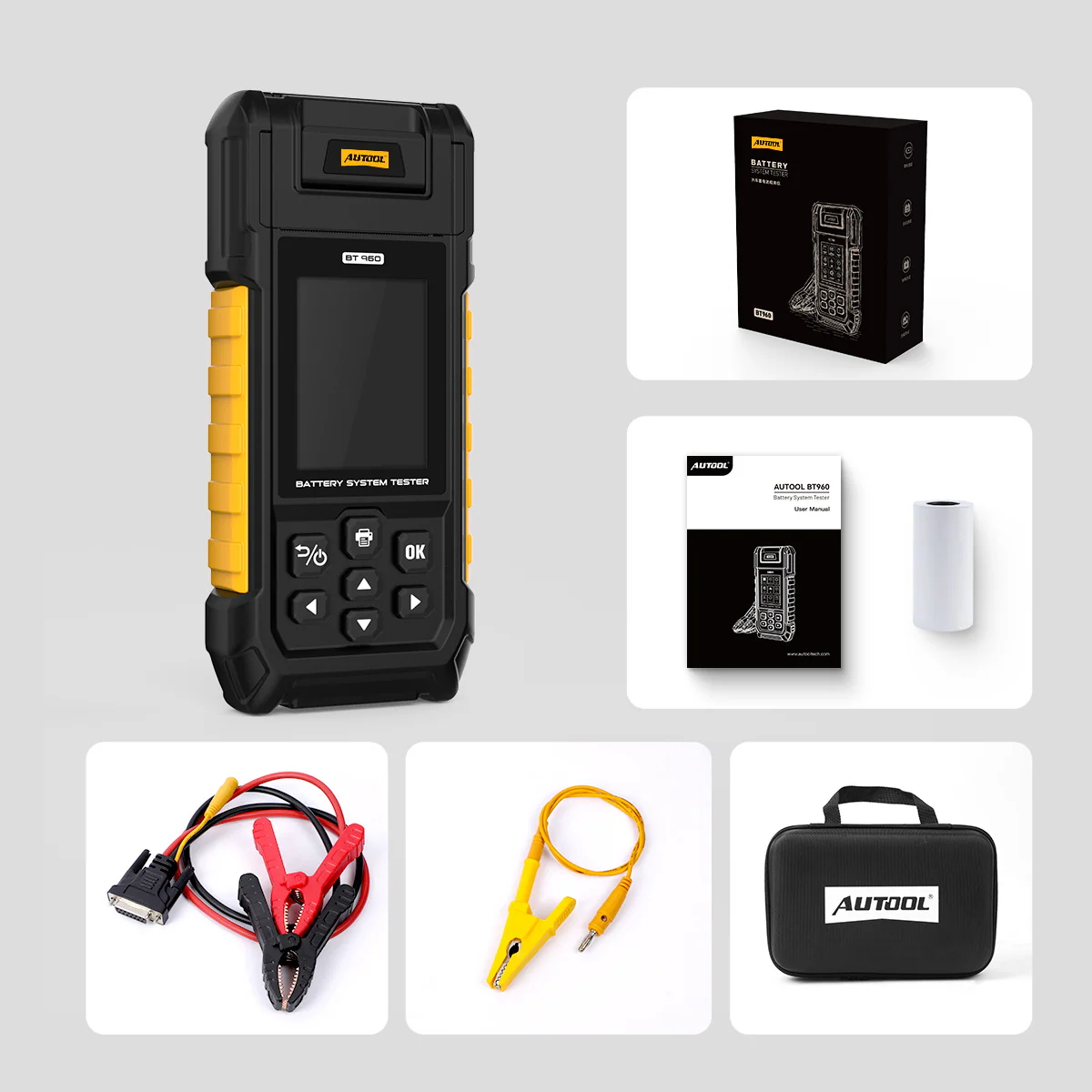
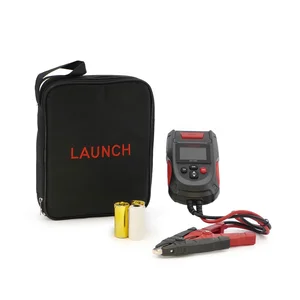
- BT960 battery tester
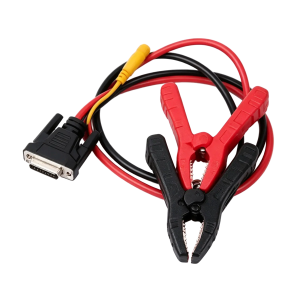
- Main clamp cable
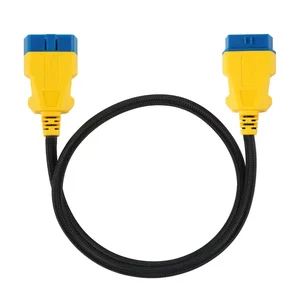
- Yellow leakage test cable with special clamp
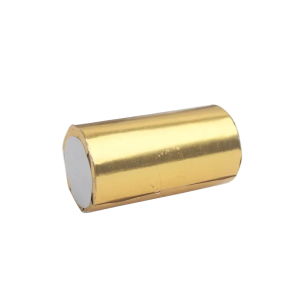
- Thermal paper roll
- User manual
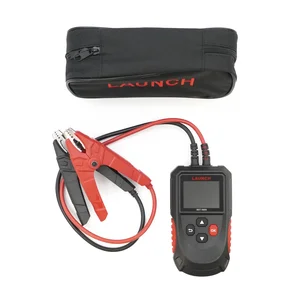
- Storage bag
- Retail box
How to Use
- Identify the batteryConfirm the chemistry, nominal voltage and printed rating standard before choosing the menu.
- Connect correctlySwitch vehicle loads off as required and place the clamps on clean terminals with correct polarity.
- Enter the ratingSelect the supported battery type and enter the rating standard and value printed on the battery.
- Run separate checksRun battery, cranking, charging or loaded-system checks one at a time so each result keeps its context.
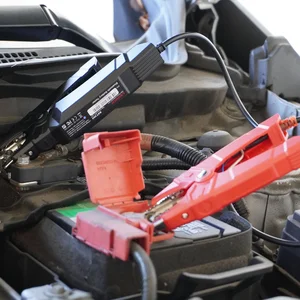
- Monitor leakageDisconnect the negative terminal and use the leakage clamp on the vehicle negative bus to record the real-time current waveform.
- Review and recordRead voltage and algorithm outputs together, record the conditions and print the report.
Testing, power options and troubleshooting: BT960 user manual (PDF).
Good to Know
Caution
- Match the menu to the battery chemistry, nominal voltage, series arrangement and BMS-permitted test state.
- The 0–80 V measurement range does not qualify the tester for high-voltage battery service.
- Leakage monitoring shows total current; locating the responsible branch or component requires circuit isolation.
Care
- Treat CCA, SOC, health and capacity-like values as algorithm outputs, not measured amp-hours or exact remaining life.
- Stop and reconnect if the tester reports a polarity error.










 English
  German
  Spanish