Trace EVAP and Low-Pressure Leaks With Regulated Shop Air
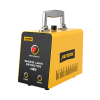
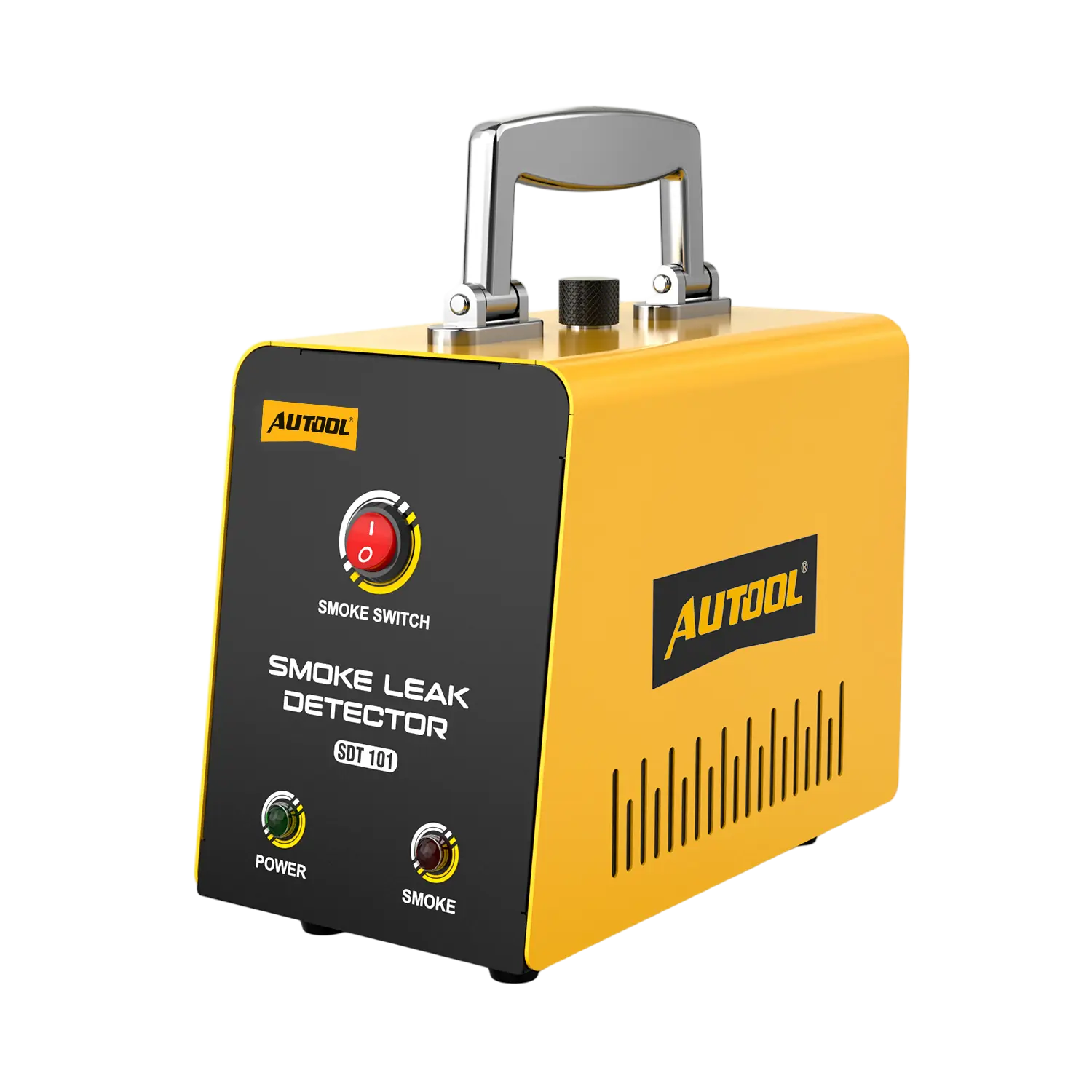
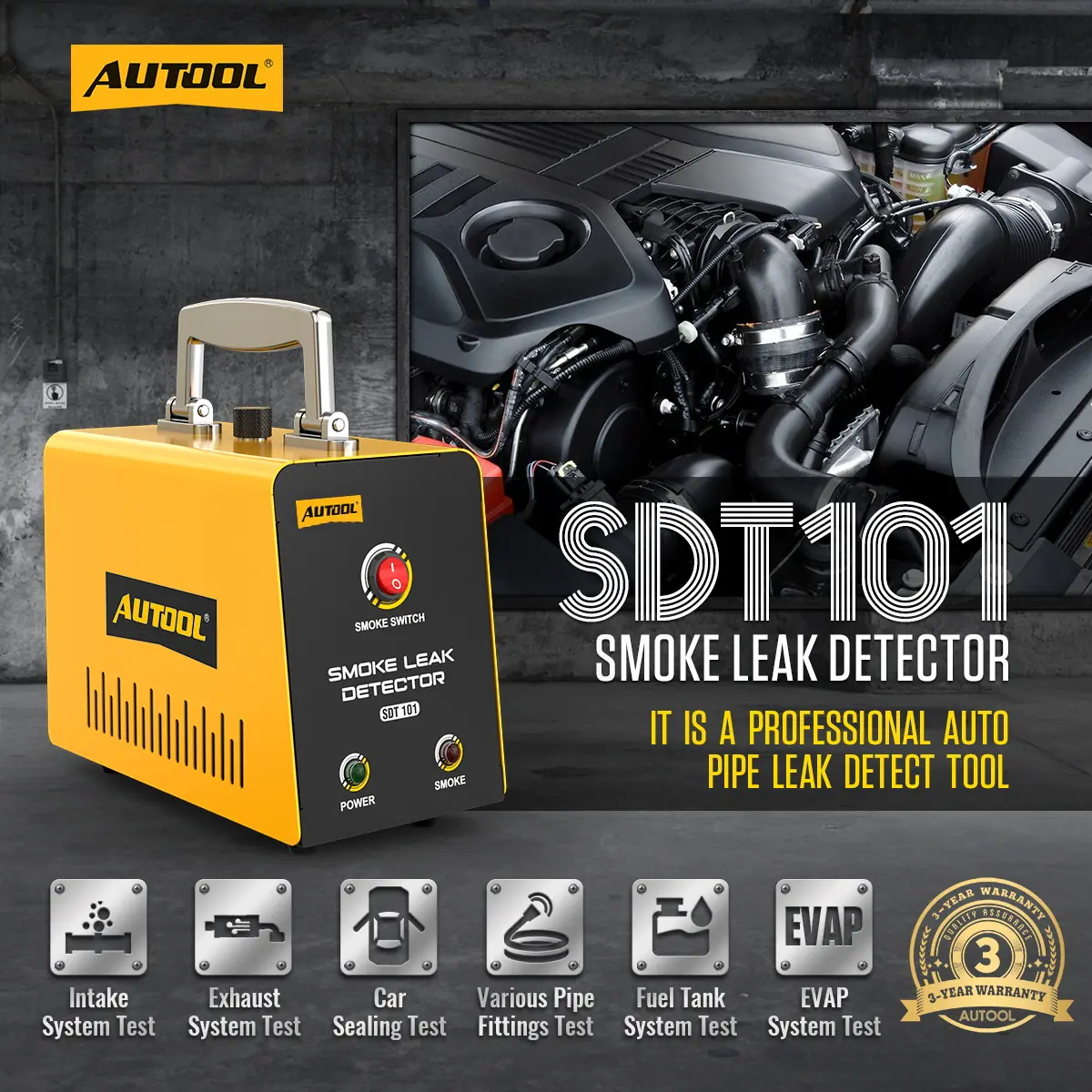
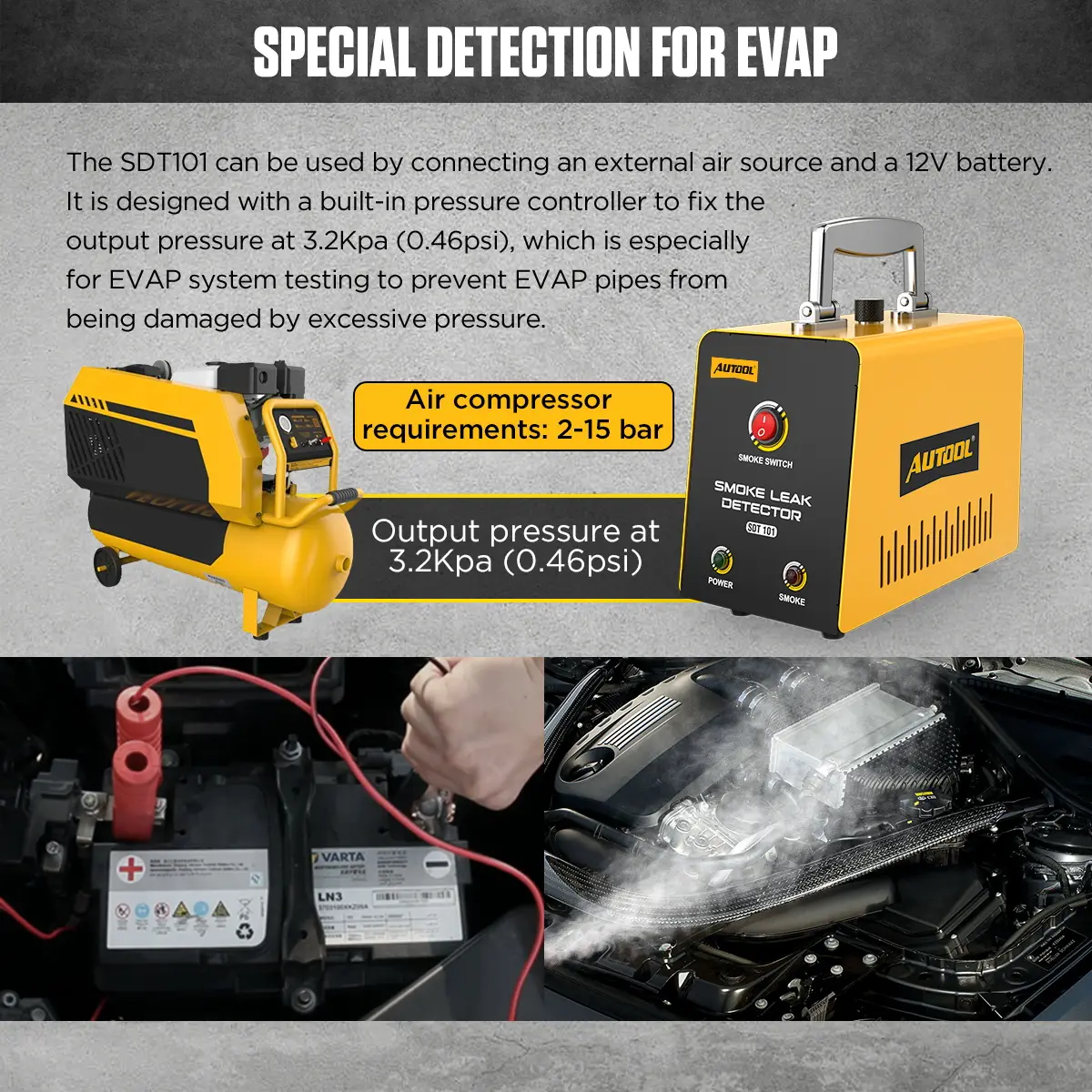
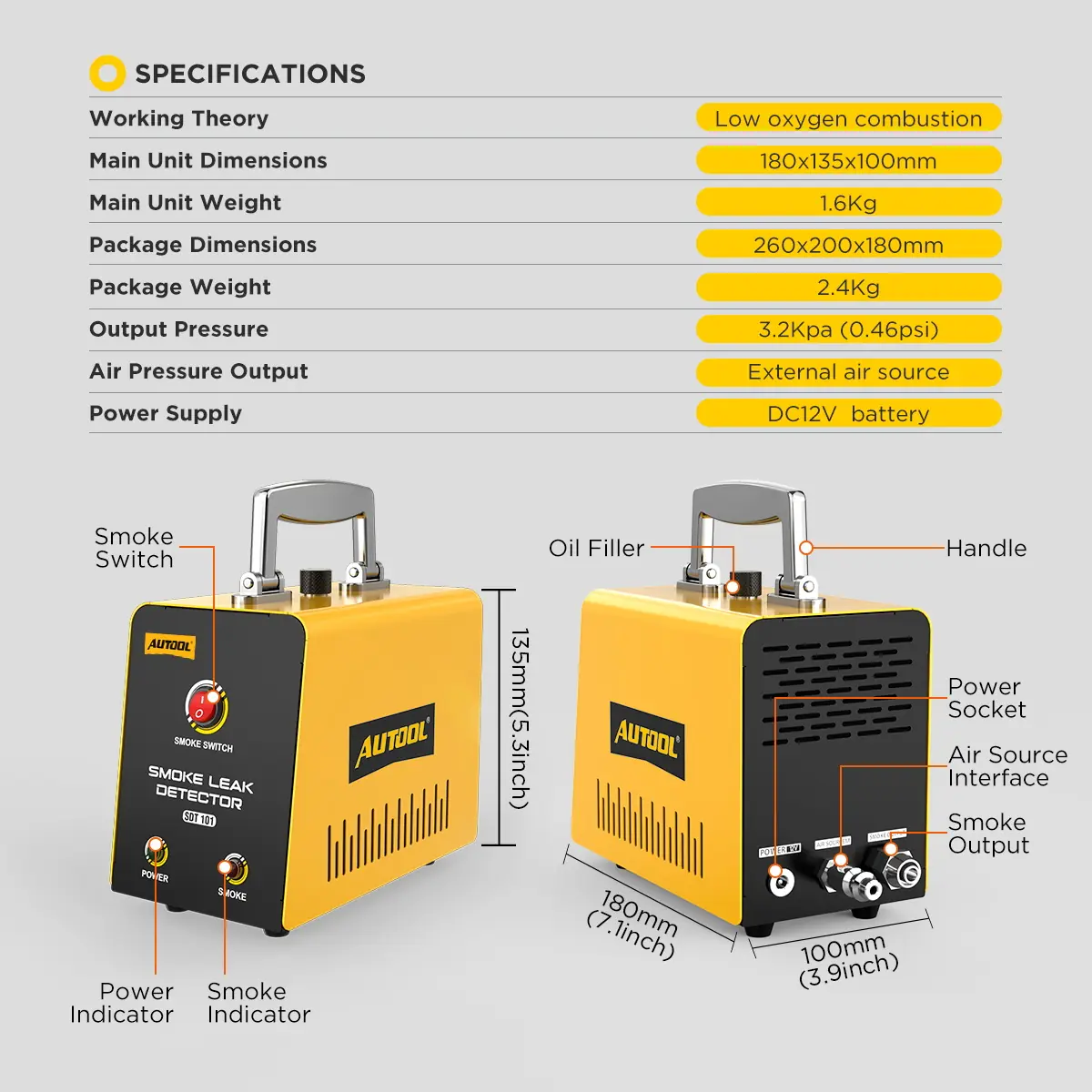
The SDT101 takes air from your shop supply, regulates it to a fixed 0.46 psi test output and fills an isolated low-pressure section with smoke so escaping paths become visible. It has no built-in pump and is not a high-pressure or boost-leak tester.
- Fixed 3.2 kPa / 0.46 psi
- External Shop Air
- Smoke in About 5 s
- 12 V DC Battery Power
Key Features
-
EVAP-Safe Fixed Pressure
The built-in controller fixes vehicle-side output for EVAP testing and other permitted low-pressure checks, helping prevent excess pressure on EVAP lines. Compressor supply pressure is never applied directly to the test line.
-
Visual Leak Tracing
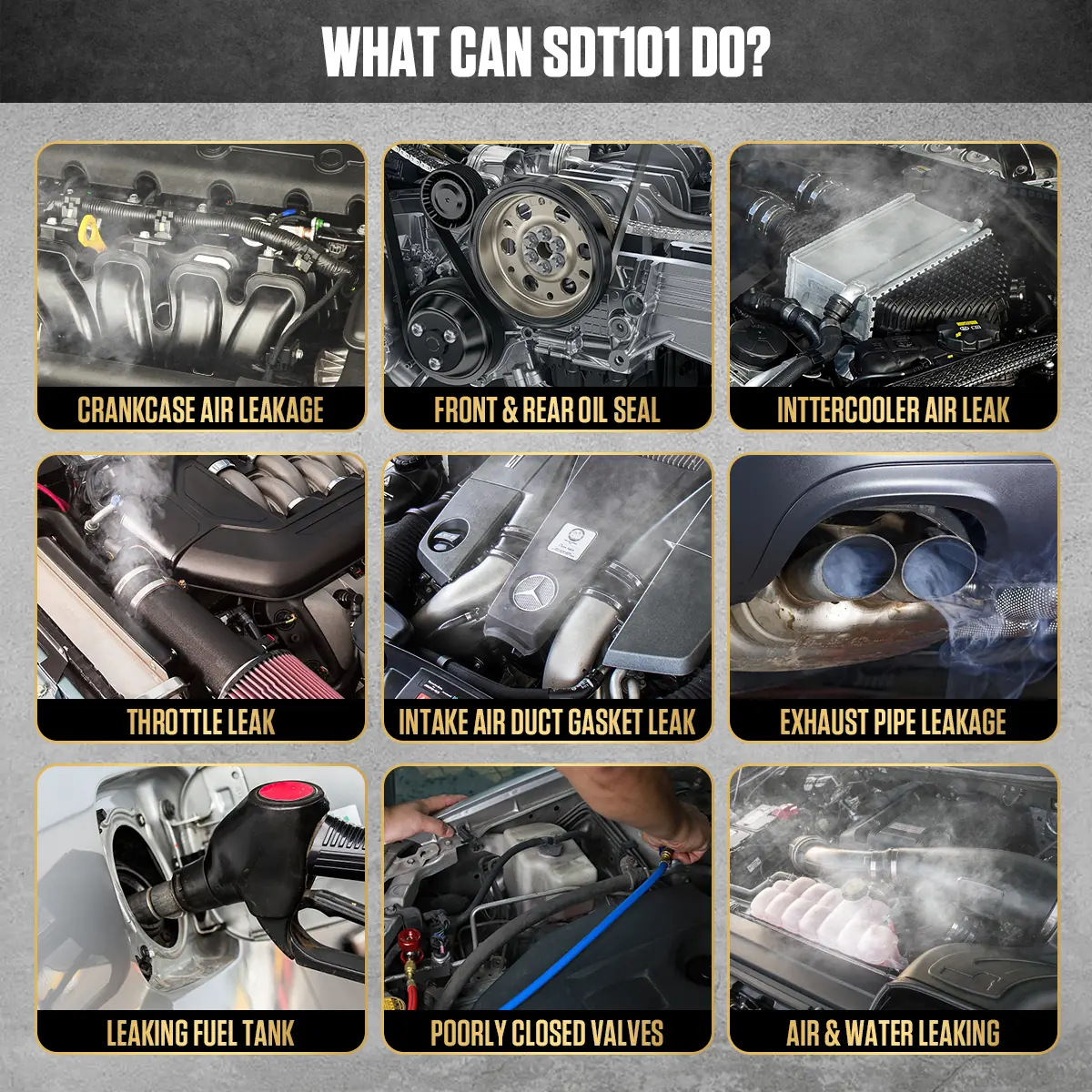
After correct connection and isolation, escaping smoke shows a path for closer inspection before parts are replaced.
-
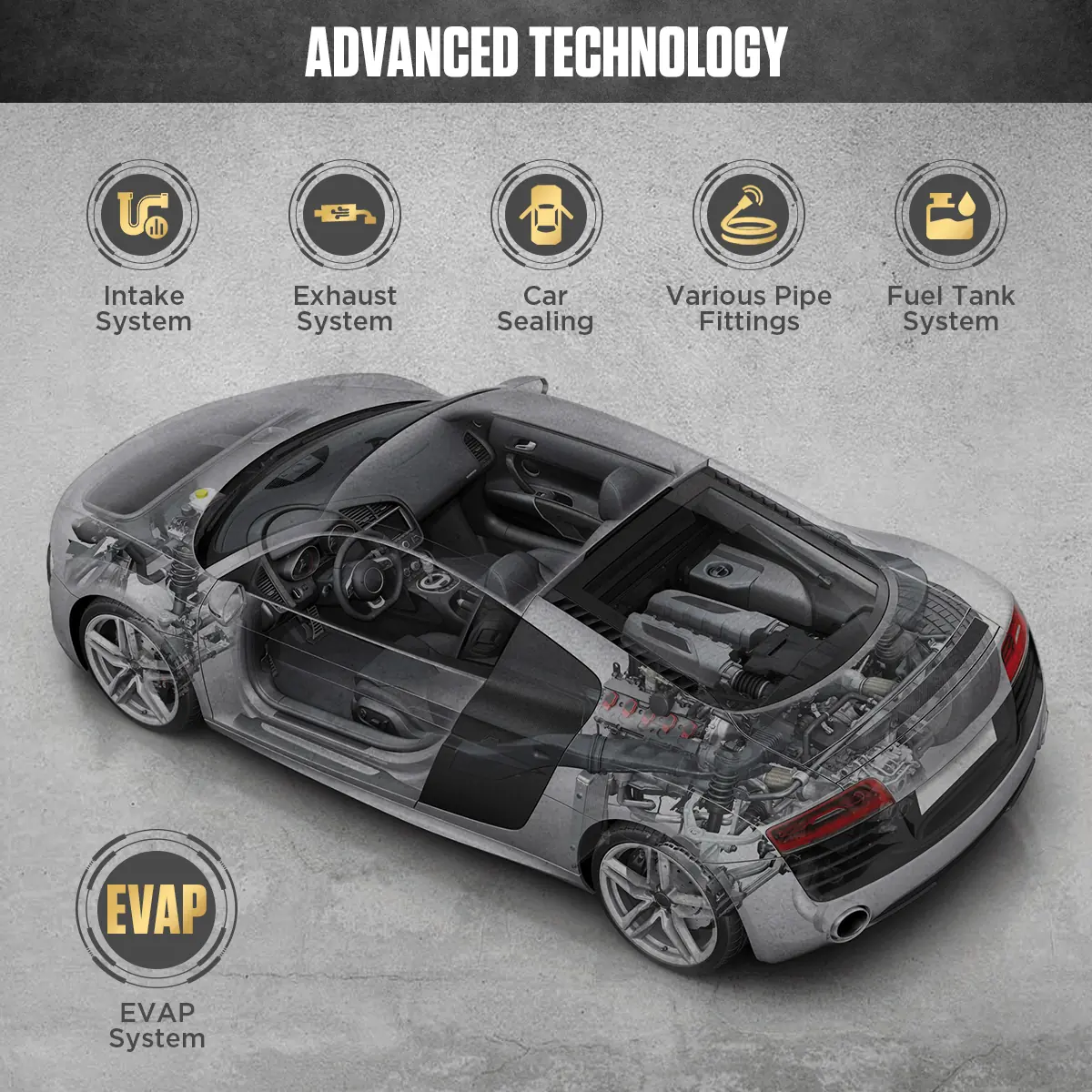
Broad Low-Pressure Coverage
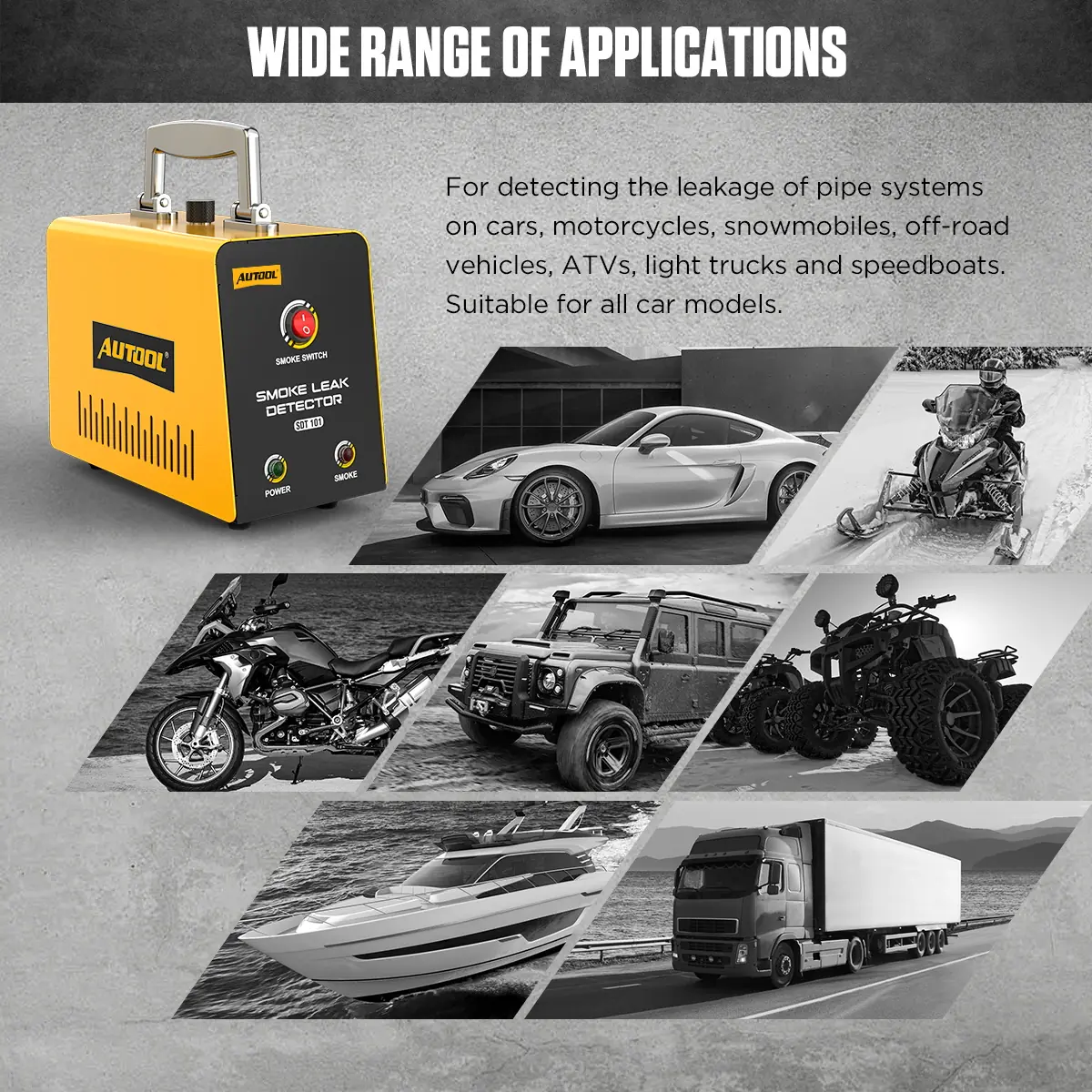
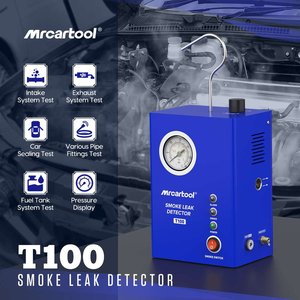
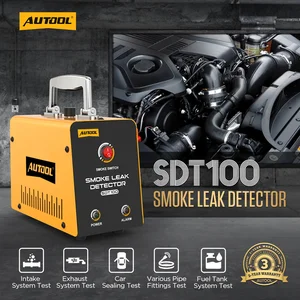
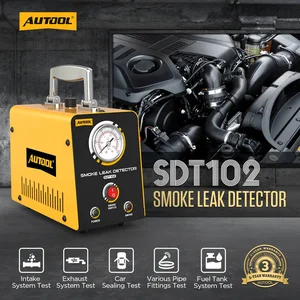
Intake and exhaust systems, throttle and intake-duct gasket leaks, crankcase, front and rear oil seals, intercooler, fuel tank, valves that do not close fully, and line fittings.
-
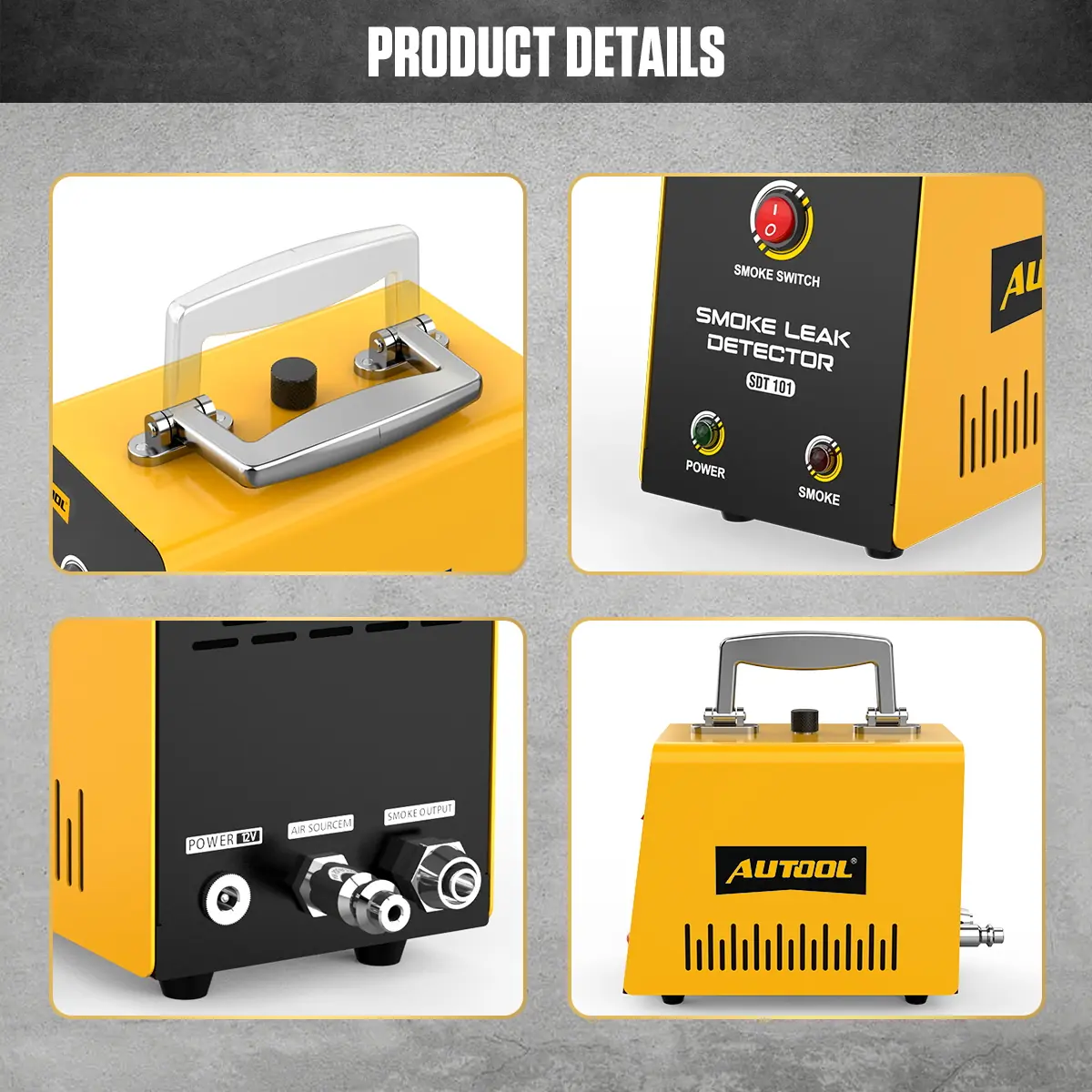
Compact Handled Body
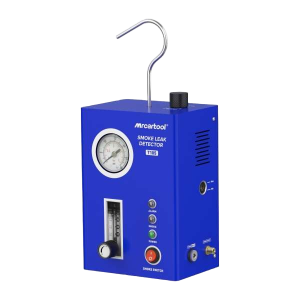
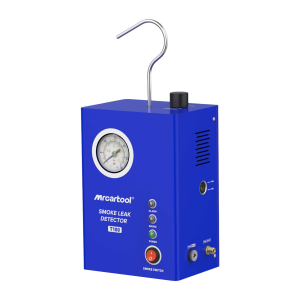
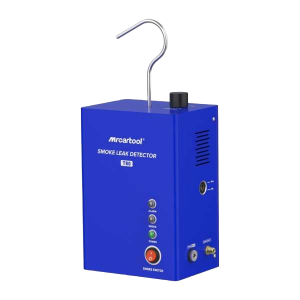
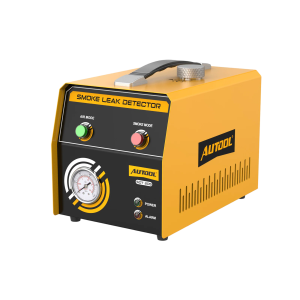
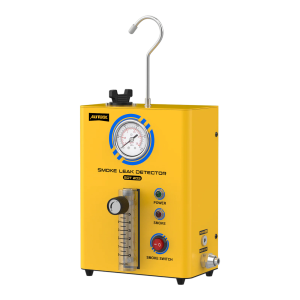
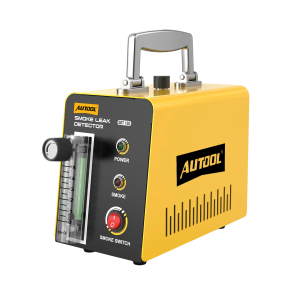
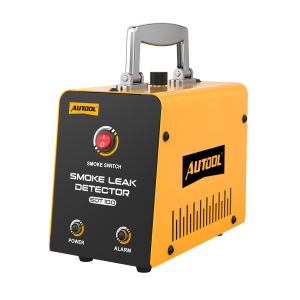
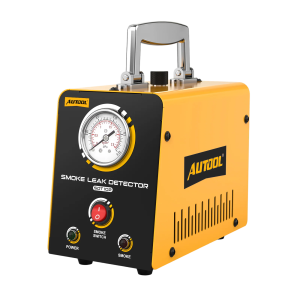
Smoke switch, power indicator, air inlet and smoke outlet are grouped on a small unit that is easy to carry and store.
-
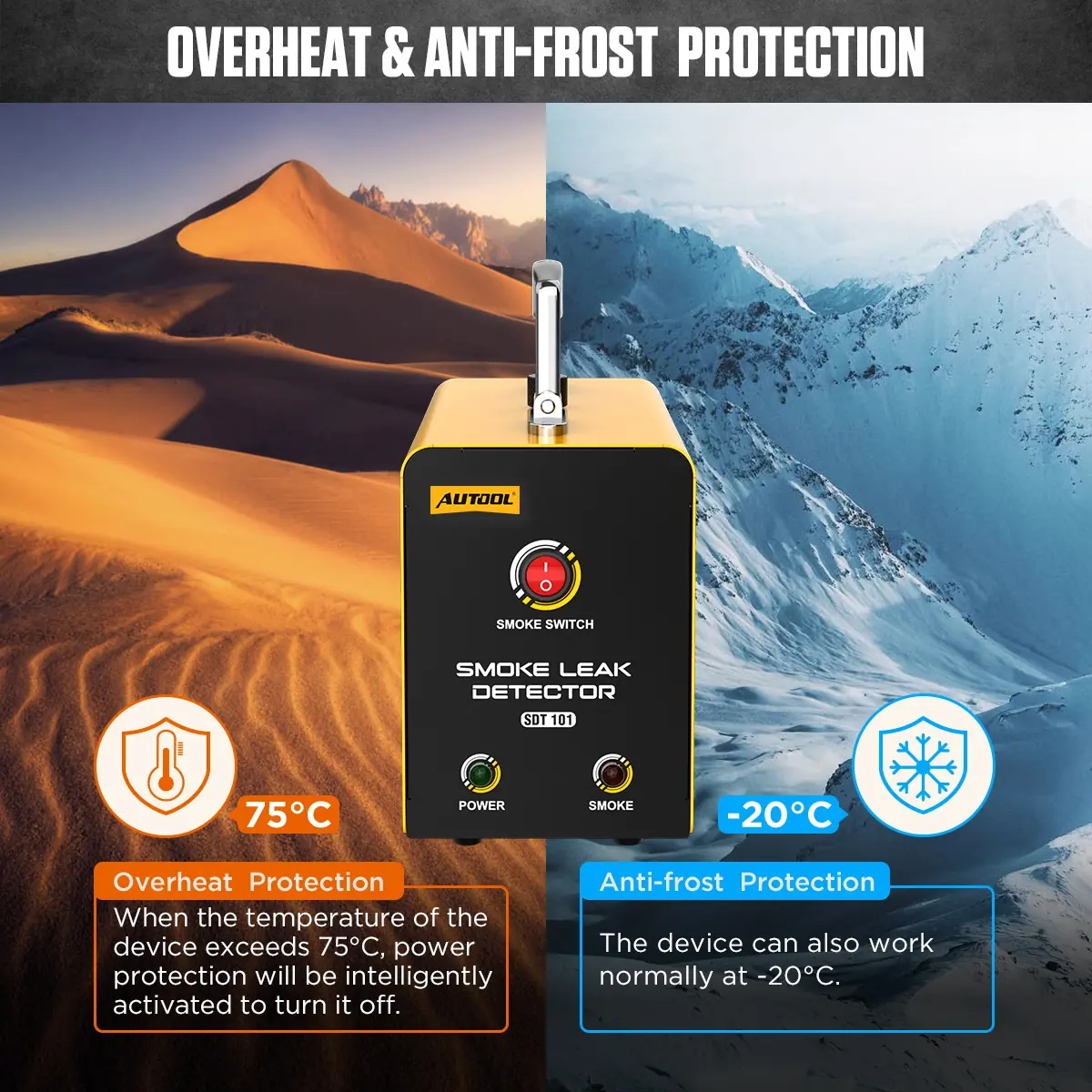
Overheat Protection
Power shuts off automatically if the internal temperature gets too high.
More Specifications
| Main unit dimensions | 180 × 100 × 135 mm |
|---|---|
| Working principle | Low-oxygen combustion |
SDT101 vs SDT103
| SDT101 | SDT103 | |
|---|---|---|
| Rated output pressure | 3.2 kPa (0.46 psi) | 3.2 kPa (0.46 psi) |
| Air source | External | External |
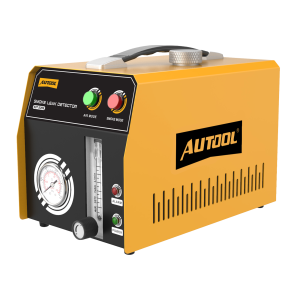
| Flow meter window | No | Yes |
| Flow adjustment knob | No | Yes |
| Main unit weight | 1.6 kg | 1.15 kg |
What’s in the Box
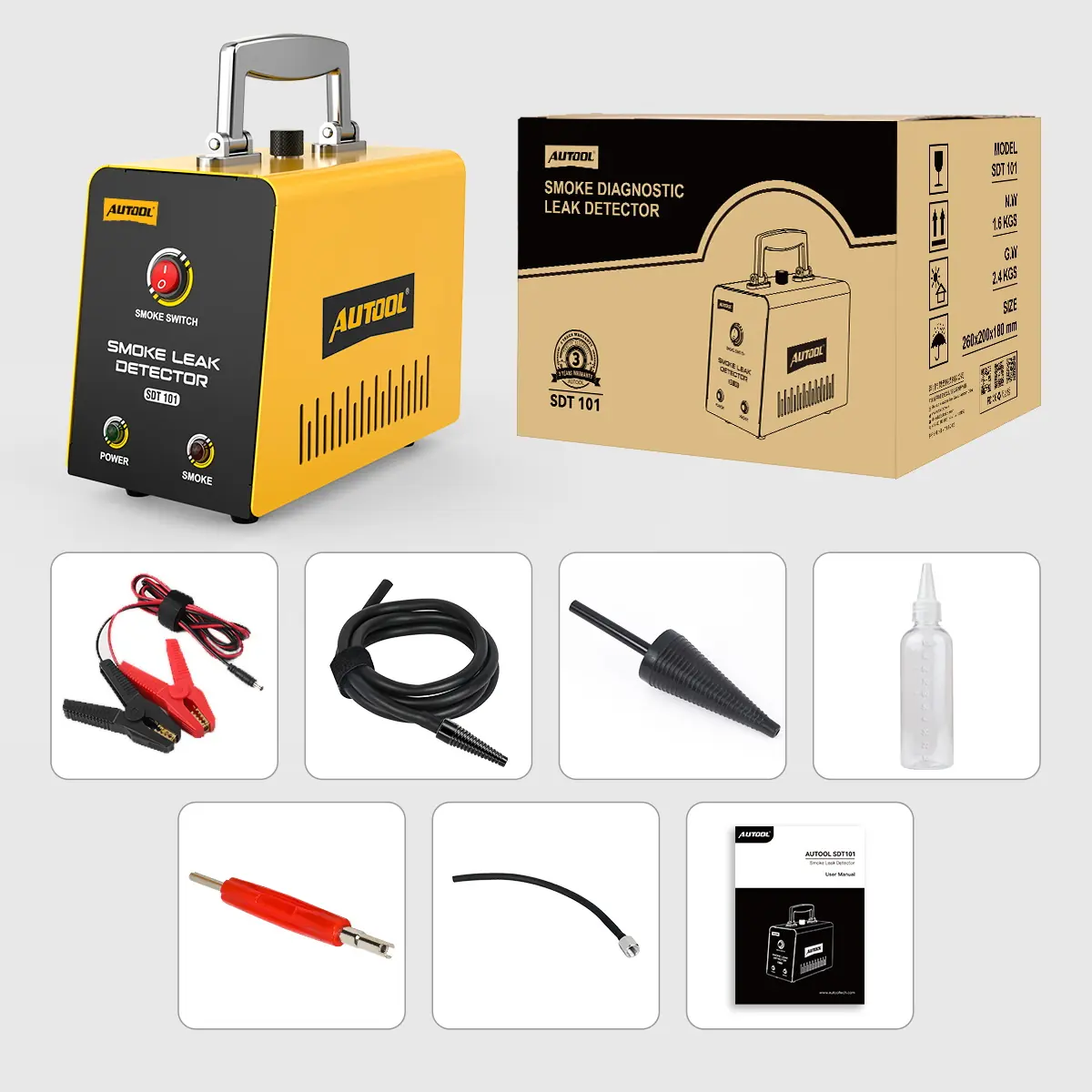
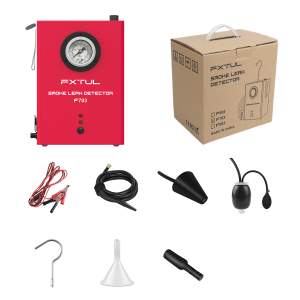
- 1×SDT101 smoke leak detector
- 1×EVAP connector
- 1×Standard cone adapter
- 1×Power cord with clamps for a 12 V DC battery
- 1×Valve-core wrench
- 1×Empty testing-oil refill bottle
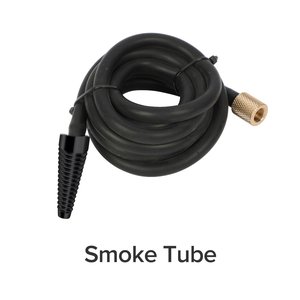
- 1×Smoke hose
- 1×User manual
Shop-air connection, system isolation, oil handling and troubleshooting: SDT101 user manual (PDF).
How to Use
- Confirm the procedureIdentify the target system, its permitted test pressure, the access point and any normal openings that must be sealed.
- Add testing oilWith the unit off and cool, fill liquid paraffin or baby oil without overfilling.
- Connect and isolateAttach the smoke hose with the right adapter and close or isolate normal escape paths as the vehicle procedure requires.
- Connect air and powerConnect shop air to the inlet, clamp the power leads to a 12 V battery with correct polarity, and switch on.
- Generate smoke and inspectLet the system fill, then check joints, hoses, seals and fittings for escaping smoke.
- Repair and retestRepair the leak area and repeat the same test; if no smoke appears, recheck isolation, flow and setup.
Good to Know
Caution
- Requires an external compressed-air supply; testing oil is not included.
- Do not use for A/C, high-pressure or boosted-system testing.
- Never refill oil while the unit is running or hot.
- After overheat shutdown, switch off and let the unit cool before restarting; the round metal housing may be hot.
Care
- Add fresh oil only when smoke becomes thin; drain the remaining oil first and add no more than 15 mL at a time.
- Smoke leaving a normal vent or purge path is not necessarily a fault; review the valve state in the service procedure.
- No visible smoke does not rule out a blockage, intermittent fault or non-leak cause.


 English
  German
  Spanish